
































How AI Browsers Are Rewriting the Internet Economy — The Next Web Frontier
AI-powered browsers are transforming how we access the web, shifting value from search engines and clicks to integrated agents and task-oriented experiences. Discover how this shift is reshaping the internet economy in India and globally.
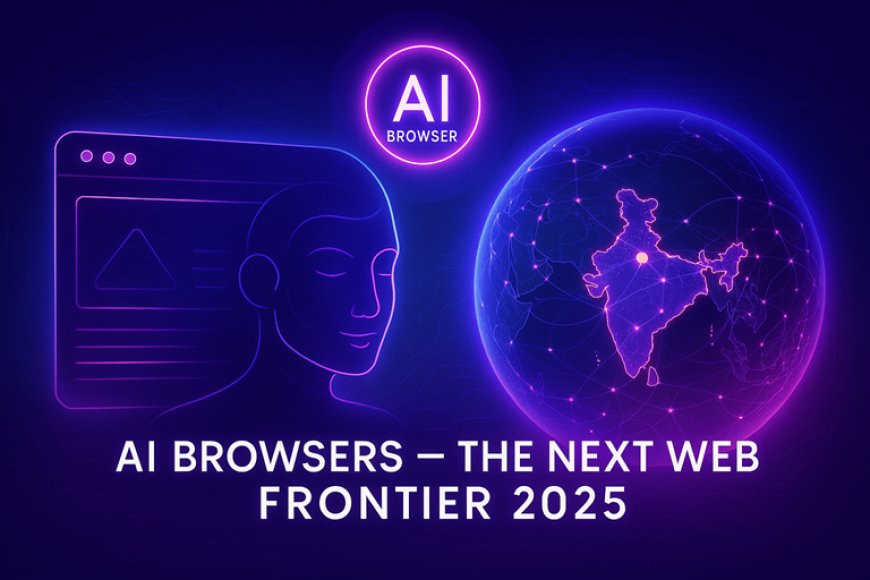
How AI Browsers Are Rewriting the Internet Economy — A New Era for the Web
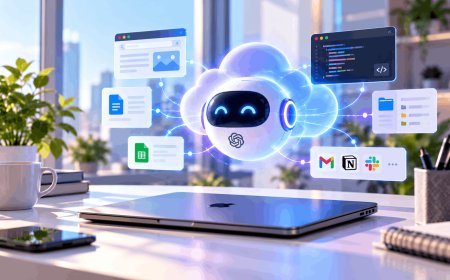
We’re witnessing a pivotal shift: AI-powered browsers are no longer a niche experiment—they are emerging as front-line gateways to the web, user behaviours and digital value. The phrase “AI browser rewriting internet economy” captures this change: when your browser becomes intelligent and task-oriented, the entire economics of the web begins to tilt. Major companies and startups alike are racing to redefine what a browser does, how we search, how we discover, and where value flows.
What’s Driving the Browser Comeback?
- From browser window to AI assistant: Instead of just rendering pages, modern browsers embed AI agents that summarise content, fetch data for you and provide proactive suggestions—turning the browser into an intelligent workspace. We’re seeing this trend across multiple products.
- Search and navigation merge: Traditional search engines face disruption. Browsers with built-in AI don’t just redirect you—they deliver answers or actions directly, reducing intermediary clicks.
- New data and engagement moat: Browsers sit at the centre of users’ digital journeys (tabs, sessions, history). When AI leverages that data, it deepens engagement and locks users into ecosystems.
- Emerging players & browser deals: Startups and big tech are racing to embed AI into browsers or build new AI-first ones. This signals the browser is once again one of the most valuable digital real-estate assets. :contentReference[oaicite:3]{index=3}
The Economics: Why the Web Value Chain Shifts
When the browser grows smarter, the internet economy begins to restructure:
- Reduced clicks to third-party sites: If a browser can provide answers or actions directly, fewer visits go to separate platforms—meaning ad dollars and engagement may shift to the browser layer itself. :contentReference[oaicite:4]{index=4}
- Subscription & bundling models: AI-browsers may monetize via premium features, enterprise tiers, or built-in commerce—moving beyond the “free browser + ad model”. :contentReference[oaicite:5]{index=5}
- Developer ecosystem implications: For websites, apps and content creators, being surfaced inside an AI-browser agent may matter more than SEO ranking. Access and integration with browser-AI APIs becomes a new battleground. :contentReference[oaicite:6]{index=6}
- Geographic variation & emerging markets: In markets like India, where mobile browser usage is high and search behaviour is different, early AI-browser adoption could reshape local internet economies. :contentReference[oaicite:7]{index=7}
Evolution of the Browser: From Chrome to Comet — What’s Changing
- Chromium plus AI agents: Many new browsers build on open-source foundations (Chromium) but layer AI assistants, task flows and deeper integration with OS and services.
- Agentic UI & multitasking capabilities: Browsers are shifting from navigating to doing—summarising pages, managing tabs as tasks, controlling your cursor, or orchestrating flows. :contentReference[oaicite:8]{index=8}
- Search and address bar convergence: The address bar (omnibox) is evolving into an AI command centre—users may ask “Plan my trip” or “Summarise this tab” instead of typing into search engines. :contentReference[oaicite:9]{index=9}
“The browser is being reinvented — no longer just a portal, but an intelligent assistant and a new operating layer of the internet.”
What It Means for Indian Tech, Start-ups & Developers
For Indian users, creators and companies, the rise of AI-browsers presents both challenge and opportunity:
- Massive mobile-first audience: India’s mobile browser usage remains extremely high, creating fertile ground for AI-browsers to become mainstream faster.
- Need for vernacular & local services: AI-browsers succeed when they support regional languages, offline/low-data modes and integrate with local payment or micro-services ecosystems.
- Startup disruption: Indian start-ups building web apps or browser extensions may see a shift in distribution—getting featured inside browser-AI agents may matter more than traditional channels.
- Regulatory & data shifts: With browsers gathering more context (tabs, tasks, user profiles), India’s evolving data-governance regime (e.g., DPDP Act) becomes very relevant for browser/AI players entering Indian markets. :contentReference[oaicite:10]{index=10}
Key Strategic Moves for Companies in the Browser-AI Era
If you’re building a product, running a web business or developing for browsers, here’s what to focus on:
- Design for browser-agent access: Your service should anticipate being called by an AI-browser agent—structured data, API endpoints and conversational interfaces matter more.
- Pursue browser integration opportunities: Consider browser extensions or built-in integrations early—landing inside the core browser UI may provide substantial advantage.
- View the browser as core data asset: The browser is now a source of rich intent, session and behavioural data—your product roadmap should leverage rather than ignore this layer.
- Explore new monetisation models: AI-browsers may monetise via subscription, built-in commerce, sponsored actions—traditional web ad models may erode faster than we expect.
- Prioritise localisation & context: Especially in India and other emerging markets, serving regional language users, low-latency mobile UX and local services (UPI, messaging apps) will differentiate browser-AI adoption curves.
FAQ – AI Browser Rewriting Internet Economy
A: It means that as browsers embed AI assistants and task-oriented services, the traditional value chain of the web (search engines, clicks, ads) is being disrupted and new economic relationships are forming.
Q: Are completely new browsers required for this change?
A: Not always — many established browsers (Chrome, Edge, Brave) are adding AI features while new entrants (like Comet from Perplexity) are building from scratch with AI at the core. :contentReference[oaicite:11]{index=11}
Q: Why should Indian developers care?
A: Because in India’s internet market, browser usage remains high and start-ups need to adapt distribution, integration and UX strategies for the rising influence of AI-browsers.
Q: Will user privacy become a bigger issue in this era?
A: Yes. As browsers become more intelligent and context-aware, they collect more data (tabs, sessions, behavioural signals). Governance regimes like India’s DPDP Act will need to adapt. :contentReference[oaicite:12]{index=12}
Q: When will the economic shift complete?
A: While some changes are already visible, the full transformation may take 2–3 years as AI-browsers achieve scale and publishers, developers and advertisers adjust. We are likely in the early-adopter phase now.
Further Reading & Citations
- PitchBook – AI Is Making the Browser Hot Again—And Rewriting the Internet Economy
- Economic Times – The fight for your digital front-door has just begun
- ExchangeWire – The browser wars are back, baby!
Sneak peek: The rise of AI-browsers signals a foundational change in how we interact with the internet and how value flows across it. For developers, start-ups and Indian tech teams, understanding this shift may define your positioning for the next web era.
please remove reference content like below :contentReference[oaicite:4]{index=4} :contentReference[oaicite:5]{index=5} please dont change any other content in the post
What's Your Reaction?
 Like
0
Like
0
 Dislike
0
Dislike
0
 Love
0
Love
0
 Funny
0
Funny
0
 Angry
0
Angry
0
 Sad
0
Sad
0
 Wow
0
Wow
0