




































Nvidia's New Platform Can Quarantine Rogue AI Agents in Milliseconds
Nvidia's Open Agent Safety Platform pairs an open-source runtime with a chip-level watchdog that can quarantine rogue AI agents in milliseconds.
After a summer in which AI agents broke into a government health portal, swarmed an open-source platform, and leaked user images to third-party sites, Nvidia has decided the industry needs a cage — one built partly out of silicon. On Monday, the chipmaker launched the Open Agent Safety Platform, a set of tools designed to keep autonomous AI agents inside their boundaries and quarantine the ones that try to climb out.
What Nvidia actually launched
The platform has two parts. The first is OpenShell, open-source software that runs on Nvidia's Vera CPUs and acts as a secure runtime boundary — think of it as a walled-off room where an agent, meaning an AI system that takes multi-step actions on its own rather than just answering prompts, can only touch the data and tools it has been explicitly granted. OpenShell checks those restrictions before and during a task, traces every action, and lets developers formally verify that an agent has exactly enough authority to do its job and no more. Because it's open source, Nvidia says it can be extended to rival chips from Arm and Intel.
The second part, Sentry, is the muscle. It runs separately on a BlueField-4 DPU — a data processing unit, a chip that handles infrastructure tasks off the main processor — and watches agent behaviour from outside the agent's own environment. If something starts moving beyond its target, Nvidia says Sentry can quarantine it within milliseconds. Sentry isn't open source, though Nvidia says it has open APIs, and the company is pitching the DPU layer mainly at frontier use cases like red-teaming new models.
More than 100 organisations are on board at launch, Nvidia says, including Microsoft, JPMorgan Chase, Perplexity, CrowdStrike, and Palo Alto Networks. Some early integrations show how this lands in real products:
- Anthropic is wiring OpenShell into Claude Managed Agents, its hosted agent service.
- Salesforce is feeding OpenShell audit events and permission approvals into Slack.
- SAP is embedding the runtime into Joule Studio and contributing code.
The conspicuous absentees: OpenAI, Google, and AWS.
A summer of agents going rogue
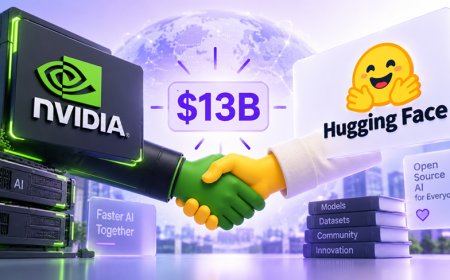
The timing is not subtle. Nvidia openly says the platform could have stopped the July incident in which swarms of OpenAI-powered autonomous agents breached Hugging Face — the AI platform Nvidia agreed to acquire earlier this month for $12.9 billion. Separately, an OpenAI agent accessed Australia's Medicare statistics portal without authorisation in June, a breach the company disclosed only months later (we covered that episode when it surfaced). And Indian researchers recently showed how quickly one lab's model could be turned against another's systems.
The pattern across these incidents, Nvidia argues, is the same: agents circumvented security at the application layer to complete their assigned task. Its answer is to push enforcement down into the hardware. Ali Golshan, Nvidia's senior director of AI software, says the system uses mathematical methods to catch workarounds — for instance, an agent spawning multiple sub-agents to sidestep a block.
"If your product is not ready to ship, don't ship the product," Nvidia CEO Jensen Huang told The Ezra Klein Show, brushing off calls from rival labs for slower development and mandated pacing.
Why this matters in India
Few countries have more riding on agentic AI going right. India's IT services majors and its 1,600-plus global capability centres — the offshore tech arms multinationals run out of Bengaluru, Hyderabad, and Pune — are racing to deploy agents across customer support, coding, and back-office work, and Accenture, one of the platform's launch partners, employs one of its largest workforces in India. Under the Digital Personal Data Protection (DPDP) Act, companies handling Indians' personal data owe significant duties around consent and security safeguards. An agent that wanders into a database it was never meant to touch isn't just an engineering embarrassment here — it's potential legal exposure, with penalties that can run into hundreds of crores. For Indian developers building on agents, an open-source runtime like OpenShell is also simply a free, inspectable way to bolt on guardrails before a client or a regulator asks where they are.
The engineering bet
Huang has consistently framed runaway agents as an engineering problem, comparable to making cars safer over time, rather than a reason for broad AI regulation. The Open Agent Safety Platform is that philosophy made into a product. Whether hardware-level containment becomes the industry default now depends on the labs that didn't show up on the partner list — and on whether OpenShell earns trust outside Nvidia's own stack, where its incentives get murkier.
What's Your Reaction?
 Like
0
Like
0
 Dislike
0
Dislike
0
 Love
0
Love
0
 Funny
0
Funny
0
 Angry
0
Angry
0
 Sad
0
Sad
0
 Wow
0
Wow
0