































Microsoft's Surface Laptop Ultra Runs Nvidia's RTX Spark Chip
Microsoft's $2,599 Surface Laptop Ultra runs Nvidia's new RTX Spark AI chip, signaling a shift from cloud AI to powerful on-device compute.

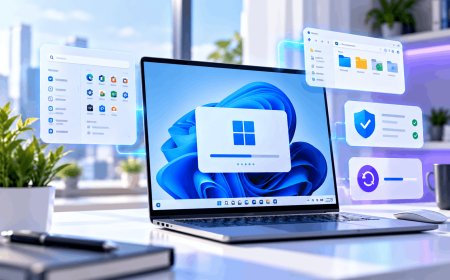
Microsoft just put a real price tag on its boldest laptop in years: a machine built to run AI models that, until recently, needed a server rack. The Surface Laptop Ultra, unveiled at Microsoft's first major Windows event in two years, starts at $2,599.99 and begins shipping October 16.
What's actually new here
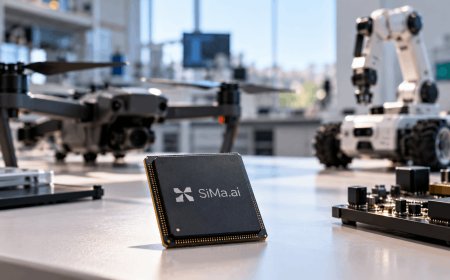
The headline spec isn't the screen or the battery — it's the chip. The base Surface Laptop Ultra runs on Nvidia's new RTX Spark, a system-on-chip (SoC), meaning the CPU and GPU are fused onto one piece of silicon instead of being separate components wired together. That matters because it lets a laptop share one large pool of memory between the processor and the graphics chip, a setup called unified memory, instead of splitting a smaller amount between the two. The base configuration pairs an 18-core Arm CPU with 5,120 Blackwell-generation CUDA cores and 24GB of that shared memory. Spend more, and you get up to 128GB of unified memory, a 20-core CPU, and a 6,144-core GPU — configurations priced near $5,899.99.
That much memory on a single chip is the point. Large AI models are usually too big to run on a laptop's own hardware, so most "AI features" on consumer devices are really just a thin app sending your request to a cloud server. A unified-memory setup this large can hold and run much bigger models locally, without that round trip.
Why Nvidia shared the stage
Alongside the laptop, Microsoft also detailed the Surface RTX Spark Dev Box, a $6,000 desktop-sized machine aimed squarely at developers building and testing AI models above 120 billion parameters before pushing them to the cloud. Nvidia CEO Jensen Huang joined Satya Nadella on stage for the announcement, framing it as a bet on the PC itself rather than the browser tab.
"The personal computer is the ultimate tool, it's my ultimate tool, and for a whole generation of people, it's our ultimate tool," Huang said at the event.
Asus, Dell, HP, Lenovo and MSI are all expected to ship their own RTX Spark machines this fall, with Acer and Gigabyte to follow — so the Surface Laptop Ultra is really the first entrant in a wider category Nvidia and its partners are trying to establish, not a one-off.
What it means for Indian buyers and developers
The Surface Laptop Ultra is already listed on Indian retail trackers at roughly ₹2,49,999, tagged "upcoming" with no confirmed launch date from Microsoft India yet — a price that, after the usual import duties and GST markup on premium hardware, sits well above what most Indian developers or startups would casually expense. But the underlying shift matters more than this one SKU. India's AI startups have long leaned on rented cloud GPUs, partly because buying high-end AI hardware outright was never cost-effective and partly because data often has to leave the laptop to reach that compute. A machine that can run a serious model locally changes that calculus for anyone building AI products under India's data localisation expectations, including obligations under the DPDP Act that push companies to think carefully about where personal data actually gets processed. It won't replace cloud training runs, but for inference, prototyping, or handling sensitive data without shipping it to a third-party server, on-device compute this capable is a genuinely new option for Indian teams — once the price comes down from flagship-laptop territory.
The bigger shift
- Microsoft hadn't held a dedicated Windows hardware event in roughly two years — this was a statement, not a routine refresh.
- Nvidia is positioning RTX Spark as a new tier between consumer laptops and its DGX workstation line, which starts near $7,000.
- Multiple PC makers are entering the same category within weeks of each other, which usually signals a platform push, not a niche experiment.
The real test isn't the keynote demos — it's whether developers actually start building for local AI hardware instead of treating it as a backup when the cloud bill gets too high. If that happens, the next round of "AI laptops" won't be measured by how well they run a chatbot, but by how much of the model they can hold without ever touching the internet.
What's Your Reaction?
 Like
0
Like
0
 Dislike
0
Dislike
0
 Love
0
Love
0
 Funny
0
Funny
0
 Angry
0
Angry
0
 Sad
0
Sad
0
 Wow
0
Wow
0