


































How Does Active Noise Cancellation Actually Work?
Active noise cancellation uses opposing sound waves to quiet noise around you. How it works, and what to check before buying ANC earbuds in India.
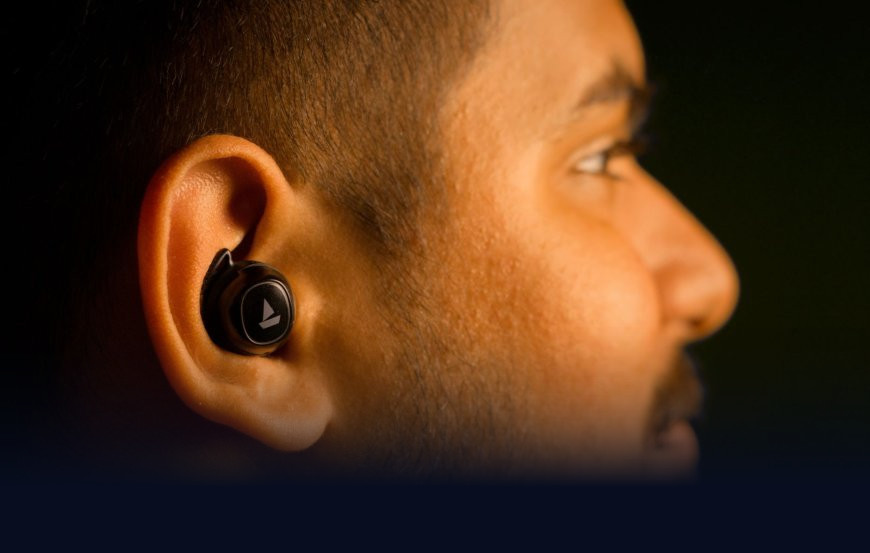
Put on a pair of ANC earbuds on a Mumbai local train, flip the switch, and the clatter of the tracks drops to a dull hum within a second. No foam, no seal, no magic — just a tiny microphone and a speaker working against you in the most helpful way possible.
Fighting Sound With Sound
Sound travels as a wave — air pressure rising and falling in a pattern. Active Noise Cancellation, or ANC, works by having a microphone on your earbud or headphone pick up the incoming noise, then generating a second wave that's the exact mirror image of it — peak where the noise has a dip, dip where the noise has a peak. When the two waves meet, they cancel each other out. Engineers call this "destructive interference," which sounds dramatic but just means the waves erase each other before they reach your eardrum.
This is different from passive noise isolation, which is just a physical seal — foam tips or an over-ear cushion blocking sound the old-fashioned way, like earplugs. Most good headphones use both: a tight passive seal to handle high-frequency sounds like voices and keyboard clatter, and active cancellation layered on top to deal with low, steady rumble — engine drones, AC hum, the whoosh of a flight.
Why ANC Is Great at Engines and Bad at Chatter
This is the part most marketing copy skips. ANC is genuinely effective against continuous, low-frequency noise — the steady growl of a diesel bus, a window AC unit, an airplane cabin. It's far less effective against sudden, high-pitched, or irregular sounds, like a baby crying, a horn honking, or someone talking next to you. The electronics simply can't react fast enough to track a constantly changing sound and generate an accurate opposite wave for it in real time.
Most earbuds actually combine two microphone setups to do this job: a feedforward mic on the outside of the earbud that samples the noise before it reaches your ear, and a feedback mic inside the ear canal that checks what you're actually hearing and corrects for it on the fly. Earbuds that use both are called "hybrid ANC," and they're usually noticeably better than single-mic designs — which is one thing worth checking before you buy, beyond just the ANC number printed on the box.
The best noise cancellation isn't the one that sounds most silent in a quiet showroom — it's the one that still works on a crowded road, which is a much harder test.
The India Angle: ANC Has Gotten Genuinely Affordable Here
Five years ago, ANC was a feature you paid a premium for — Sony and Bose flagships running ₹20,000 and up. That's changed fast in the Indian market. Brands like boAt, Noise, and Nothing now ship ANC earbuds well under ₹3,000, and OnePlus and realme have pushed it into the ₹2,000–₹5,000 band too. The chips that do the real-time wave cancellation have gotten cheap enough that ANC is now a checkbox feature rather than a luxury one — which matters a lot in a country where daily commutes mean autos, metros, and traffic horns rather than quiet suburban drives.
That said, cheaper ANC implementations usually mean fewer microphones and simpler processing, so the cancellation is shallower and the "ANC hiss" — a faint static you hear when it's switched on — tends to be more noticeable on budget models. If you're commuting in heavy traffic noise daily, it's worth trying a pair in person or checking return policies before committing, since how "good" ANC feels is genuinely subjective and ear-fit dependent.
What to Actually Check Before Buying ANC Earbuds
- Hybrid vs single-mic ANC — hybrid (feedforward + feedback) generally performs better in real-world, unpredictable noise.
- Noise cancellation depth in dB — brands often quote this, but treat it as a rough indicator, not a guarantee, since test conditions vary.
- Ear-tip fit — a poor physical seal undermines ANC entirely, since passive isolation does a lot of the early filtering work.
- Battery drain with ANC on — cancellation runs extra processing constantly, and can cut playback time noticeably, especially on budget earbuds.
- Transparency mode — the reverse of ANC, letting outside sound in deliberately; useful for crossing Indian streets safely without pulling an earbud out.
None of this means you need the most expensive pair on the shelf. ANC quality has less to do with price than with how well a brand has tuned its microphones and software for real-world noise — which is exactly why it's worth testing a pair with actual street or train noise around you, not just in a silent store, before you decide it's the one.
What's Your Reaction?
 Like
0
 Dislike
0
 Love
0
 Funny
0
 Angry
0
 Sad
0
 Wow
0