





















France Blames Iran for Hack That Set Supermarket Fridges on Fire
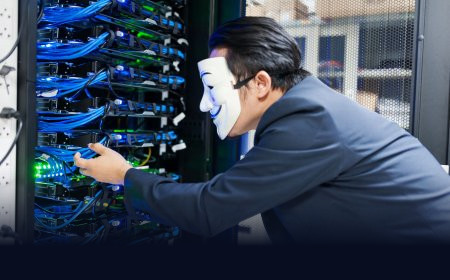
France says Iran's Revolutionary Guards hacked 700 supermarket refrigeration systems, sparking fires — a new kind of sabotage attack.
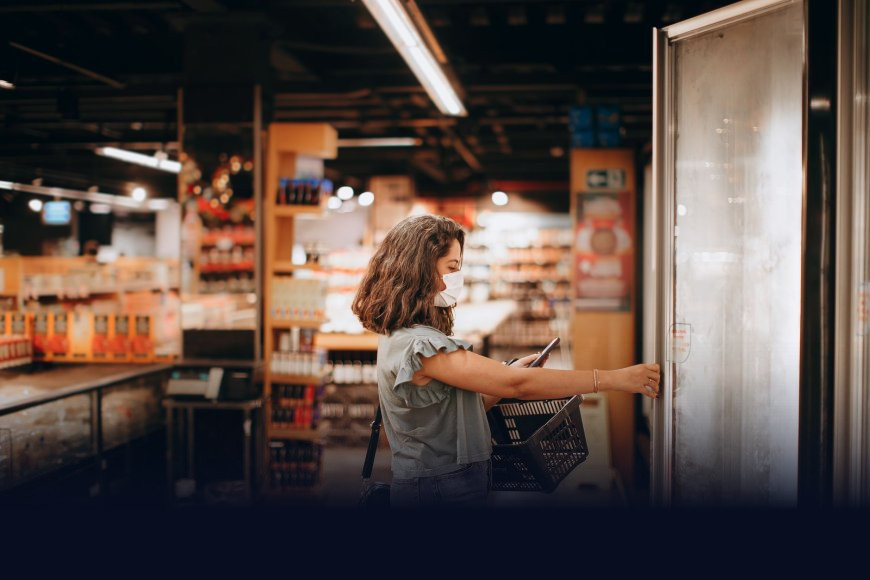
On the night of October 11, refrigeration units inside roughly 700 French supermarkets stopped behaving like refrigeration units. Someone had reached into their control panels from thousands of kilometres away and told them to defrost. Temperatures climbed, food spoiled, and in at least 15 stores the overheating electronics caught fire.
A hack that targeted machines, not data
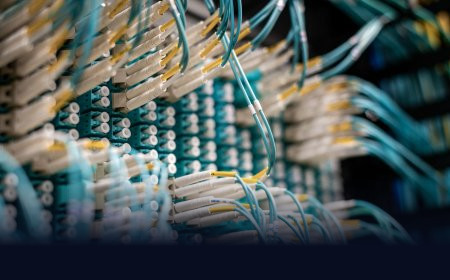
This wasn't a ransomware attack or a data breach in the usual sense, where criminals lock up files or steal customer records for money. The target here was industrial control systems — the networked boxes that regulate temperature, humidity and timing in commercial refrigeration, often installed with factory-default passwords and rarely patched because nobody thinks of a supermarket fridge as a computer. Investigators say the intrusion reached the controllers directly and altered defrost cycles to push temperatures well past safe limits, long enough to spoil stock and, in the worst cases, overheat equipment to the point of combustion.
Why France is pointing at Tehran
French authorities have named Shahid Kaveh, a cyber unit they say is linked to Iran's Islamic Revolutionary Guard Corps, or IRGC — the branch of Iran's military that runs its own intelligence and paramilitary operations separate from the regular armed forces. Paris has opened a criminal investigation, summoned Iran's ambassador, and says it will push the European Union for fresh sanctions. Reuters has reported that Microsoft's own threat-intelligence team had privately linked Iran to the attack roughly two weeks before the French government said so in public.
French Foreign Minister Jean-Noël Barrot described it as "the first large-scale cyberattack aimed at sabotage on our national territory."
Iran hasn't directly addressed the specifics of the accusation. What stands out is the framing on both sides: France isn't calling this espionage or theft, it's calling it sabotage — an attack meant purely to cause physical damage and disruption, with no financial or data-theft motive attached.
What made it possible
- Refrigeration controllers connected to the internet for remote monitoring, often without network segmentation separating them from safety-critical functions
- Default or weak credentials that were never rotated after installation
- No real-time alerting when a controller's settings are changed remotely instead of by a technician on site
- A retail sector that treats refrigeration as plumbing, not as IT infrastructure needing the same scrutiny as a point-of-sale system
None of that is unique to France. It describes most commercial refrigeration fleets anywhere in the world, including in India.
The India angle
India's retail and quick-commerce boom runs on exactly this kind of equipment — cold storage for grocery delivery, dark stores and cloud kitchens, increasingly fitted with IoT (internet-connected) sensors so chains can monitor temperature remotely instead of sending someone to check a dial by hand. That convenience is also the attack surface. CERT-In, India's nodal cybersecurity agency, has repeatedly flagged exposed industrial control systems and IoT devices in its advisories, and the Critical Information Infrastructure framework under India's IT Act currently leans toward power, banking and telecom — retail cold chains aren't treated as critical infrastructure the way this incident suggests they probably should be. A similar intrusion into a major Indian supermarket chain or a quick-commerce dark-store network wouldn't just mean spoiled vegetables; at scale, in cities that now run on 10-minute delivery, it could mean real supply disruption.
The bigger shift
Cyberattacks used to mostly steal things — money, data, credentials. What France is describing is a state-linked group using a hack purely to break physical equipment and unsettle people, not all that different in intent from sabotaging a transformer, just cheaper to pull off and harder to trace back to a government. If that becomes a template rather than an outlier, the next target doesn't have to be a supermarket. It just has to be something running an internet-connected controller that nobody thought to secure, because nobody thought of it as a computer in the first place.
What's Your Reaction?
 Like
0
 Dislike
0
 Love
0
 Funny
0
 Angry
0
 Sad
0
 Wow
0