































IBM's Nighthawk r3 Quantum Chip Packs 520 Qubits for a 2027 Leap
IBM's new Nighthawk r3 chip runs 10,000 operations on 520 qubits, with a 1,040-qubit system planned for 2027.
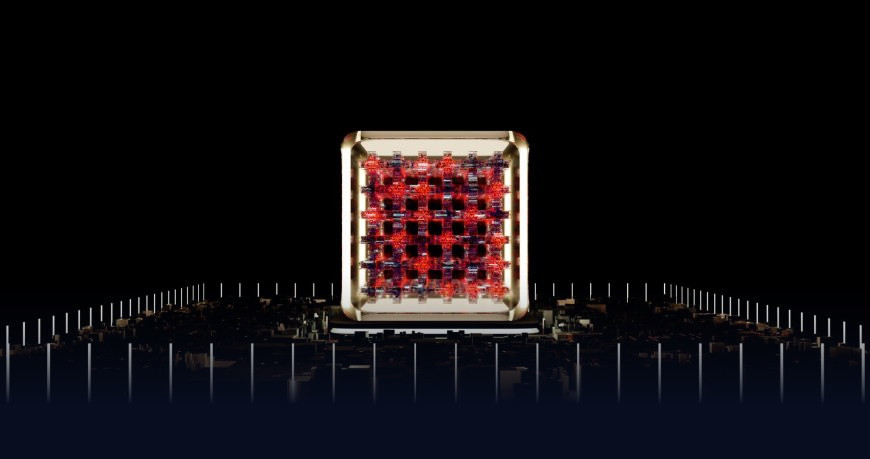
IBM just put a hard number on how far its quantum hardware has moved in a year: a new chip called Nighthawk r3 that can hold a calculation together for 10,000 operations before noise wrecks the result, running across 520 qubits. A year ago, its sibling chip managed roughly 7,500 operations on just 120 qubits.
What actually changed
To understand why that matters, it helps to know what a qubit is. A classical computer bit is a 0 or a 1. A qubit — quantum computing's basic unit of information, usually a tiny superconducting circuit cooled close to absolute zero — can hold a mix of both at once, which is what lets a quantum processor explore many possible answers in parallel instead of checking them one by one. The catch has always been that qubits are fragile: the longer and more complex a calculation gets, the more likely outside noise corrupts it before you get a useful answer. That's what IBM means by "operations" here — it's effectively a measure of how long and complex a calculation the chip can run before it falls apart.
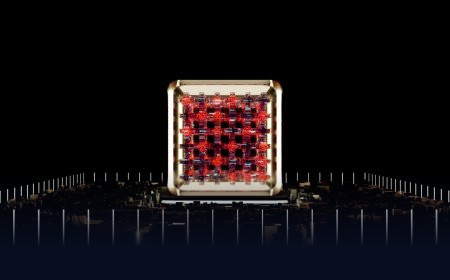
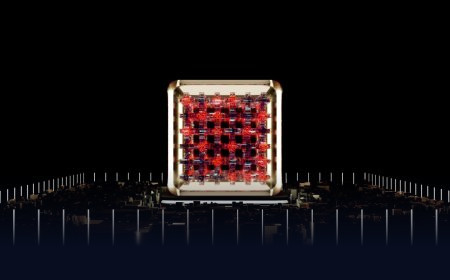
Nighthawk r3 keeps the same square-lattice chip layout IBM introduced last year, but packs in 2,034 physical qubits in total (most of them used for error correction rather than direct computation) and adds ten new chip-to-chip connectors, which IBM calls "l-couplers." Those connectors are the real headline: they're built to link separate Nighthawk chips into one larger machine, rather than IBM having to cram more qubits onto a single piece of silicon, which gets exponentially harder as chips grow.
The 2027 bet
IBM's roadmap now calls for wiring two Nighthawk r3 chips together through those l-couplers to create a single 1,040-qubit system by 2027. If that works, it's less a chip upgrade than a proof that IBM's whole modular strategy — bolting smaller quantum processors together like Lego instead of building one giant chip — actually scales outside a lab demo.
"Useful quantum computing hinges on whether results can be delivered with accuracy and speed, both are fundamental," said Jay Gambetta, Director of IBM Research.
Worth being precise about what IBM is not claiming: this isn't "quantum advantage" — the point at which a quantum computer reliably beats the best classical supercomputer on a useful real-world problem. IBM's own advantage experiments so far have run on an older chip family, and r3 is explicitly a stepping stone toward IBM's separate goal of a fault-tolerant quantum computer by 2029.
Why this isn't just an IBM story
Quantum computing can feel like a foreign subject for Indian readers, but the pieces are already here. The government's National Quantum Mission has put roughly ₹6,000 crore behind building domestic quantum hardware, talent and startups over the next several years, and Bengaluru got its own hands-on quantum hub this October when MIT Bengaluru switched on a 25-qubit system for researchers and students to actually touch. Indian startups are also building the defensive side of this story — QNu Labs, for instance, raised ₹200 crore this year to build encryption that's designed to survive a future quantum computer breaking today's standard cryptography.
That defensive angle is the one that should actually worry Indian banks, telecom operators and anyone handling sensitive citizen data under the DPDP Act. A sufficiently powerful quantum computer could, in theory, crack the encryption that currently protects online banking, UPI transactions and government databases. IBM isn't there yet — nobody is — but every jump like Nighthawk r3 shortens that runway, which is exactly why regulators and enterprises in India are being nudged toward "post-quantum" encryption migration years before it's strictly necessary.
- Nighthawk r3: 520 programmable qubits, 10,000 operations, 2,034 total physical qubits
- Predecessor (Nighthawk r2): 120 qubits, roughly 7,500 operations
- 2027 target: two Nighthawk r3 chips linked into a single 1,040-qubit system
- IBM's separate long-term goal: a fault-tolerant quantum computer by 2029
None of this changes anything about the phone in your pocket tomorrow. But the gap between "quantum computing is a research curiosity" and "quantum computing is a planning assumption for anyone doing cryptography" is closing faster than most people tracking it expected a few years ago — and that's a timeline India's own quantum and security push is now racing against.
What's Your Reaction?
 Like
0
 Dislike
0
 Love
0
 Funny
0
 Angry
0
 Sad
0
 Wow
0