

































China Blocks SoftBank's $5.4B Bid for ABB's Robotics Unit
China has blocked SoftBank's $5.4 billion deal to buy ABB's robotics unit, its second major tech takeover stopped this year.
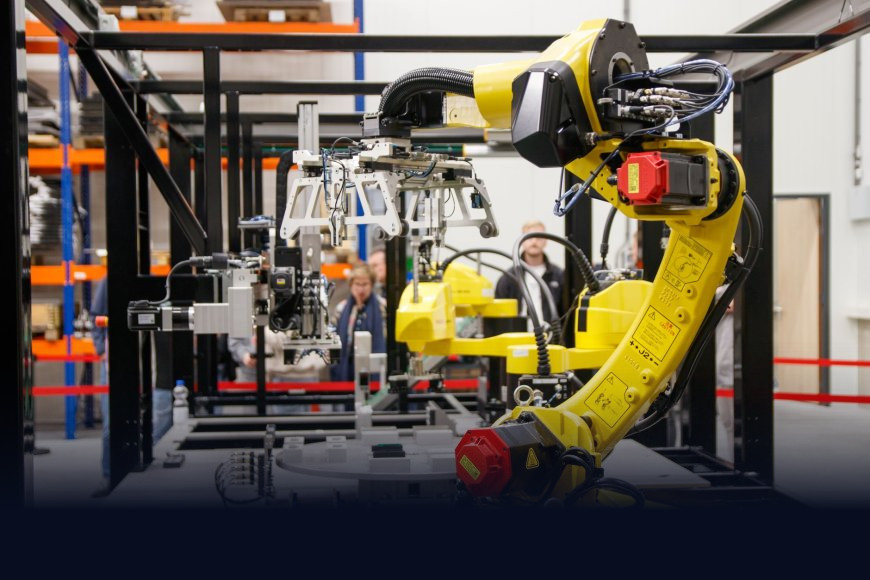
SoftBank spent more than a year lining up a $5.4 billion takeover of one of the world's biggest industrial robotics businesses. China just told it no — and didn't bother with a public explanation beyond "national security."
What got blocked, and why it's a big deal
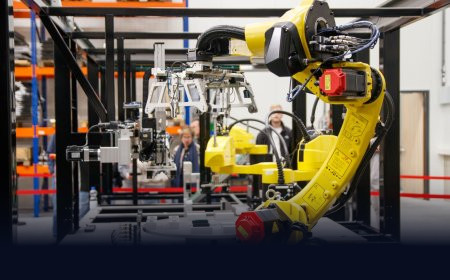
Back in October 2025, Swiss-Swedish engineering giant ABB agreed to sell its entire robotics division to SoftBank for roughly $5.4 billion. ABB had originally planned to spin the unit off as a separately listed company, but its CEO decided a straight sale to SoftBank put cash in hand faster. For Masayoshi Son, SoftBank's chairman, it was another piece of what he calls "physical AI" — his bet that the next phase of artificial intelligence isn't chatbots, it's machines that can actually move, assemble, and build things in the real world.
That plan hit a wall on November 5, when Chinese regulators formally blocked the deal under the country's foreign investment security review process — the mechanism China uses to vet whether a transaction involving foreign capital could threaten its strategic industries or data security. The reasoning cited: ABB's robotics arm is deeply embedded in China, which accounts for close to a third of its global robotics revenue, and regulators are reportedly uneasy about manufacturing know-how and robotics data ending up under Japanese ownership.
Not an isolated move
This is the second time this year China has stepped in to unwind a major tech acquisition. Earlier in 2026, it ordered Meta to reverse course on its acquisition of Manus, a Chinese AI agent startup. Put the two together and a pattern starts to show:
- Foreign buyers courting Chinese AI or robotics assets are getting slower, harder reviews, not rubber stamps.
- Deals that look fine on paper to antitrust regulators elsewhere can still die at the national-security stage in Beijing.
- Companies with large China exposure, like ABB, now have to treat Chinese regulatory approval as a genuine deal-breaker risk, not a formality.
Neither ABB nor SoftBank has declared the deal dead. Both are reportedly still exploring whether some restructured version of the transaction could pass muster, which tells you how much is riding on keeping access to that market.
Blocking this deal was never really about robots. It was about deciding, in advance, who gets to own the next generation of automation — and China just made clear it isn't handing that answer to Tokyo.
Why Indian manufacturers and robotics startups should care
India has actually been on the other side of this exact playbook. Since 2020, Press Note 3 has required any foreign direct investment (FDI) from a country that shares a land border with India — in practice, overwhelmingly aimed at China — to clear a government approval process before the money can come in. It was introduced after border tensions flared, explicitly to stop opportunistic stakes in Indian companies. So when Beijing uses its own version of that screen to keep a Japanese conglomerate out of its robotics supply chain, Indian policymakers and founders are watching a mirror image of a tool they already use themselves.
There's a more direct business angle too. India's factories, from auto component makers to electronics assemblers under the government's production-linked incentive (PLI) schemes, lean heavily on exactly the kind of industrial robotic arms ABB builds. If global robotics majors start treating China as a harder, slower market to operate in, that reshuffling of supply chains and manufacturing partnerships is an opening — not a guarantee, but a real one — for India to pitch itself as the alternative base for assembly-line automation investment that might otherwise have gone through a Chinese subsidiary.
The bigger lesson for any Indian startup or investor chasing a cross-border tech deal is simpler: regulatory risk isn't just about your own government anymore. A deal can clear every antitrust hurdle in two continents and still get stopped cold by a regulator in a third country that was never even a direct party to the negotiation. That's the world cross-border tech M&A operates in now, and it isn't changing back.
What's Your Reaction?
 Like
0
 Dislike
0
 Love
0
 Funny
0
 Angry
0
 Sad
0
 Wow
0