

































Gemini 4 Carbon's AI Swarm Mode Arrives — Price Doubles Dec 1
Google's Gemini 4 Carbon now runs teams of AI coding agents via a new /swarm mode, but its API price doubles for everyone on December 1.
Four days from now, every rupee a developer spends calling Google's newest AI model is about to buy half as much. Gemini 4 Carbon's introductory pricing expires on December 1st, and what replaces it is double the cost per token — the small chunk of text an AI model reads or writes, and the unit Google bills by.
From Security Lab to Everyone's Terminal
Carbon didn't start out as a model anyone could just sign up for. When Google first introduced it in late October, it went straight to a few hundred vetted cybersecurity teams through something called the Fairwind Program — Code24 covered that restricted launch when it happened. Since November 10th, that's changed. Carbon is now available through the Gemini API — the interface other apps and services use to plug into the model, rather than people typing into a chat window — in Google AI Studio and through Gemini for Business, open to any paying developer or enterprise willing to put in a card. Google is calling it its strongest model yet, with a particular edge in long, multi-step coding tasks — the kind that used to take a human engineer an afternoon.
Swarm Mode: Agents That Check Each Other's Work
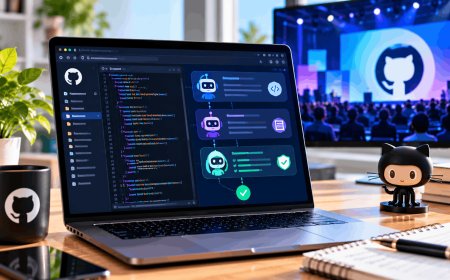
The more interesting change isn't the model itself — it's what Google built around it. Antigravity, Google's AI coding assistant, just added a preview feature called /swarm. Instead of one AI assistant working through your request line by line, a coordinator agent splits the job across several named workers, each one operating in its own isolated copy of the codebase — a git worktree, in developer terms — so they don't trample each other's edits. On top of that sit separate "adversarial" agents whose entire job is to run tests against the others' output and argue with it before anything ships.
Google says its own engineers ran swarms for five weeks on real work — large multi-package migrations, bugs that span several subsystems, that kind of thing — before shipping the feature. You can watch the whole operation unfold in a side panel inside the app, or pop it into a full-screen view with Alt+S.
- A coordinator agent breaks a coding task into parts and assigns them to named workers.
- Each worker runs in its own isolated copy of the project so changes don't collide.
- Separate verifier agents test and challenge the work before it's accepted.
- Cheaper, faster models can be assigned to routine edits while Carbon handles coordination and review.
Running five AI agents in parallel isn't five times the insight — it's five times the token bill, and starting December 1st, that bill costs twice as much per token on top.
The Price Change Developers Need to Plan Around
Here's the part that actually affects your monthly invoice. Carbon's introductory API rate — $2 per million input tokens, $10 per million output tokens, matching what Google charged for its previous model, Argon — holds only until December 1st. After that, it doubles to $4 and $20. Reasoning or "thinking" tokens, the extra processing an AI does internally before it answers, get billed at the higher output rate too, which matters a lot once you're running several agents that each think before they act. A swarm of agents debating a migration plan can rack up those thinking tokens fast, in a way a single chatbot query never would.
What This Means for India
India has one of the fastest-growing pools of developers building AI agents into real products, from customer-support bots to coding assistants sold to clients abroad — and most of that work still runs on someone else's API meter. A doubling of per-token cost lands hardest on bootstrapped startups and the IT services firms that bill clients in dollars but pay compute costs the moment they're incurred; margins that looked fine in November can look thin in December if nobody adjusted pricing models in time. For individual developers, Google's consumer AI Ultra plan — which includes access to Carbon in the Gemini app — is already priced at roughly ₹6,500 a month in India, which is real money for a student or solo builder deciding whether swarm-style agent coding is worth the subscription.
None of this requires new regulation to matter — it's simply a cost curve every Indian team experimenting with agentic coding tools needs to model before December 1st, not after the first invoice lands.
The Real Shift
Multi-agent coding tools like swarm mode are genuinely useful — having a model test and challenge its own output before a human sees it is a real improvement over trusting one pass blind. But the economics cut the other way from how most teams think about AI pricing. A single assistant answering one question at a time is cheap and forgiving. A swarm of coordinators, workers, and verifiers, all billed per token and all about to get twice as expensive, is a very different budget line — and the teams that win with this stuff will be the ones who treat it like infrastructure spend, not a chat subscription.
What's Your Reaction?
 Like
0
 Dislike
0
 Love
0
 Funny
0
 Angry
0
 Sad
0
 Wow
0