
























Bharat Semi Raises $24M for AI Image Sensors, Eyes 70% Cost Cut
New Delhi's Bharat Semi raised $24M to build AI image sensors that could cut camera system costs 70%, as India bets big on chip design.
A New Delhi chip-design startup just picked up a bigger check than most Indian hardware founders see in a decade — and it wants to spend it proving that one chip can do the job of three.
What Bharat Semi is actually building
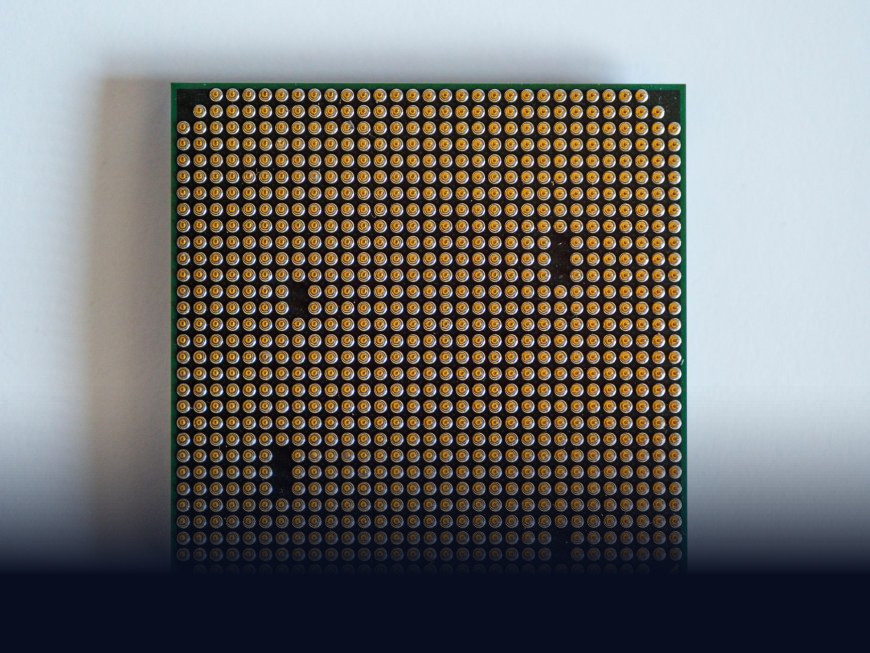
Bharat Semi, co-founded in late 2021 by Vrinda Kapoor and Vinayak Dalmia, builds image sensors with the camera, the image processor, and the AI brain all stitched onto a single chip. Today, a typical smart camera — the kind bolted onto a factory robot arm or flown on a crop-monitoring drone — needs three separate components wired together: an image sensor to capture light, an image signal processor (ISP) to clean up the picture, and a system-on-chip (SoC) to run whatever AI model decides what's actually in the frame. Bharat Semi's pitch is to collapse all three into one programmable chip.
That matters because every extra chip in a device adds cost, power draw, and a few more millimetres of board space — not a small thing when you're trying to fit a camera into a drone at scale, where every gram and milliwatt is budgeted.
The money, and who's behind it
The startup closed a $24 million seed round — early-stage funding that typically arrives before a company has a finished, sellable product — led by Info Edge Group, South Park Commons, and Indus Bridge Ventures, with India's Micromax also participating, TechCrunch reported this month. It's an all-equity round, and Bharat Semi hasn't disclosed a valuation. The money is earmarked for growing the engineering team and finishing development on its first commercial sensors, which the company is targeting for production in 2027.
Co-founder Vrinda Kapoor has pitched the integrated design as a way to cut system costs by at least 70% compared with stitching together a separate sensor, ISP, and SoC — the kind of saving that could decide whether a camera-based AI product is commercially viable at all.
Bharat Semi says it already has design wins lined up with General Atomics and Kaynes Semicon, though the chips themselves are still at the prototype stage. The company plans to stay fabless, meaning it designs the silicon but pays an outside foundry to actually manufacture it, rather than building and running its own fabrication plant.
Why this lands differently in India
India has spent the last two years trying to go from "chip consumer" to "chip designer," and Bharat Semi is a decent test case for whether that shift is actually happening. The India Semiconductor Mission 2.0, backed by $13.5 billion in government incentives, exists precisely to pull this kind of design talent and capital toward Indian soil instead of letting it drift to the US or Taiwan. A $24 million seed round for a chip-design startup — as opposed to a components distributor or another app — is still rare enough in India that the ecosystem watches each one closely.
- It signals to Indian engineering graduates that chip design, not just chip assembly or testing, can be a viable career built at home.
- It adds to a small but growing cluster of India-based hardware-AI bets — Bengaluru's Simplismart closed its own funding round for AI inference chips just weeks earlier.
- If Bharat Semi's sensors actually ship at a 70% cost cut, it could make camera-based AI cheaper to deploy across price-sensitive Indian markets — traffic monitoring, warehouse automation — and not just for export customers abroad.
The part that's still unproven
None of this is production yet. Bharat Semi is promising silicon by 2027, which in chip-design years is a long runway — plenty of time for a well-funded rival, or a cost overrun, to change the picture. Staying fabless also means the company's timeline depends on a foundry partner's capacity and priorities, not just its own execution. Deep-tech hardware bets like this one tend to live or die on whether the second chip ships as promised, not on how good the first seed round sounded.
What's genuinely interesting here isn't the dollar figure — $24 million is a modest seed round by Silicon Valley standards. It's that a growing slice of Indian venture money is now willing to fund multi-year silicon bets instead of the next 12-month app cycle. Whether that patience survives the first disappointing earnings call is the thing actually worth watching.
What's Your Reaction?
 Like
0
 Dislike
0
 Love
0
 Funny
0
 Angry
0
 Sad
0
 Wow
0