



































Optimizely Hack Hits 178 Websites: Zoom, CNN, BBC, HSBC Exposed
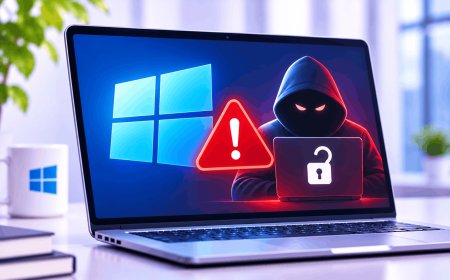
A flaw in Optimizely's platform let attackers inject malware into 178 companies' websites, including Zoom, CNN, BBC and HSBC, for hours.

For about 17 hours this month, visiting Zoom, the BBC, CNN, HSBC or Salesforce's websites meant your browser might quietly run code that had nothing to do with any of those companies. None of them got hacked directly. The company that did was a tool almost all of them trusted without a second thought.
One signup flaw, 178 companies exposed
The company at the center of this is Optimizely, a web-experimentation and personalization platform that thousands of businesses plug into their sites to run A/B tests and tweak what visitors see. Researcher Scott Helme, founder of the security firm Report URI, found that attackers had exploited a flaw in Optimizely's own signup flow to get write access to a part of its system called a "Project JavaScript field" — essentially a code snippet that Optimizely serves directly from its own content delivery network (a CDN, the network of servers that pushes a website's files to visitors quickly) straight into the websites of its customers.
That matters because none of the 178 affected organizations had to be breached themselves. Their sites simply loaded a script from Optimizely like they always had, except this time the script had been tampered with at the source. Helme's team confirmed 178 organizations were affected, including Zoom, the BBC, CNN, Fox News, Salesforce, GitLab, IKEA, HSBC and Equifax — and cautioned the real number could be higher, since that count reflects what was directly observed, not necessarily every victim.
What the malicious code actually did
Once loaded, the injected script reportedly swapped out cryptocurrency wallet addresses shown on pages, ran a card skimmer (hidden code that silently copies payment details as a visitor types them into a checkout form) on e-commerce checkouts, and pushed exploit kits aimed at older iPhones. None of this required a visitor to click anything suspicious — the malicious code rode in on a script the site owner had already approved.
"Organizations allowed a third party to deliver executable code into their customers' browsers, and that trust was exploited," says Chris Nyhuis, CEO of the security firm Vigilant.
That line is really the whole story. A similar logic played out earlier this year when a poisoned npm package slipped malware into software builds through a dependency developers trusted by default. Supply-chain attacks like this one keep succeeding for the same reason: nobody audits the tools they've already decided to trust.
Why Indian businesses should care, not just read about it
This isn't a story that stays overseas. HSBC and Zoom both have large user bases in India, and Salesforce is one of the most widely deployed CRM platforms among Indian enterprises, from banks to D2C startups. A growing number of Indian e-commerce and fintech companies also run the same category of tool Optimizely sells — on-site personalization and experimentation widgets — to customize what shoppers or app users see. Every one of those integrations is a line of code running with the same level of trust Optimizely's customers extended, and the same blind spot.
Under India's Digital Personal Data Protection (DPDP) Act, a company that processes personal data is still on the hook for a breach even when the actual flaw sat inside a vendor's system, not its own. CERT-In has pushed similar warnings about third-party script risk for years. If an Indian bank, fintech, or retailer was running an affected Optimizely snippet during that window, the resulting data exposure is their notification headache to deal with, regardless of whose code caused it.
A few practical takeaways security teams are repeating after this one:
- Audit every third-party script your site loads directly from an external domain, not just the ones your developers added recently
- Use Subresource Integrity (SRI) tags where possible, so a browser refuses to run a script if its content changes unexpectedly
- Monitor outbound network calls from your own site for connections to unfamiliar domains
- Treat vendor security incidents as your incident too, since the DPDP Act and most global privacy laws don't distinguish between "our bug" and "their bug"
The uncomfortable part
Optimizely hasn't published its own total customer count to compare against the 178 confirmed organizations, which means nobody outside the company actually knows what share of its customer base got touched. That ambiguity is becoming a pattern with these vendor-level incidents — the same shape showed up in the Salesforce cloud breach reported earlier this year, where Salesforce itself turns up again, this time as a victim rather than the platform at fault.
The lesson isn't that Optimizely was careless, though its signup flow clearly needed better safeguards. It's that the web runs on an enormous, invisible layer of third-party scripts that almost nobody reviews line by line, and every business that embeds one is quietly vouching for code they didn't write and can't see change in real time.
What's Your Reaction?
 Like
0
 Dislike
0
 Love
0
 Funny
0
 Angry
0
 Sad
0
 Wow
0