






















Nvidia's GR00T 2 Teaches Robots to Learn From Human Video
Nvidia's new GR00T 2 model trains robots on human video instead of costly robot fleets, and gives away 100,000 hours of footage free.
Teaching a robot arm to line a lab funnel with filter paper and wet it just right used to mean thousands of trial-and-error runs inside a simulator. Nvidia just showed a two-armed robot learning to do exactly that by watching a human do it on camera — no simulation required.
A robot that learns by watching, not just by doing
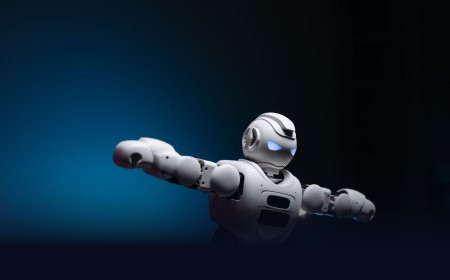
At the Conference on Robot Learning in Austin earlier this month, Nvidia unveiled GR00T 2, the latest version of its Isaac GR00T line of robot "foundation models" — large AI models trained once on huge amounts of data and then adapted to many different tasks, the same basic idea behind models like GPT but for physical movement instead of text. GR00T 2 is built on Nvidia's Cosmos platform and works as what Nvidia calls a world-action model: it predicts what a video will look like a few seconds ahead and what robot movements would produce that outcome, at the same time. In effect, it learns how the physical world behaves by watching it, then works backward to the actions needed to get there.
The training recipe leans heavily on footage of actual humans rather than expensive robot-only datasets: Nvidia says it pretrained the model on over 400,000 hours of first-person human video, more than 10,000 hours of handheld-gripper demonstrations across nearly 2,900 tasks, and tens of thousands of hours of robot teleoperation on top. The payoff, according to Nvidia's own reporting, is strong zero-shot performance — meaning the robot can attempt tasks it was never specifically trained on — on roughly 40% of a set of 50 unfamiliar tasks. Hand it just five human demonstrations of a new task, and that number is said to climb sharply, with one two-armed robot's success rate reportedly jumping into the 90s after minimal extra coaching.
Giving away the training data, not just the model
The more consequential move might be what Nvidia is giving away. Alongside GR00T 2, the company is releasing 100,000 hours of human video and motion data as an open dataset called Human-1M-100K, licensed for both commercial and non-commercial use, with code expected to follow in December. There's also a lighter variant, GR00T 2 Turbo, built to run directly on a robot's onboard computer — in Nvidia's demo, a Unitree humanoid planning its own movements on Nvidia's Jetson Thor chip in about 124 milliseconds per step, fast enough to react in near real time instead of waiting on a cloud server.
- Pretraining data: 400,000+ hours of first-person human video, 10,000+ hours of gripper demos, 23,500 hours of teleoperation
- Reported zero-shot success: ~40% across 50 tasks the robot had never seen
- With five human demos per task: reported jump into the 90s for one two-armed setup
- Open release: 100,000 hours of video and motion data (Human-1M-100K), code due in December
Why does this matter beyond a robotics lab in Austin? Because the single biggest cost in humanoid robotics has never really been the robot — it's the data. Every company building a warehouse-picking arm or a delivery robot has historically needed its own fleet of physical machines, running for months, just to generate enough examples to learn from. A model that can absorb ordinary video of a person doing a task, and a dataset Nvidia is handing out for free, chips away at that barrier for anyone without Boston Dynamics-sized budgets.
Robots can now learn the way people do — by watching someone else do it first, not by being told every rule in advance.
Why this matters for India's robotics push
India doesn't have a Boston Dynamics, but it has a fast-growing cluster of robotics and automation startups serving manufacturing, warehousing and agriculture, plus chipmakers like SiMa.ai — founded by an Indian-origin engineer and already building AI silicon aimed squarely at robots and drones. For that ecosystem, the expensive part of building a useful warehouse or factory robot has always been collecting enough real-world demonstrations to train it on. A free, 100,000-hour human-video dataset and a model that can learn from ordinary footage rather than a fleet of physical robots is the kind of thing that could let a smaller Bengaluru or Pune startup compete on software rather than on how many robots it can afford to run. It's also relevant to India's own push under schemes like the National Strategy for Robotics to build domestic manufacturing automation without depending entirely on imported, already-trained systems.
There's a labour angle too, and it's worth being honest about it. Tools that let robots pick up new physical skills from a few minutes of video make automation cheaper and faster to deploy in exactly the sectors — garment manufacturing, logistics, food processing — that employ large numbers of people in India. That tension between productivity gains and job displacement isn't new, but foundation models that learn this quickly make the timeline for it shorter, not longer.
The gap between a lab demo and a loading dock
None of this means humanoid robots are about to show up on Indian factory floors next quarter. Nvidia's own numbers come from controlled lab tasks — threading filter paper, wetting it with a wash bottle — not the messiness of a real warehouse with bad lighting, cluttered aisles and worn-out equipment. The 40%-to-95% jump Nvidia reported also measures two different things: unguided attempts versus performance after a handful of human demonstrations, not a single clean benchmark. Foundation models for robots are following the exact same hype-to-reality curve that language models did a few years ago: impressive in demos, genuinely useful eventually, but not an overnight replacement for a person standing at a conveyor belt. What's changed is that the cost of trying is dropping fast enough that a lot more people, including outside the US robotics giants, are now in a position to find out for themselves.
What's Your Reaction?
 Like
0
 Dislike
0
 Love
0
 Funny
0
 Angry
0
 Sad
0
 Wow
0