



























fal Raises $1.65 Billion, Valuation Hits $16 Billion
AI infrastructure startup fal raised $1.65B in back-to-back rounds, hitting a $16B valuation as Nvidia and Sequoia pile into generative media.
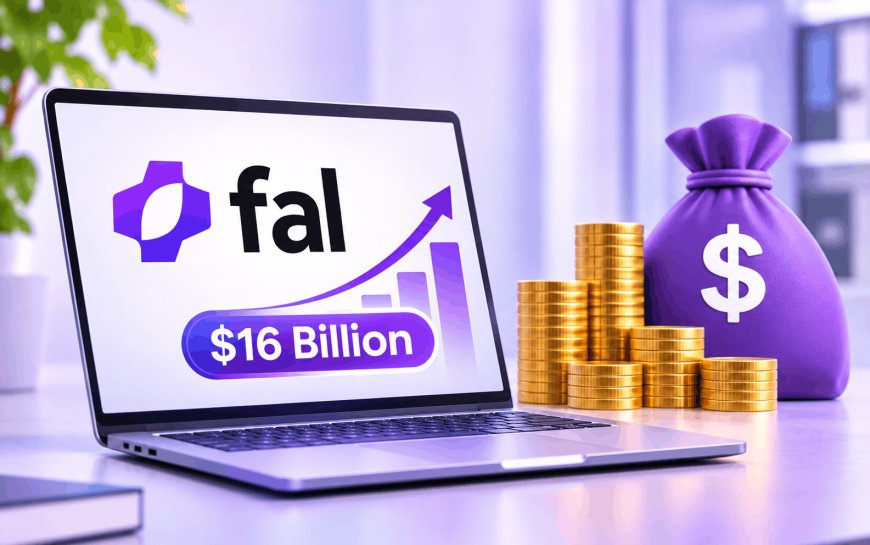
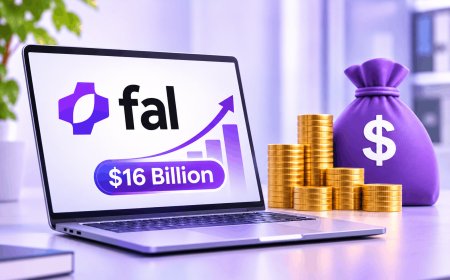
Two funding rounds, five months apart, and one number everyone in AI circles is repeating this week: $16 billion. That's the fresh valuation of fal, a three-year-old infrastructure startup most people outside the AI developer world have never heard of, after it disclosed a combined $1.65 billion raised across Series E and F rounds.
What actually got announced
fal confirmed on November 3 that it closed two rounds it hadn't fully detailed before. The Series E, roughly $350 million, was led by Sequoia Capital and had quietly closed earlier in the year. The much larger Series F, about $1.3 billion, was led by Bessemer Venture Partners, with Nvidia, Sound Ventures, HOF Capital and T. Rowe Price also putting money in. Put together, that's a valuation jump from $8 billion in April to $16 billion now — a double in under seven months, which is fast even by this year's AI-funding standards.
fal hasn't broken down exactly how the $1.65 billion splits between the two rounds, and some of the figures are still being pieced together from investor disclosures rather than a clean company statement. What is confirmed is the use of funds: scaling inference infrastructure, growing the team, and pushing further into generative media tooling through 2027.
Why this matters even if you've never used fal
fal doesn't build chatbots or search engines. It runs the plumbing — the "inference" layer — that lets other companies' apps generate images, video and audio on demand without owning racks of GPUs themselves. Inference, in plain terms, is just the AI model actually doing its job after training: every time an app turns your text prompt into a picture or a video clip in a few seconds, something like fal's infrastructure is usually running quietly underneath, renting out GPU capacity and squeezing it for speed.
That's a less glamorous business than building the next big chatbot, but investors seem to think it's a safer bet. As generative media apps multiply, almost all of them need the same thing: fast, cheap, reliable access to GPUs, without the capital expense of buying the hardware outright. fal positioned itself as the shop that sells that access.
"Today, we're announcing we raised our Series E & F rounds for a combined total of $1.65B... We're excited to push the boundaries of what's possible even more next year," fal said in its funding announcement.
The India angle: this is the market Indian AI startups are building on
Here's why this isn't just a Silicon Valley story. A growing number of Indian startups building generative media products — AI video editors, ad-creative generators, avatar apps, product photography tools for D2C brands — don't own GPU clusters either. They rent inference capacity from exactly this layer of the stack, often from US-based providers like fal, because building and running GPU infrastructure in India is still expensive and import-dependent.
That dependency cuts both ways. Cheaper, more reliable inference from well-funded players like fal can lower the cost of building AI products out of Bengaluru or Gurugram. But it also means a chunk of the money Indian startups spend on "AI" ultimately flows to US infrastructure companies rather than staying in the domestic ecosystem. It's part of why homegrown efforts matter: Code24 reported last month on Nvidia backing Bengaluru-based Simplismart, a much smaller AI inference startup trying to build exactly this kind of infrastructure on Indian soil. fal's $16 billion valuation shows just how large that market can get — and how far behind India's own inference players currently are in scale.
For Indian developers shipping generative AI features, the practical takeaway is simpler: well-capitalized infra providers tend to mean more stable pricing and fewer outages, at least in the near term, since companies like fal now have the runway to keep subsidizing compute costs while they chase scale.
What the money is actually chasing
A few things stand out about who wrote the checks:
- Nvidia's continued investment isn't just financial — it's a bet on keeping its chips embedded in the next layer of AI infrastructure, not just at the model-training stage.
- Sequoia and Bessemer backing both rounds suggests traditional venture firms still see infrastructure, not just flashy consumer AI apps, as the safer long-term play.
- T. Rowe Price's participation is notable — it's the kind of late-stage, public-market-adjacent investor that usually shows up when a startup is being prepped for an eventual IPO.
The bigger pattern here is consolidation. As generative AI matures past the hype phase, money is shifting away from betting on every new app and toward betting on the handful of companies that control the underlying pipes. That's a more boring story than a flashy chatbot launch, but it's probably the more consequential one — because whoever controls inference pricing effectively controls the cost of building AI products everywhere, including in markets like India that don't yet have the infrastructure to compete on their own terms.
What's Your Reaction?
 Like
0
 Dislike
0
 Love
0
 Funny
0
 Angry
0
 Sad
0
 Wow
0