



































OpenRouter Cuts Ties With AI Providers Caught Leaking Prompts
A researcher's two-million-prompt test caught AI inference providers leaking data despite 'zero retention' promises—here's what it means for India.

Send a prompt through an AI router like OpenRouter and you're trusting that it passes straight to the model and nowhere else. For months, that trust was quietly broken at the provider level — and nobody caught it until a cybersecurity firm planted traps to prove it.
How a researcher caught AI providers red-handed
Between July and November this year, HD Moore, chief research officer at the industrial cybersecurity firm Dragos, ran an experiment that sounds almost too simple to work. His team sent close to two million prompts to a range of widely used AI inference services, each one carrying a unique "canary" — a fake secret or credential planted inside the text that does nothing on its own, but quietly reports back if anyone other than the intended model ever touches it. Think of it as a tracked decoy document: harmless to hand over, but it tells you exactly where it ends up.
The results weren't flattering. At least three AI inference hosting providers were found exposing customer prompts, and by Dragos's account, none of them knew it was happening until they were told. Some of the leaked AWS canary keys later turned up in tens of thousands of separate API calls elsewhere — meaning stolen secrets weren't just sitting idle, they were actively being reused. One Chinese AI lab reportedly fetched links embedded in roughly two-thirds of requests that were explicitly marked "zero data retention," a label that's supposed to mean the exact opposite of what happened.
A label on a dashboard that says "we don't store your data" is a promise, not a guarantee — and this experiment shows the gap between the two can run for months before anyone notices.
OpenRouter's cleanup, and the pushback
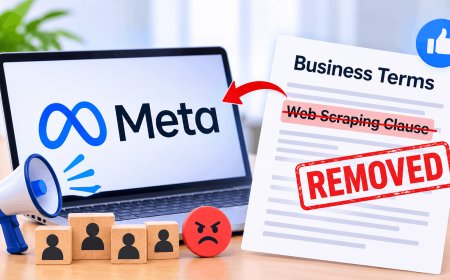
OpenRouter, the popular marketplace that lets developers route a single API call across dozens of underlying AI models and hosting providers, responded by removing three providers from its platform and stripping "Zero Data Retention" certification from 125 endpoints as a precaution. The company said its own infrastructure wasn't breached and that it had notified potentially affected customers directly.
Not everyone agrees on the details. Several outlets named Together AI, Phala, and Novita as the providers dropped, but Together AI publicly disputed being removed at all, and OpenRouter itself hasn't officially confirmed the names. What isn't in dispute is the broader point: when you call an AI model through a router, your prompt can pass through two, three, or more companies you never chose and have no contract with — and any one of them can be the weak link.
- Canary tokens let researchers prove a leak without exposing real user data in the test
- "Zero data retention" is a policy claim, not a technical guarantee you can independently verify
- Multi-provider AI routing adds hops — and each hop is a separate trust decision
Why this matters for Indian developers and the DPDP Act
This isn't just a story about American infrastructure. AI routers like OpenRouter have become popular with Indian startups and solo developers precisely because they make it cheap to shop between models without rewriting code for each one — a real cost advantage for teams watching their burn rate. The catch is that under India's Digital Personal Data Protection (DPDP) Act, a company that collects personal data is the "data fiduciary" and stays accountable for how that data is handled downstream, even when the actual processing happens at a vendor, or a vendor's vendor, it never directly picked. If an Indian fintech or healthtech startup pipes customer queries through an AI router that turns out to leak prompts at the inference layer, the legal exposure doesn't stop at the router — it flows back to the company that collected the data in the first place. We've covered what the DPDP Act actually requires in more detail, and this episode is a concrete example of the kind of third-party risk it's meant to catch.
For any team building on third-party AI infrastructure, the practical lesson is to stop treating "zero data retention" as a checkbox and start treating it as a claim that needs the same scrutiny as any other vendor security promise:
- Map exactly which providers your AI calls actually route through, not just the router's brand name
- Keep genuinely sensitive or regulated prompts off shared multi-provider routers entirely
- Ask vendors for audit evidence of retention claims, not just a settings toggle
The uncomfortable part is that this took a deliberate, expensive experiment to surface. Most companies routing traffic through these same providers have no equivalent way to check — which means the real number of leaks still sitting undiscovered in the AI supply chain is almost certainly higher than three.
What's Your Reaction?
 Like
0
 Dislike
0
 Love
0
 Funny
0
 Angry
0
 Sad
0
 Wow
0