









































MIT Bengaluru Launches Quantum-Hub@MAHE With a 25-Qubit System
MIT Bengaluru's Quantum-Hub@MAHE brings a 25-qubit quantum computer to campus, part of India's push to train quantum engineers.
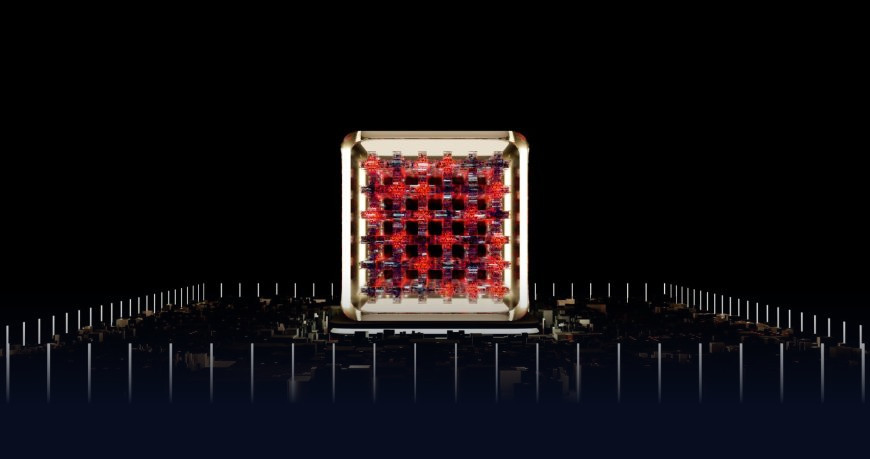
Inside a lab on MIT Bengaluru's campus, a dilution refrigerator about the size of a large cupboard has been quietly chilling a chip to a fraction of a degree above absolute zero, colder than deep space. That machine, switched on this past week, is now India's newest working quantum computer — and unusually, it's built for undergraduates to actually touch.
What's humming inside the lab
Manipal Academy of Higher Education (MAHE) has inaugurated Quantum-Hub@MAHE, or Q-HUB, at its Bengaluru campus, running a 25-qubit open-architecture system called VIDYAQAR. A qubit, or quantum bit, is the basic unit of information in a quantum computer — unlike an ordinary bit, which is strictly a 0 or a 1, a qubit can hold a mix of both states at once, which is what lets quantum machines explore many possibilities in parallel for certain kinds of problems.
The catch is that qubits are extremely fragile, which is why the system sits inside that dilution refrigerator: any stray heat or vibration collapses the delicate quantum state before it can be used. The hardware itself comes from a mix of specialist vendors rather than one single supplier, with UK-based QuantrolOx providing the open-architecture control system, alongside cryogenics and control electronics from Bluefors and Qblox.
From 25 qubits to an industrial machine
Twenty-five qubits is a teaching-scale system, not a record-breaker — commercial machines from IBM and Google already run in the hundreds of qubits. MAHE has framed this as phase one of a longer build-out, with a stated path toward a 150-qubit proof-of-concept platform and, eventually, industrial-grade systems beyond 1,000 qubits. The hub's stated research focus spans drug discovery and oncology, aerospace, and advanced computing, areas where quantum simulation is expected to eventually outperform classical computing for very specific, narrow problems.
- 25-qubit open-architecture dilution refrigeration system (VIDYAQAR), live now
- Planned next step: 150-qubit proof-of-concept platform
- Longer-term goal: industrial-scale systems exceeding 1,000 qubits
- Partners involved: QuantrolOx, Bluefors, Qblox, and ConScience
Training people, not just building a machine
MAHE says the hub aims to train 100 quantum engineers by December this year, and is also running quantum-awareness camps for Class 10 and 12 students in rural parts of the country — a deliberate bet that access to real hardware, even modest hardware, builds a talent pipeline faster than theory alone.
"Just as personal computers and the internet transformed possibilities for my generation, quantum computing can empower this generation to build new machines, create breakthrough applications and take India to greater heights," said Dr. Sridhar Vembu, Chief Scientist and Co-Founder of Zoho Corp, who was chief guest at the inauguration.
Why this matters beyond one Bengaluru campus
Q-HUB sits inside India's National Quantum Mission, the government's roughly ₹6,000-crore, eight-year program to build homegrown quantum computing, communication, and sensing capability instead of relying entirely on machines and expertise bought from abroad. IISc Bangalore already holds a thematic hub for quantum computing under the same mission, and the logic behind funding a teaching-focused facility like this one is straightforward: the US and China aren't just racing to build bigger quantum machines, they're racing to produce people who know how to program and maintain them, and India currently has very few engineers with hands-on access to real quantum hardware rather than simulators.
There's a sharper, less abstract reason for Indian readers to pay attention too. A sufficiently powerful quantum computer could eventually break the encryption that currently protects UPI transactions, Aadhaar-linked services, and most banking traffic — which is exactly why Bengaluru's own QNu Labs recently raised ₹200 crore to build quantum-safe encryption for Indian banks and defence networks ahead of that threat materialising. A facility like Q-HUB, training the next batch of engineers who understand how this hardware actually behaves, is the other half of that same long bet. If the underlying physics is still unfamiliar, our plain-English guide to how quantum computing actually works is a useful place to start.
None of this makes quantum computers useful for your phone tomorrow, and a 25-qubit system won't out-compute a laptop at anything ordinary. But the gap between India's quantum ambitions and its quantum workforce has been the quieter problem all along, and a lab where engineering students can burn their fingers on real hardware, instead of reading about it in a textbook, is a more useful signal than another qubit-count headline.
What's Your Reaction?
 Like
0
Like
0
 Dislike
0
Dislike
0
 Love
0
Love
0
 Funny
0
Funny
0
 Angry
0
Angry
0
 Sad
0
Sad
0
 Wow
0
Wow
0