







































What Is CI/CD? How Code Goes From Commit to Production
CI/CD explained simply: how continuous integration and deployment automate software releases, and why it matters for Indian developers today.

A developer at a Bengaluru fintech pushes a one-line fix to a payment bug at 11 PM. By the time she's made chai, it's already tested, built, and running in production, with zero manual steps in between. That's not magic. That's CI/CD doing its job quietly in the background.
If you've ever wondered how apps like Swiggy or Zomato ship updates almost every day without the whole thing falling over, CI/CD is a big part of the answer. It's one of those terms thrown around constantly in job descriptions and tech Twitter, but rarely explained in plain terms. Let's fix that.
What CI and CD Actually Stand For
CI/CD is really two practices stitched together, and splitting them apart makes the whole thing much easier to understand. (If you want the bigger-picture culture this sits inside, Code24's guide to DevOps covers that context — CI/CD is one of its core building blocks.)
Continuous Integration (CI) is the practice of merging code changes from multiple developers into a shared codebase frequently, often several times a day, rather than saving up weeks of work for one giant merge. Every time someone pushes code, an automated system builds the project and runs a battery of tests to check nothing broke. Think of it as a strict but tireless proofreader who checks every sentence the moment you write it, instead of waiting to review the whole book.
Continuous Delivery/Deployment (CD) picks up where CI leaves off. Once code passes its tests, CD automatically packages it and moves it toward release. "Continuous Delivery" means the code is always in a state ready to be released, usually with a human clicking a final "go" button. "Continuous Deployment" goes one step further and skips that button entirely: if the tests pass, it ships straight to production, automatically.
Put together, a pipeline (the automated sequence of build, test, and deploy steps) turns what used to be a nerve-wracking, all-hands-on-deck release night into something that happens dozens of times a day without anyone noticing.
The whole point of CI/CD isn't speed for its own sake. It's making releases boring. A boring deploy is a safe deploy.
Why Teams Bother With This at All
Before CI/CD became standard, software releases were events. Entire companies would schedule "release weekends," freeze all code changes for days, and still end up firefighting bugs that only showed up once dozens of untested changes collided in production. A single typo could sit undetected for weeks and break everything when it finally merged.
CI/CD flips that model by catching problems while they're small and cheap to fix, rather than letting them pile up. A few concrete benefits:
- Bugs get caught earlier — often within minutes of being written, not weeks later during a stressful release.
- Releases become routine — shipping ten times a day is less risky than shipping once a month, because each change is small.
- Rollbacks are fast — if something does go wrong, pipelines make it easy to revert to the last known-good version automatically.
- Developers spend less time on manual chores — no more copying files to servers by hand or running test suites manually before lunch.
What a Pipeline Looks Like in Practice
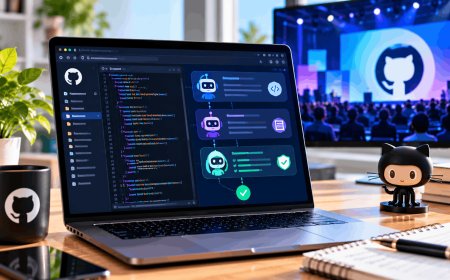
Most CI/CD pipelines, regardless of which tool runs them, follow a similar shape:
- A developer pushes code to a shared repository (commonly hosted on Git-based platforms like GitHub or GitLab).
- An automated build compiles the code and installs dependencies.
- Automated tests run — unit tests, integration tests, sometimes security scans — to catch regressions.
- If everything passes, the build is packaged, often using a container format like Docker, so it runs identically everywhere.
- The package moves to a staging environment that mirrors production for a final check.
- Finally, it's released to users, either with a human approval or fully automatically.
Popular tools that run these pipelines include GitHub Actions, GitLab CI/CD, Jenkins, and CircleCI. None of them are mysterious once you see the underlying idea: it's just a checklist that a machine runs instead of a person, every single time, without getting tired or skipping a step at 2 AM.
Why This Matters for Indian Developers and Startups
India has one of the largest developer populations in the world, and CI/CD skills show up in an enormous share of job postings from Bengaluru to Pune to Hyderabad, not just at product companies but across the IT services firms that still employ a huge chunk of the country's engineers. Knowing how to set up and read a pipeline is increasingly treated as a baseline skill, not a specialty.
For India's startup ecosystem specifically, CI/CD has lowered the barrier to shipping reliable software without a large dedicated operations team. A five-person startup in Gurugram can use GitHub Actions' free tier to run the same kind of automated testing and deployment pipeline that a large bank's engineering org uses, just at a smaller scale. That matters in a market where capital efficiency is often the difference between a startup surviving its next funding round or not. It's also part of why Indian fintech and e-commerce apps can push frequent updates and security patches quickly when a vulnerability is reported, instead of waiting for a quarterly release cycle.
The Takeaway
CI/CD isn't a tool you install once and forget about. It's a habit of shipping small changes constantly and automating the tedious, error-prone parts of getting code from a laptop to a live server. If you're learning to code and want to make yourself genuinely useful on a real engineering team, understanding how a pipeline fits together will matter just as much as knowing the programming language itself. The best engineers aren't the ones who write perfect code on the first try — they're the ones who've built systems that catch their mistakes before anyone else does.
What's Your Reaction?
 Like
0
 Dislike
0
 Love
0
 Funny
0
 Angry
0
 Sad
0
 Wow
0