

























AI Data Center Stocks Tumble After US Democrats Sweep Midterms
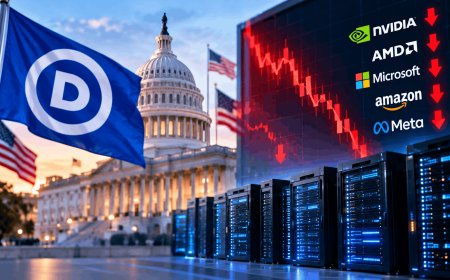
Democrats' sweep of the US midterms triggered a selloff in AI data center stocks — and the ripple reaches India's own data center boom too.
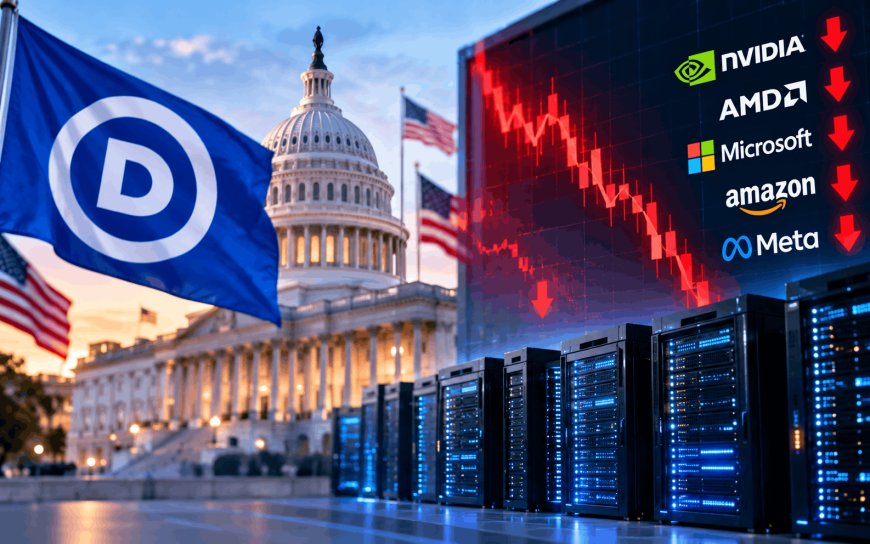
Core Scientific and Nebius spent Wednesday morning bleeding red on Wall Street, and for once the reason had nothing to do with earnings, chip shortages, or a bad product demo. It was an election result.
What actually happened
On November 3, Democrats swept both chambers of the US Congress in the midterm elections. By the next trading session, shares of companies tied to America's AI data center boom were sliding, while renewable energy stocks climbed. Reuters reported Core Scientific down roughly 2.8% and Iren off about 1.4% as the results rolled in, but the pain was sharper among the newer breed of "neoclouds" — companies like CoreWeave and Nebius that essentially rent out AI computing power the way a hotel rents rooms. Morningstar pegged some of those names down more than 9% intraday, with Nebius off nearly 6%.
The logic is straightforward even if the politics aren't: a Democrat-controlled Congress raises the odds of hearings, investigations, and eventually legislation aimed at how fast AI infrastructure gets built, how much electricity and water it consumes, and who gets a say in approving it near their town.
Why the market is this jumpy
This wasn't happening in isolation. Goldman Sachs' broad AI stock basket had already fallen 15% in October and was down more than 24% from its peak heading into election night, after disappointing quarterly numbers from Alphabet and Amazon — two of the biggest spenders on hyperscale data centers (industry shorthand for the giant, company-run server farms that train and run AI models). Add a surprise political shift on top of an already nervous market, and you get the kind of overreaction that shows up in a single trading session.
Goldman Sachs economists estimated that a more restrictive regulatory environment under Democratic control could create temporary friction for roughly 45% of planned US data center capacity — not a certainty, but enough uncertainty to spook short-term traders.
"A more restrictive data center development environment could create incrementally more negative sentiment for AI infrastructure exposed names," analysts at Evercore ISI wrote in a note to clients.
Not everyone in tech got hit. Microsoft and Amazon shares actually rose on the day, a reminder that the market isn't punishing AI broadly — it's repricing the riskiest, most leveraged corners of the data center trade, the ones built on debt and long-term bets that demand for AI compute keeps climbing uninterrupted.
Why this matters beyond Wall Street — including in India
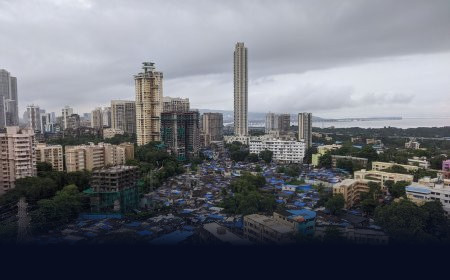
It's tempting to read this as a purely American story about Congress and stock tickers. It isn't. India is in the middle of its own data center building spree, with Microsoft, Google, Amazon Web Services, Reliance Jio, Adani, and NTT all pouring billions into new facilities across Mumbai, Hyderabad, Chennai, and beyond to serve AI workloads for both domestic and global customers. That buildout depends heavily on the same supply chain — Nvidia GPUs, cooling hardware, and capital — that US neoclouds use. If American political uncertainty slows capital flowing into AI infrastructure or dampens investor appetite for the sector globally, Indian data center operators and the startups that rent capacity from them feel the ripple too, through financing costs, equipment lead times, and valuations.
There's also a policy parallel worth watching. The same concerns driving US lawmakers — electricity grid strain, water usage for cooling, and local communities pushing back on massive facilities being built near them — are already surfacing in Indian states like Maharashtra and Telangana as data center projects scale up. India doesn't yet have a dedicated regulatory framework for AI infrastructure's environmental footprint the way it does for data protection under the DPDP Act, but that gap won't stay empty for long if the US debate intensifies.
What to watch next
- Whether state-level races — particularly in Texas, a major data center hub — end up mattering more than the congressional shift itself, as some Goldman analysts argue
- Whether hyperscalers like Microsoft and Amazon keep outperforming leveraged neoclouds as investors separate durable AI spenders from speculative ones
- Whether Indian data center operators start facing similar local pushback over power and water use as projects multiply
None of this means the AI infrastructure buildout is suddenly in danger — the capital committed globally, including in India, is too large to reverse on one election result. But it's a clear signal that the easy phase of AI's infrastructure expansion, where capital flowed with minimal friction, is ending. The next phase will be fought project by project, state by state, and increasingly, country by country.
What's Your Reaction?
 Like
0
 Dislike
0
 Love
0
 Funny
0
 Angry
0
 Sad
0
 Wow
0