


























ISRO's NVS-03 Launch Could Finally Fix NavIC's Gap
ISRO launches NVS-03 on October 13 to patch a gap left by a failed 2025 satellite, bringing NavIC to phones via GPS's L1 band.
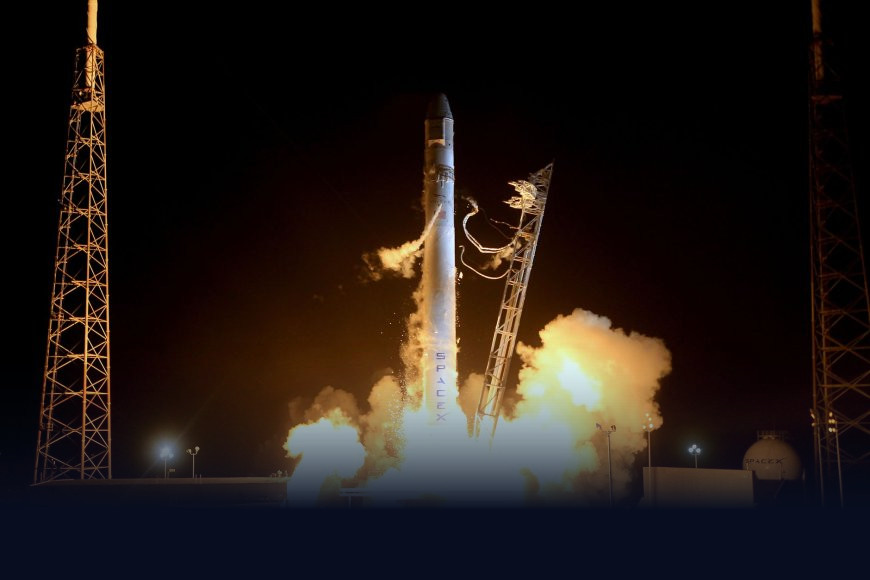
On October 13, a GSLV Mk II rocket is set to lift off from Sriharikota carrying a 2,250-kilogram satellite whose entire job is to quietly patch a gap that's been sitting in India's navigation system for close to two years.
A Satellite That Never Got Where It Was Going
To understand why NVS-03 matters, you have to go back to January 2025, when its predecessor, NVS-02, launched successfully but then got stuck. The satellite's onboard engine — the one meant to push it from a transfer orbit into its final geostationary position, roughly 36,000 km above Earth — never fired. ISRO later traced the fault to something almost absurdly small: a disconnected wire in the circuit meant to trigger the valve that lets fuel into the thrusters. No signal reached the valve, the engine stayed silent, and a satellite built for India's homegrown positioning system has been drifting in the wrong orbit ever since, unable to do the one thing it was launched to do.
That system is called NavIC — Navigation with Indian Constellation — India's answer to GPS, run entirely by Indian agencies rather than a foreign government. The pitch has always been independence: the US controls GPS, Russia controls GLONASS, and either could, in theory, degrade or restrict civilian access during a crisis. A navigation system that India fully owns doesn't carry that risk. But that independence only works if enough satellites are actually in position, and NVS-02's failure left the constellation short-handed right when newer satellites were supposed to be expanding it.
What NVS-03 Actually Fixes
NVS-03 is built on ISRO's I-2K satellite platform, carries roughly 3 kW of power from its solar arrays, and is designed for a ten-year working life. Once it reaches its geosynchronous slot, it brings NavIC back up to four fully functional satellites — IRNSS-1B, IRNSS-1I, NVS-01, and now NVS-03 — restoring a constellation that's supposed to eventually run to five or more newer-generation satellites.
- Launch vehicle: GSLV Mk II, from the Second Launch Pad at Satish Dhawan Space Centre
- Satellite mass: around 2,250 kg at liftoff, on a ten-year design life
- Constellation status before launch: weakened by NVS-02's stranded orbit
- Key upgrade: broadcasts on the L1 frequency band, the same one standard GPS chips already use
Why Your Phone Should Care
The L1 detail is the part that reaches beyond government and defence circles. NavIC's older satellites broadcast mainly on L5, a frequency most consumer chipsets never bothered supporting, which kept the system largely confined to specialised equipment. Newer satellites like NVS-03 also carry L1 signals — the exact frequency that GPS receivers in ordinary phones, smartwatches and fitness trackers already listen to. Qualcomm has already built and tested chipsets that pick up NavIC's L1 signal, which means a working constellation could let an Indian-made or India-sold phone fall back on a home-grown satellite network instead of leaning entirely on GPS, with no extra hardware required. For a country that is simultaneously one of the world's largest smartphone markets and increasingly cautious about depending on infrastructure it doesn't control, that's a meaningful shift, not a footnote.
"NavIC is a significant step towards using space technology for national development... The L1 signals will be a critical next step by enabling better performance of location-based services in the consumer segment," said Manish Saxena, Director of ISRO's Satellite Navigation Programme Office.
There's a strategic layer too. India's armed forces have pushed for a fully functioning NavIC precisely because GPS and GLONASS remain, ultimately, under someone else's control — useful in peacetime, potentially unreliable in a conflict. Every satellite that goes up and actually reaches its intended orbit narrows that dependency a little further.
The Part That's Easy to Overlook
None of this guarantees NVS-03 will succeed where NVS-02 didn't — the launch campaign has been underway since mid-September, and liftoff is still routine until it isn't. But the more interesting story here isn't really about one rocket. It's that a navigation system's usefulness has quietly stopped being measured only in satellites reaching orbit, and started being measured in whether the chip inside an ordinary person's phone can actually hear them. India has spent years building the constellation; October 13 is less a finish line than a test of whether the rest of the ecosystem — chipmakers, phone brands, app developers — is finally ready to use it.
What's Your Reaction?
 Like
0
Like
0
 Dislike
0
Dislike
0
 Love
0
Love
0
 Funny
0
Funny
0
 Angry
0
Angry
0
 Sad
0
Sad
0
 Wow
0
Wow
0