

































Google's $17B Wyoming Data Center Defies a Voter Backlash
Google will spend $17 billion on a gas-and-carbon-capture AI data center in Wyoming, days after US voters backed limits on such projects.
Two days after American voters in a string of local elections told data-center developers to slow down, Google announced it's spending $17 billion to build one of the biggest data centers in the country — in a state where barely three in ten residents say they want it.
Why Wyoming, and why gas
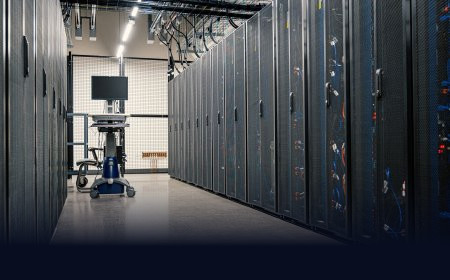
The project is going up in Laramie County, Wyoming, and it isn't a small server shed. Google is partnering with Tallgrass Energy, Black Hills Energy, AEP, and Related Digital to build a 702-megawatt power plant specifically to feed it, running on fuel cells (devices that turn natural gas into electricity through a chemical reaction instead of combustion) built by Bloom Energy. The captured carbon dioxide gets piped to a Tallgrass sequestration site rather than vented into the air. Google says it will also cool the facility with air instead of water, and that it's picking up the full cost of the power the site uses rather than passing it to the local grid.
That's a deliberate answer to the two things that keep showing up in every data-center fight: water and electricity bills. AI workloads are power-hungry and, in many designs, water-hungry for cooling. Google's pitch here is essentially "we'll build our own power plant and we won't touch your tap."
Voters just said they don't want this anyway
The timing is the awkward part. Google's announcement landed two days after US midterm voters backed restrictions on data centers in most of the local ballot measures tracked nationally, and a University of Wyoming poll found only about 30 percent of residents support more large AI facilities in the state. People aren't necessarily against AI — they're against the noise, the strain on local utilities, and watching a trillion-dollar company build next door without much say in the terms.
A company can build its own power plant to avoid a fight over electricity, but it can't build its own public opinion.
It's the second time this year that a major tech infrastructure deal has run into a wall it didn't expect. Our earlier coverage of how AI data-center stocks tumbled after the midterm sweep showed investors are already pricing in the risk that local backlash, not technology, becomes the bottleneck for AI infrastructure.
India is fighting the same battle, minus the air-conditioning
This isn't just an American problem. India's own data-center footprint has roughly tripled in capacity expectations for the rest of the decade, and the same two pressure points — power and water — are already showing up in government reports here. The Economic Survey has flagged grid volatility and groundwater depletion risks tied to AI data centers, and industry estimates put the country's data-center water use at around 150 billion litres a year today, potentially more than doubling by 2030. Unlike the European Union, India doesn't currently require data centers to disclose how much water they use, which makes it harder for state regulators or local communities to even see the problem coming before it's too late.
Several Indian states have been racing to attract hyperscale investment with incentives rather than scrutiny — one state environmental authority reportedly cleared two large data-center parks within days of application, without a public hearing. Google, Microsoft, and Amazon are all building out Indian capacity, and the Wyoming model — build your own power source, go air-cooled, absorb the energy cost yourself — is exactly the kind of commitment Indian regulators and state governments could start asking for before approvals are rubber-stamped, rather than after residents start complaining about dry borewells.
What this actually signals
A few things are worth tracking as this plays out:
- Whether other hyperscalers copy the "build-your-own-power-plant" approach, or whether it stays a one-off for politically sensitive sites.
- Whether carbon capture at this scale actually performs as promised — it's an unproven technology at the gigawatt level, not a settled one.
- Whether Indian states start writing water-disclosure and dedicated-power requirements into data-center approvals, the way Uttar Pradesh's draft policy already gestures at with promised "24x7" water supply guarantees — which, notably, is a promise to the data center, not a protection for everyone else drawing from the same aquifer.
The uncomfortable truth is that AI's hunger for compute isn't slowing down, and neither is the resistance from the places asked to host it. Google has just set a new floor for what a "good neighbor" data center looks like — its own power plant, its own carbon capture, no competition for local water. Every state courting the next hyperscaler investment, in the US or in India, now has a concrete checklist to hold that next pitch against.
What's Your Reaction?
 Like
0
 Dislike
0
 Love
0
 Funny
0
 Angry
0
 Sad
0
 Wow
0