



































Meta Muse Ember: A Cheaper AI Model Built for Agent Busywork
Meta's new Muse Ember model targets repetitive AI agent tasks at a lower cost — a pricing move that matters for budget-conscious Indian developers.
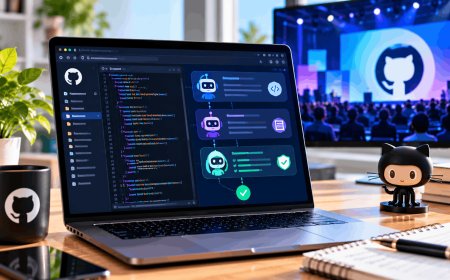
Most of what an AI "agent" does all day isn't glamorous. It's reading a PDF to pull out three numbers, deciding which internal tool to call, or rewriting a messy spreadsheet row into clean JSON. Meta's newest model, released on November 9, is built almost entirely for that unglamorous slice of the job, and it's priced like it knows that's all it needs to do.
What Muse Ember actually is
Muse Ember is the fourth model in Meta's Muse family, following Spark in April, Glimmer in August, and Wonder in October. Meta Superintelligence Labs — the internal group Meta set up to chase frontier AI after its Llama models lost ground to rivals — is calling it the lightest and most cost-efficient model the lab has shipped. It's not meant to out-think anything; it's meant to handle the repetitive load inside an AI agent's workflow: routing a query to the right tool, extracting fields from a long document, running small coding subtasks, that sort of thing.
Developers can reach it through Meta's Model API as muse-ember-1.0, inside Meta's own Muse Code tool, or through Google Cloud and Oracle Cloud. It's a closed model, meaning Meta isn't releasing the underlying weights for anyone to download and run themselves — you use it as a hosted service, the same way you'd call an API from OpenAI or Anthropic. Reported specs put its context window (how much text and conversation history it can hold in memory at once) at 1 million tokens, with up to 512,000 tokens of output, and it can take in text, images, audio, and video.
The real competition in AI right now isn't just who builds the smartest model — it's who builds the cheapest one that's still good enough to run a million times a day without anyone noticing the bill.
The pitch: cheaper than Claude Haiku, on paper
Meta says Ember beats Anthropic's Claude Haiku 5.5 and OpenAI's GPT-6 Luna on performance-per-dollar, while landing close to Haiku 5.5 and Meta's own Muse Spark on raw benchmark scores. Worth being upfront about one thing: those comparisons come from Meta's own testing, not an independent lab, so treat the "beats Haiku" framing as a marketing claim until outside developers have run their own numbers. Third-party pricing trackers list Ember's API rate around $0.10 per million input tokens and $0.50 per million output tokens — figures that, notably, line up almost exactly with what Anthropic charges for Haiku 5.5 after its own price cut in October. This isn't really a story about one model winning; it's about every major lab racing to make its cheap, high-volume tier cheaper, because that's the tier that actually gets called millions of times a day in production.
- Context window: reported at 1 million tokens; output capped around 512,000 tokens
- Access: Meta Model API, Muse Code, Google Cloud, Oracle Cloud
- Inputs: text, images, audio, and video
- Positioning: tool-calling, routing, extraction, and long-document parsing — not frontier reasoning
- License: closed (hosted API access only, no downloadable weights)
Why this actually matters for Indian developers
If you're building an AI agent out of Bengaluru or Pune rather than San Francisco, this kind of release lands differently. Most Indian AI products aren't training their own foundation models — they're stacking API calls to models like this one, billed in dollars, on top of a rupee-denominated subscription from the end customer. A support bot answering in Hindi and Tamil, a fintech tool flagging suspicious transactions, a legal-tech agent summarising contracts — all of these fire off thousands of small, repetitive model calls a day, and that's exactly the workload Ember and its rivals are fighting to own. When Anthropic cut Claude Haiku's pricing by up to 75% back in October, it was already squeezing margins for cost-sensitive Indian startups in a good way; Meta pricing Ember in the same range keeps that pressure on, which is good news for anyone running agent workloads on a tight budget rather than venture money.
There's a policy angle too. India's own push to reduce dependence on foreign AI infrastructure — through the IndiaAI Mission's locally built models — exists partly because exactly this kind of dollar-priced, foreign-hosted API is what most Indian AI companies currently depend on for anything production-grade. A cheaper global option doesn't change that dependency, it just makes it less painful in the short term.
What to watch next
Nobody outside Meta has independently verified the benchmark claims yet, and that's really the thing to track over the next few weeks — whether developers running Ember on real workloads see the cost and quality Meta is advertising, or whether the usual gap between a launch blog post and production reality shows up here too. Either way, the direction is clear: the fight among AI labs has quietly moved from "whose model is smartest" to "whose model is cheap enough that nobody thinks about the bill," and that's a fight that benefits exactly the kind of high-volume, budget-conscious teams building agents in India.
What's Your Reaction?
 Like
0
 Dislike
0
 Love
0
 Funny
0
 Angry
0
 Sad
0
 Wow
0