








































Copilot Fusion: GitHub's AI Model-Picker for Coding
GitHub's new Copilot Fusion mode auto-routes coding tasks across AI models, promising frontier-level code at a fraction of the cost.

Pick a model, any model — that's been the GitHub Copilot routine for two years now, and plenty of developers picked wrong half the time anyway. GitHub just did away with that choice. Its new Copilot Fusion mode decides on its own which AI model, or combination of models, should handle your code.
No more model roulette
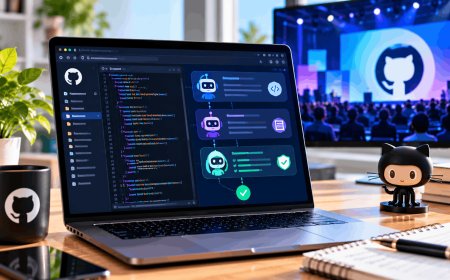
Announced at GitHub Universe 2026 on October 28 and now generally available, Copilot Fusion replaces the old model picker with three effort levels instead: Standard, High, and Max. Rather than naming a specific model before you start typing, you tell Copilot how hard it should try, and an orchestration layer underneath — essentially a dispatcher that reads the task and decides which engine suits it — figures out whether one model can handle the job or whether it needs to split the work across several and stitch the results back together.
The feature grew out of Project HydraFusion, a research preview GitHub quietly shipped back in September. It's live now across Visual Studio Code, the GitHub Copilot app, the Copilot CLI, and JetBrains IDEs, with more clients expected to follow.
The pitch: faster and cheaper, not just smarter
Microsoft CEO Satya Nadella didn't undersell it when he posted about the launch.
"Fusion delivers frontier-level quality 40% faster and at up to 77% lower cost," Nadella wrote on LinkedIn, adding that the unified system running Copilot's agents now sits inside Microsoft Foundry.
Independent numbers land a bit more modestly. On the Artificial Analysis Coding Agent Index, GitHub says Copilot Fusion running at Max effort scored within two points of Claude Code paired with Anthropic's Opus 5.5 model at its own Max setting — close enough that the gap barely matters for daily work, assuming the benchmark holds up outside a vendor's own slide deck.
Billing follows the orchestration. Enterprise customers no longer need a separate Copilot subscription at all — they pay for the AI credits consumed, whichever models Fusion happens to route a task through, billed at each model's standard rate. Paid subscribers get a 30% discount on that metered cost for a limited window after launch.
Why this lands differently for Indian developers
GitHub's own yearly Octoverse reports have flagged India for several years running as one of the platform's fastest-growing developer bases, and a lot of that growth has come from cost-conscious engineers and small startup teams juggling two or three separate AI coding subscriptions at once — one for a cheap daily driver, another kept around just for the handful of problems where the cheaper model falls apart. Fusion is a direct pitch at collapsing that into a single bill, and in a market where the rupee cost of a $10 or $20 monthly AI subscription is a real line item for freelancers and bootstrapped teams rather than rounding error, that matters more than it would in a Silicon Valley budget. It's also one more AI tool that enterprise IT teams in India now have to vet under the Digital Personal Data Protection Act, since knowing which model actually processed a company's proprietary code is getting harder once routing decisions happen automatically, out of sight.
What to actually watch
- Whether "Max" effort quietly burns through credits faster than the old single-model plans did
- Whether code quality holds up on messy, real production codebases rather than clean benchmark tasks
- Whether GitHub keeps retiring underlying models the way it did last month, which would mean Fusion's routing choices shift under you without warning
- Whether that 30% introductory discount survives past its "limited time" window
Routing decisions away from the developer is a bet that most people don't actually want to pick a model — they just want working code, and for the bulk of day-to-day programming that's probably true. But it also means GitHub, not the person writing the code, now controls the tradeoff between speed, cost and quality on every single request. That's a lot of trust to hand to an orchestration layer you can't see inside.
What's Your Reaction?
 Like
0
 Dislike
0
 Love
0
 Funny
0
 Angry
0
 Sad
0
 Wow
0