

















Asahi Linux Drops MIT License After AI 'Code Laundering'
Asahi Linux is abandoning its permissive MIT license for GPL after accusing bad actors of using AI tools to launder stolen, unreleased code.
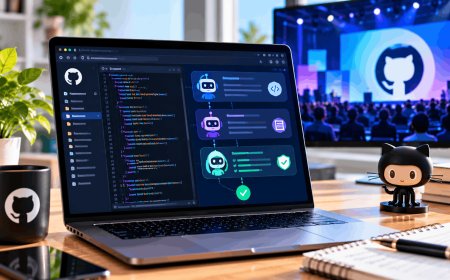
Asahi Linux just rewrote the rules for every line of code it ships from here on, and the reason has nothing to do with Apple's locked-down hardware. The volunteer project that reverse-engineers Apple Silicon Macs to run Linux announced on November 7 that it is abandoning its permissive MIT license across every repository it maintains, switching to the GPL instead. The trigger: the team says it caught bad actors lifting unreleased code from contributors' personal branches and running it through AI tools to disguise where it came from, before republishing it as their own work.
From "take it, no questions asked" to strong copyleft
To understand why this matters, it helps to know what these licenses actually do. MIT is about as permissive as open source gets: anyone can take the code, modify it, bundle it into a paid product, and never release their changes back. The GPL works differently — it's a "copyleft" license, meaning if you build on GPL code and distribute what you built, you have to release your version under the same open terms. You can't quietly fork it into a closed product.
Asahi had deliberately picked MIT years ago specifically to make life easy for other free operating systems, including the BSD family, to reuse its reverse-engineering work. That calculation has now flipped. Going forward, every new Asahi repository will carry GPL v2-or-later, and the project says it's done handing out code with no strings attached.
Where AI enters the picture
The part that's drawing the most attention isn't the license swap itself — it's the method the project says was used to exploit it. According to coverage of the project's own progress report, contributors' unreleased, in-progress code was copied out of personal forks and then run through large language models to rewrite and restructure it, making the lifted code harder to trace back to its original authors before it resurfaced elsewhere. Open source maintainers have warned for a while that AI rewriting tools could be used this way; Asahi says it's now lived through it directly.
A permissive license only stays friendly as long as everyone downstream plays fair — the moment code laundering enters the picture, "do whatever you want with it" stops looking generous and starts looking like an open invitation.
Not every detail is settled. Coverage of the announcement notes the project hasn't fully spelled out how it's handling past contributions that were already released under MIT, or whether every earlier contributor signed off on the shift.
The BSD camp isn't thrilled
Pushback has come fastest from the BSD side of the free-software world. OpenBSD developer Bryan Steele publicly objected, arguing the relicensing happened without the consent of everyone who'd contributed under the old MIT terms. The stakes for OpenBSD are concrete: its own Apple Silicon support leans on Asahi's m1n1 bootloader (the low-level software that gets a machine running before the operating system itself loads), and GPL's copyleft terms sit awkwardly with BSD-style licensing, which has traditionally avoided those obligations. Older m1n1 releases stay under MIT, but anything new from Asahi won't flow into BSD codebases on the same easy terms it used to.
- Existing MIT-licensed releases (m1n1 up to 1.9.9) remain under the old terms
- All new Asahi code ships under GPL v2-or-later, strong copyleft only
- Companies and projects that quietly reused Asahi code in closed products lose that option going forward
- BSD projects relying on Asahi's reverse-engineering work face a harder path to reusing future updates
Why this isn't just a hobbyist Linux story
India has one of the largest populations of open source contributors anywhere, and a fast-growing base of developers working on Apple's M-series MacBooks who rely on exactly this kind of reverse-engineering effort to run Linux dual-boot setups. More importantly, the "AI tool used to disguise where code came from" problem isn't unique to one niche kernel project — it's a live issue for India's enormous IT services and product engineering sector, where AI coding assistants are now baked into daily workflows. A codebase that unknowingly absorbs relicensed or laundered open source code carries real legal exposure, especially for companies exporting software under contracts that promise clean IP provenance. (If you're fuzzy on how MIT, GPL, and Apache actually differ, we've broken it down before.)
The irony is hard to miss: a project built entirely on reverse-engineering someone else's hardware just got burned by people reverse-engineering its own code's origins. Expect more maintainers to quietly audit their licensing posture in the coming months — not because GPL is fashionable again, but because "anyone can take this, no questions asked" only works when nobody's using AI to make sure no one can prove it.
What's Your Reaction?
 Like
0
 Dislike
0
 Love
0
 Funny
0
 Angry
0
 Sad
0
 Wow
0