































Factory's AI Coding Agents Triple Its Valuation to $5 Billion
Factory's AI "Droids" write code and fix bugs for Nvidia and Morgan Stanley - the bet tripled its valuation to $5 billion in 5 months.

Five months ago, investors valued Factory at $1.5 billion. This week, the same company closed a $200 million round at a $5 billion valuation - without shipping a flashy new product, just proving the old one keeps making money.
What Factory actually sells
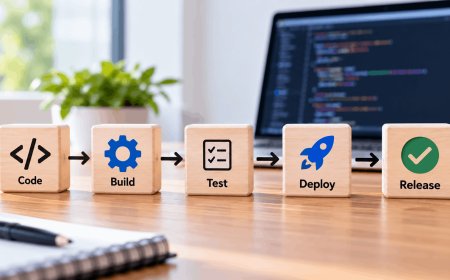
Factory builds what it calls "Droids" - task-specific AI agents that plug into a company's existing codebase and take on the software work most developers try to avoid: writing tests, hunting bugs, refactoring old code, migrating systems between platforms, and even responding to production incidents at 3 a.m. Think of an AI agent as software that can look at a problem, decide on its own what steps to take, and carry them out - rather than just answering a question and waiting for the next prompt.
Founded in 2023 by Matan Grinberg and Eno Reyes, Factory says its customer list already includes Nvidia and Morgan Stanley, and that revenue has been doubling roughly every month for the past six months. That growth curve is what pulled in a fresh round backed by Blackstone, Khosla Ventures, Sequoia Capital, Insight Partners and Evantic Capital, with Salesforce chief Marc Benioff and Altimeter's Brad Gerstner joining as individual investors.
Why investors are betting big
The pitch isn't that Droids write better code than a human engineer. It's that they free up engineers from the unglamorous 80% of the job - the testing, the documentation, the multi-repo migrations - so teams ship faster without growing headcount. Grinberg has framed the harder problem as one of context, not raw coding skill.
"If Jeff Dean shows up at your office and he doesn't understand your code base, he won't be productive."
That line is doing a lot of work: even a legendary Google engineer is useless without deep familiarity with a specific company's systems, and Factory's bet is that an AI agent can build and retain that familiarity better than a rotating cast of contractors or new hires ever could.
Why this matters for India
This is where the story stops being just a Silicon Valley funding headline. Testing, debugging, code migrations and maintenance are exactly the categories of work that built India's roughly $250 billion IT services industry - the bread and butter for firms like TCS, Infosys and Wipro, who staff thousands of engineers to do this work for global clients. If enterprise buyers start routing that work to a handful of AI agents instead of an outsourced team, the pressure lands squarely on the services model that employs a huge share of India's engineering workforce.
It cuts both ways, though. Indian IT majors have the capital and client relationships to license or build competing agent platforms rather than get replaced by them, and several are already pitching "agentic AI" offerings of their own to the same enterprise clients. For India's independent developers and startups, tools like Factory, Cursor and GitHub Copilot are also lowering the cost of building software in the first place - which is exactly why Bengaluru-based founders have been some of the fastest adopters of AI coding agents globally.
What Droids are actually built to handle
- Writing and maintaining automated test suites
- Tracking down and fixing bugs across large codebases
- Migrating legacy systems to new platforms or languages
- Responding to production incidents and outages
- Generating and updating internal documentation
None of this means engineers are becoming redundant overnight. But a $5 billion valuation for a company whose entire premise is "let agents do the boring parts of software engineering" is a signal that enterprise buyers, not just AI labs, now believe agentic coding tools are ready for production work - and that changes who gets paid to do that work next.
What's Your Reaction?
 Like
0
Like
0
 Dislike
0
Dislike
0
 Love
0
Love
0
 Funny
0
Funny
0
 Angry
0
Angry
0
 Sad
0
Sad
0
 Wow
0
Wow
0