





































Apple Pay Launches in India, But Only for Axis Bank Cards
Apple Pay is live in India after 12 years, but only for Axis Bank Visa/Mastercard users — UPI support is still missing.
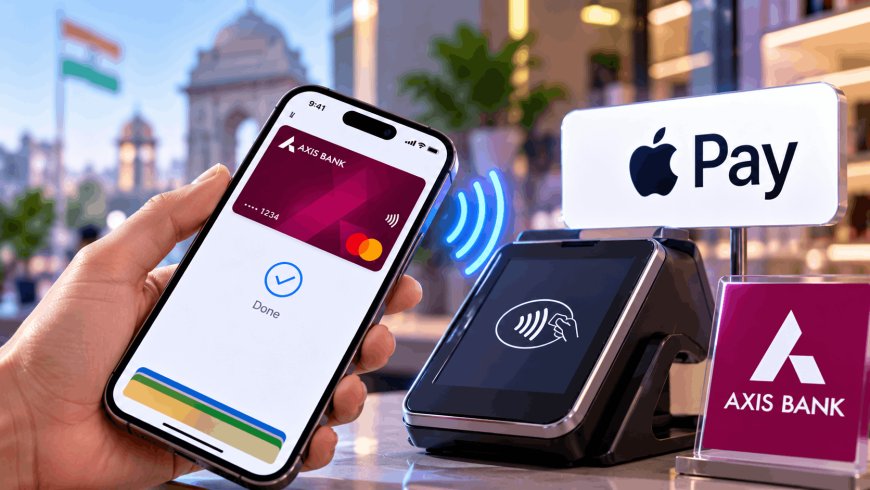
After nearly twelve years of false starts, Apple Pay is finally live in India — but for now, it only works if you happen to bank with Axis Bank.
The tap-to-pay service quietly went live on September 30, letting Axis Bank's Visa and Mastercard credit card holders pay in stores, inside apps, and on the web by holding an iPhone or Apple Watch near a contactless terminal. No swiping a physical card, no typing in a one-time password. It's the kind of frictionless payment experience iPhone users in the US and Europe have had for a decade, arriving in India only now — and arriving incomplete.
What actually works today
To use it, you'll need an iPhone XR or newer on iOS 18, or an Apple Watch Series 6 or later on watchOS 11. Authentication happens through Face ID, Touch ID, or your device passcode — Apple calls this biometric authentication, which just means your phone confirms it's really you using your face or fingerprint instead of a PIN.
That detail matters more in India than almost anywhere else, because it's the exact thing that kept Apple Pay out of the country for over a decade.
Why this took so long
The Reserve Bank of India previously required an additional factor beyond biometrics for card transactions — a rule that effectively locked Apple's device-based authentication model out of the market. That changed only in 2025, when the RBI relaxed its stance on biometric authentication for card payments. Apple Pay's India debut is a direct, if delayed, consequence of that single regulatory shift.
It's a reminder that in India's payments market, the rulebook written by the RBI and the National Payments Corporation of India (NPCI) decides what global tech companies can and can't ship — regardless of how finished the product is elsewhere.
A payment feature that's existed worldwide since 2014 is "new" in India only because the regulator just said yes.
The UPI-shaped hole in the room
Here's what Apple Pay can't do yet: Unified Payments Interface, or UPI — the free, instant bank-transfer system that over 500 million Indians use for everything from splitting a restaurant bill to paying the vegetable vendor. Apple Pay in India currently supports only Visa and Mastercard credit cards; India's homegrown RuPay card network isn't in the mix either.
To add UPI, Apple would need a Third-Party Application Provider (TPAP) license from the NPCI — the same approval Google Pay and PhonePe already hold — plus a sponsor bank to route transactions. We've covered how NPCI has been steadily reshaping UPI's rules this year, including the push toward biometric authentication for UPI itself, so Apple entering that system later isn't far-fetched. It's just not where the company chose to start.
There's also the data localisation requirement to clear: the RBI mandates that all payment data for transactions settled in India be stored exclusively within the country. Any UPI integration Apple pursues will have to satisfy that before NPCI signs off.
Why Axis Bank, and why this matters for Indian users
Axis Bank becoming Apple's first Indian banking partner isn't an accident — mid-sized private banks have historically moved faster than India's public-sector giants to plug into new payment rails, betting that early exclusivity pulls in premium iPhone-owning customers. Expect HDFC Bank, ICICI Bank, or SBI Card to follow with their own Apple Pay tie-ups over the coming months, since Apple's standard playbook elsewhere has been to expand bank-by-bank rather than launch nationwide on day one.
For the average Indian iPhone user, here's what changes right now:
- Axis Bank Visa/Mastercard credit card holders can add their card to the Wallet app and start tapping to pay immediately.
- Debit card and RuPay users get nothing new yet — UPI apps remain their only contactless-adjacent option.
- Online and in-app checkouts that already support Apple Pay globally will now accept it from eligible Indian cardholders too.
The bigger story isn't the feature itself — tap-to-pay has existed in India through UPI and various bank apps for years. It's that Apple finally cleared the specific regulatory hurdle that blocked it, and chose to enter through credit cards rather than UPI, the rail that actually dominates how India pays. Whether Apple eventually gets its TPAP license and joins UPI, or keeps betting on India's smaller but lucrative premium-card segment, will say a lot about how seriously it takes the mass market here versus the iPhone-owning slice of it.
What's Your Reaction?
 Like
0
Like
0
 Dislike
0
Dislike
0
 Love
0
Love
0
 Funny
0
Funny
0
 Angry
0
Angry
0
 Sad
0
Sad
0
 Wow
0
Wow
0