
























Tesla Lines Up $30 Billion in Credit for Cybercab and Optimus, Not Cars
Tesla secured $30 billion in standby credit for Cybercab, Optimus and Semi factories — and none of it is headed toward India.
Tesla just arranged $30 billion in credit that it says it doesn't plan to touch this year. That's not a company short on cash — it's a company making sure it has a very large cushion before it bets heavily on robots and robotaxis instead of the cars that still pay its bills.
What Tesla actually signed up for
The financing, reported in late September, comes from two banking groups. Citibank is providing a $20 billion three-year delayed-draw term loan — money Tesla can pull down over time rather than all at once. Wells Fargo is backing that up with an $8 billion five-year revolving credit facility and a separate $2 billion revolver with a shorter, 364-day term. Together, that's $30 billion Tesla can draw on if and when it needs to, without having to go back to the negotiating table.
Tesla has said it doesn't intend to draw on any of it in 2026. As of the second quarter, the company was sitting on roughly $9 billion in existing debt alongside cash and investments north of $40 billion. In other words, this isn't a rescue package. It's insurance, taken out well before anyone's forced into a corner.
Why a company with $40 billion in the bank wants $30 billion more
The honest answer is that Tesla's next decade doesn't look like its last one. Cybercab, the two-seat autonomous robotaxi with no steering wheel, and Optimus, the humanoid robot Elon Musk has repeatedly called the company's biggest long-term opportunity, both need dedicated factories — not spare capacity bolted onto existing car plants. So does the Tesla Semi, the electric truck that's been inching toward real production for years. Building purpose-built factories for three unproven product lines at once is expensive in a way that selling more Model Ys isn't.
Tesla has already said it expects to spend at least $25 billion on capital expenditure in 2026 alone. That's before any of these new credit lines are even touched. A standby credit facility this size tells you the company wants room to move fast on manufacturing decisions without waiting on quarterly cash flow from a car business that, by multiple accounts, has seen thinner margins over the past year as price cuts and competition eat into profitability.
A $30 billion credit line you don't plan to use isn't a sign of weakness on its own — but it is a very expensive way to keep your options open.
What this is actually funding
- Cybercab — Tesla's purpose-built robotaxi, already running limited driverless rides in Austin, now facing scrutiny from US regulators over its safety record
- Optimus — the humanoid robot program, which needs its own assembly lines separate from Tesla's car factories
- Tesla Semi — the electric freight truck finally scaling toward volume production
- New dedicated factories — rather than retrofitting existing Gigafactory lines, Tesla is building separate facilities for these product lines
Why this matters beyond the US
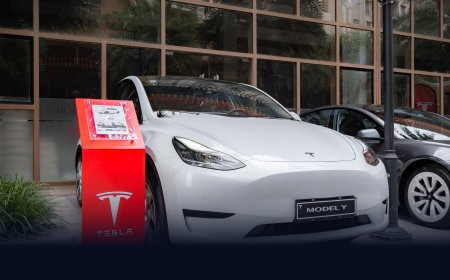
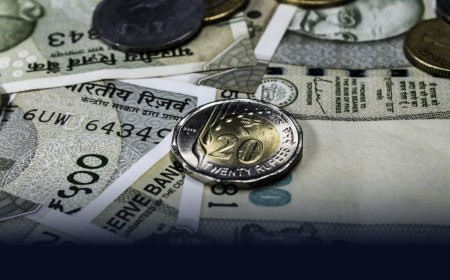
For Indian readers, the more interesting story isn't the credit line itself — it's where Tesla is choosing to spend the money it already has, and where it isn't. Tesla entered India for the first time only in mid-2025, opening a Mumbai showroom and selling the Model Y as a fully imported vehicle. Because India charges import duty of roughly 70 to 110 percent on completely built-up cars depending on price, the Model Y lists at close to ₹51 lakh here — nearly double what it costs in markets where Tesla manufactures locally.
India's EV policy already offers a way out of that: manufacturers who commit to building a factory in the country get a sharply lower duty rate, around 15 percent, on imports in the meantime. Tesla hasn't taken that offer. Every rupee of this new $30 billion facility is earmarked for Cybercab, Optimus, and Semi factories in the US — not for an Indian assembly line that would make Tesla's cars actually affordable here. For Indian EV buyers and for domestic manufacturers like Tata Motors and Mahindra racing to own the mass-market EV segment, that's arguably more informative than the financing structure itself: it tells you exactly where Tesla thinks its next decade of growth actually lives, and it isn't in India's car market.
The bigger picture
Credit facilities like this are normal corporate finance — plenty of large companies keep standby loans they never draw on, purely as a buffer. What makes this one notable is the scale relative to what Tesla is actually building. Robotaxis and humanoid robots are both categories where no company, including Tesla, has shipped a product at real volume with a proven business model. Lining up $30 billion before that model is proven isn't reckless, but it is a tell: Tesla is treating its car business as the thing that funds the past, while this credit line funds the bet on what comes next.
What's Your Reaction?
 Like
0
Like
0
 Dislike
0
Dislike
0
 Love
0
Love
0
 Funny
0
Funny
0
 Angry
0
Angry
0
 Sad
0
Sad
0
 Wow
0
Wow
0