









































What Is a CDN? How It Keeps Websites and Apps Fast
A plain-English guide to CDNs, the servers that keep streaming and apps fast, and why they matter even more on India's mobile-first internet.
Ever wonder how a cricket match streams smoothly to millions of phones at the exact same moment, while a video you shot yourself takes forever just to upload to a friend? It isn't your internet connection playing favorites. It's a piece of invisible plumbing called a CDN, and it's the main reason the internet doesn't collapse every time something goes viral.
What a CDN Actually Is
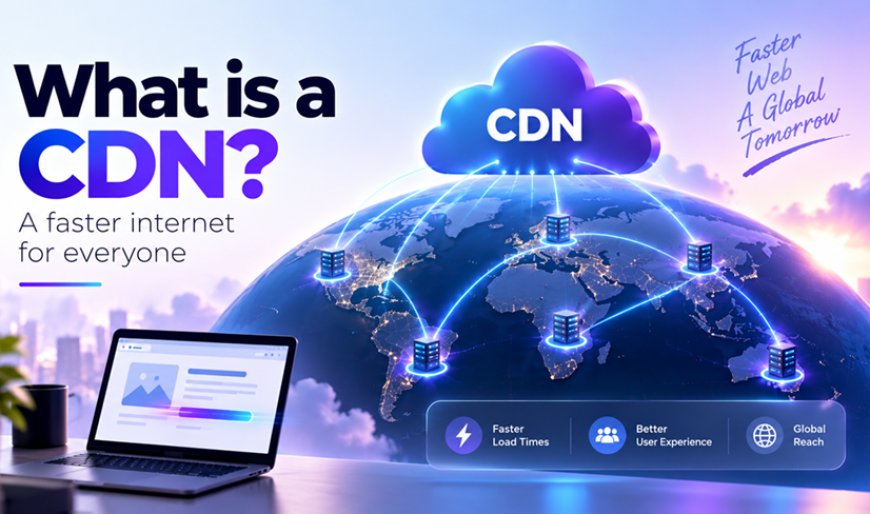
CDN stands for Content Delivery Network — a group of servers spread across many cities and countries that all keep copies of the same content. Instead of every visitor to a website pulling data from one single computer (called the origin server) sitting in, say, a data centre in Virginia or Mumbai, a CDN stores copies of that data — images, videos, app files, even entire web pages — on servers scattered much closer to the people actually requesting them. These nearby copies are called edge servers, because they sit at the "edge" of the network, close to users rather than buried deep inside one company's data centre.
The benefit is simple physics. Data travels fast, but it isn't instant, and every extra kilometre it has to cross adds a small delay called latency. A CDN shortens that distance for most people, most of the time.
A CDN doesn't make the internet faster. It makes the distance shorter.
Why This Matters Even More for Indian Users
India has one of the largest and most mobile-first internet populations in the world, and a huge share of that traffic arrives in short, massive bursts. Think of the last over of a tight T20 finish on JioHotstar, or a big-ticket sale going live on an e-commerce app at midnight. Without CDNs positioned inside the country — companies like Akamai, Cloudflare, and Amazon CloudFront all run edge locations in cities such as Mumbai, Chennai, and Delhi — that kind of traffic would have to travel to servers overseas and back, and streaming quality would fall apart exactly when the most people are watching.
It also matters for cost. Mobile data in India is cheap by global standards, but the infrastructure carrying it isn't free for the companies running it. Serving a video from a nearby edge server instead of hauling it across an ocean cuts bandwidth costs for the business and cuts buffering for the viewer — which is a big part of why apps built for the Indian market, from OTT platforms to UPI-based payment apps, lean so heavily on this kind of infrastructure. It's also one reason cloud providers now bundle CDN capability directly into their broader cloud computing platforms rather than selling it as a separate product.
What Actually Happens When You Load a Page
Here's the rough journey a request takes once a CDN is in the picture:
- You tap a link or open an app, which asks for a piece of content — say, a product image.
- Instead of routing straight to the company's main server, your device gets pointed toward the nearest edge server through a system called DNS (essentially the internet's address book).
- If that edge server already has a cached copy of the image, it hands it over immediately — this is called a cache hit.
- If it doesn't have a copy yet, it fetches one from the origin server, delivers it to you, and keeps a copy for the next person nearby who asks — a cache miss, but only once.
That's why the very first person to load a brand-new piece of content in a region sometimes sees it load slightly slower than everyone after them. The system is quietly building a local copy for the whole neighbourhood.
What a CDN Doesn't Fix
It's not magic for everything. Content that's different for every single user — your personal bank balance, a live chat message, a customised dashboard — can't just be cached and served to the next person, since it's specific to you. CDNs handle that kind of dynamic content differently, usually by only accelerating the static, shareable parts of a page while still routing personal data securely to the origin. CDNs are also a genuinely useful defence layer: because they absorb traffic across many servers, they make it much harder for a flood of junk requests (a denial-of-service attack) to take a single website offline, which is one reason security teams treat them as infrastructure, not just a performance trick.
The Takeaway
Next time a livestream doesn't stutter during the exact moment you don't want it to, or an app loads instantly on a crowded mobile network, there's a decent chance a CDN quietly did its job somewhere between you and a server you'll never see. For anyone building a website or app aimed at Indian users specifically, treating a CDN as optional infrastructure is a mistake — it's often the single cheapest fix for the slow, frustrating load times that make people abandon an app before it even finishes opening.
What's Your Reaction?
 Like
0
Like
0
 Dislike
0
Dislike
0
 Love
0
Love
0
 Funny
0
Funny
0
 Angry
0
Angry
0
 Sad
0
Sad
0
 Wow
0
Wow
0