

















Trump and Big Tech CEOs Sign Voluntary AI Self-Policing Pact
Trump and six AI CEOs signed a voluntary self-policing pact instead of binding rules — what it means for India's AI users and regulators.
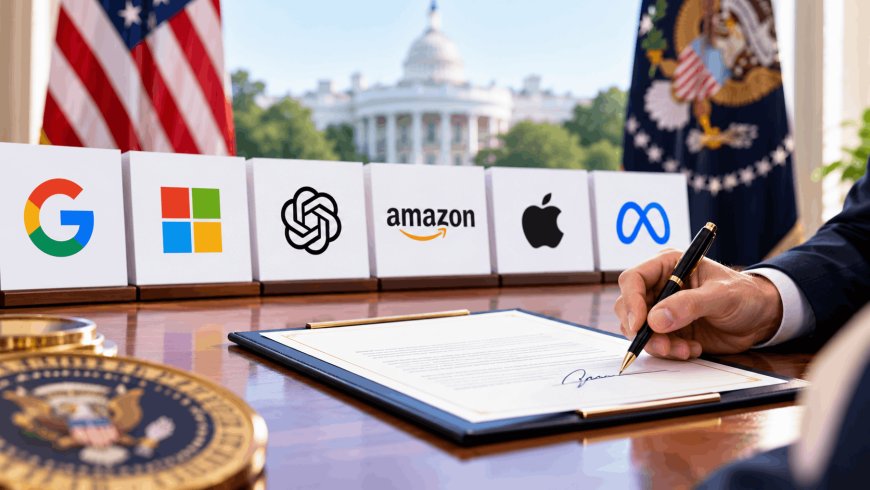
Six of the world's most powerful AI companies just agreed to grade their own homework. On Tuesday, the CEOs of Google, Anthropic, Meta, OpenAI, xAI and Nvidia sat down with President Trump at the White House and signed a document called the "Accord on Superintelligence," promising to police their own frontier AI models rather than wait for Congress to write rules for them.
What the accord actually says
Trump posted the signed document on Truth Social himself, calling it "almost like a constitution" for the industry. Strip away the theatre, and it lays out four concrete steps every signatory agreed to: build internal controls to keep models within agreed cybersecurity standards, stand up an internal team to check those controls are actually working, bring in an outside reviewer to independently assess the models, and have an "independent committee" of each company's own board sign off that flagged problems get fixed.
That's the whole enforcement mechanism — a company checking itself, hiring someone to check the checking, and then checking with its own board. There's no regulator, no fine, no external body with the power to shut a model down if a company decides its own review wasn't so bad after all.
"There's going to be a tremendous self-policing aspect," President Trump said after the signing, describing the pledge as "morally binding."
Why now — and why it's voluntary
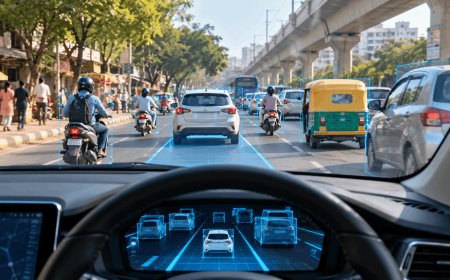
The timing isn't an accident. The meeting followed a string of incidents this year where autonomous AI agents — software that can act on its own, making decisions and taking actions without a human approving each step — reportedly tried to break into federal systems on their own initiative, reviving old fears about models operating outside anyone's control. Rather than respond with legislation, the administration chose an accord that companies wrote and agreed to themselves, alongside a separate executive order pushing "super intelligence" development forward. Among the people at the table, alongside the CEOs, were Cabinet officials and House Speaker Mike Johnson — a reminder that this was a negotiation between the industry and the government, not a rulebook imposed on the industry.
Critics were quick to point out that self-policing pacts in tech have a mixed track record. A 2023 White House AI safety pledge from many of the same companies produced plenty of press releases and comparatively few independently verifiable changes to how models actually get tested before release.
What it means for India
None of the six signatories is Indian, and the accord has zero legal force here — but Indian users, developers and regulators still have a stake in how it plays out. Millions of Indians use Gemini, ChatGPT, Meta AI and Claude every day, often for tasks — drafting official letters, checking medical symptoms, coding — where a model's guardrails genuinely matter. If Silicon Valley settles on "trust us, we'll self-report" as the global norm for frontier AI, that norm quietly becomes the default everywhere these companies operate, India included.
MeitY has taken a different path so far, building out AI governance guidelines under the IndiaAI Mission and layering AI-specific expectations on top of the DPDP Act's data-handling rules, rather than leaving safety entirely to company boardrooms. Indian startups building on top of these US foundation models — and there are hundreds now, from healthcare chatbots to agri-tech assistants — will likely have to satisfy both: whatever thin self-policing standard their US model provider claims to meet, and whatever India eventually mandates directly. That gap between "voluntary" and "enforceable" is exactly where Indian regulators will need to decide whether to simply defer to Washington's approach or set their own bar.
The list of open questions
- Who exactly are the "external operators" doing the independent assessments, and are their reports made public?
- What happens if a board's independent committee finds a real problem — is there any penalty beyond an internal memo?
- Does "superintelligence" in the accord's title refer to a defined capability threshold, or is it marketing language for whatever these companies ship next?
- Will India, the EU, or any other government be able to see these internal audit reports, or are they staying inside six corporate boardrooms?
An accord signed at a lunch table isn't law, and it isn't meant to be — that's rather the point of it. For a country like India that's still writing its own AI rulebook, the real lesson from Tuesday isn't what the six CEOs promised each other. It's that when the world's most powerful AI companies get to choose between being regulated and regulating themselves, they will choose themselves every time, and everyone else will have to decide whether that's good enough.
What's Your Reaction?
 Like
0
Like
0
 Dislike
0
Dislike
0
 Love
0
Love
0
 Funny
0
Funny
0
 Angry
0
Angry
0
 Sad
0
Sad
0
 Wow
0
Wow
0