






































Odyssey-3's AI World Model Drove on Indian Roads in Just 20 Hours
A Palo Alto startup's AI 'world model' learned to drive on Indian roads using just 20 hours of training data. Here's why that matters for India.

One researcher. Twenty hours of data. No real test miles logged before the car went out on the road. That's all it reportedly took for a Palo Alto startup's new AI model to start driving on the streets of India — a place most self-driving engineers treat as the hardest traffic on Earth to crack.
The company is Odyssey, and the model is called Odyssey-3. It isn't a self-driving system in the way Waymo or Tesla build one. It's what AI researchers call a "world model" — an AI that learns how the physical world behaves, the way objects move, bounce, collide and react to force, purely by watching huge amounts of video. Instead of being hand-coded with traffic rules or trained on millions of miles of real driving footage, it builds an internal sense of physics first, then gets taught a specific task on top of that foundation.
That's the part Odyssey is making noise about. The same underlying model, the company says, can be pointed at wildly different jobs: running robot arms, powering humanoid robots, flying drones, playing video games, and yes, driving a car — just by attaching a small, task-specific "decoder" that translates its understanding of physics into the right commands for each machine. One brain, many bodies, instead of training a separate specialist model from scratch for every single use case.
Why India, of all places
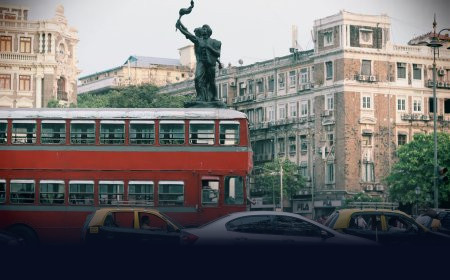
Autonomous vehicle companies have historically avoided Indian roads for testing, and for good reason. Lane markings are suggestions, two-wheelers weave between cars, pedestrians and livestock share the carriageway, and traffic signals are treated as optional in a lot of cities. It's precisely the kind of unpredictable, poorly-structured environment that breaks rule-based driving systems trained mostly on orderly American or European streets.
That's what makes Odyssey's demo notable. According to the company, a driving policy built on roughly 20 hours of largely simulated driving data was able to drive "in closed loop" — meaning it made its own steering and speed decisions in real time, not just assisting a human — on real Indian roads, with a safety driver present, and covered about 77% of the distance between human interventions compared to a policy trained on real recorded footage. In plain terms: a model that barely saw real Indian traffic got most of the way to matching one that was trained on actual recordings of it.
"I spent 2015-2023 building self-driving cars. It was so painful. It's now 2026, and we tasked just 1 researcher to take Odyssey-3, our latest world model, and teach it to drive the roads of India with just 20 hours of driving data. And…it works! This is insane."
That's Oliver Cameron, Odyssey's CEO, posting on X after the demo. He's not new to this fight — he spent years in the earlier wave of self-driving car startups, back when teams needed fleets of cars logging millions of real miles just to get a model that could handle a four-way stop reliably.
What else the same model can do
Driving was just one demo in a broader launch. Odyssey says the same Odyssey-3 backbone has also been put to work on:
- Humanoid robots — a robotics partner reportedly trained control policies for tasks like opening containers and moving objects using only tens of hours of teleoperation data
- Drones — piloting them using the model's learned sense of motion and space
- Video games — policies trained on Grand Theft Auto V reportedly showed some ability to transfer to other games like Red Dead Redemption 2 without being retrained on them specifically
It's worth being upfront that most of these numbers come from Odyssey's own announcement, not independent testing. There's no published trial count for the humanoid tasks, and the company hasn't opened Odyssey-3 up for outside researchers to verify the driving results at scale. A research preview is live, with a wider release reportedly planned for the coming weeks, so the real test is what happens once people outside Odyssey's own demos get to poke at it.
Why this matters if you're in India
India doesn't really have a dedicated regulatory framework for autonomous vehicles yet — existing motor vehicle rules assume a human is always in control. If world models like this actually deliver on cutting the real-world data needed to get a driving policy working, it changes who can realistically compete here. Building a self-driving effort used to mean years of fleet operations and massive logging infrastructure, which only well-funded players like Waymo could afford. A model that needs a fraction of that data to get most of the way there lowers the bar for Indian mobility startups, EV makers, and even logistics and delivery companies to experiment with autonomy on home turf, instead of importing a system trained entirely on foreign roads and hoping it generalizes.
There's also a more immediate commercial angle: companies building ADAS (advanced driver-assistance systems, the lane-keeping and auto-braking features now standard in many new Indian cars) could use the same approach to get safety features working on Indian road conditions faster, without needing to collect years of local driving data first.
Whether Odyssey-3 holds up outside a controlled company demo is still an open question. But the pitch itself tells you where the industry thinks the next edge is: not more data, but models that need less of it to begin with.
What's Your Reaction?
 Like
0
Like
0
 Dislike
0
Dislike
0
 Love
0
Love
0
 Funny
0
Funny
0
 Angry
0
Angry
0
 Sad
0
Sad
0
 Wow
0
Wow
0