







































Tim Cook Steps Down as Apple CEO, John Ternus Takes Over
Tim Cook's 15-year run as Apple CEO ended Sept 1; John Ternus takes over as India cements its place in Apple's supply chain.
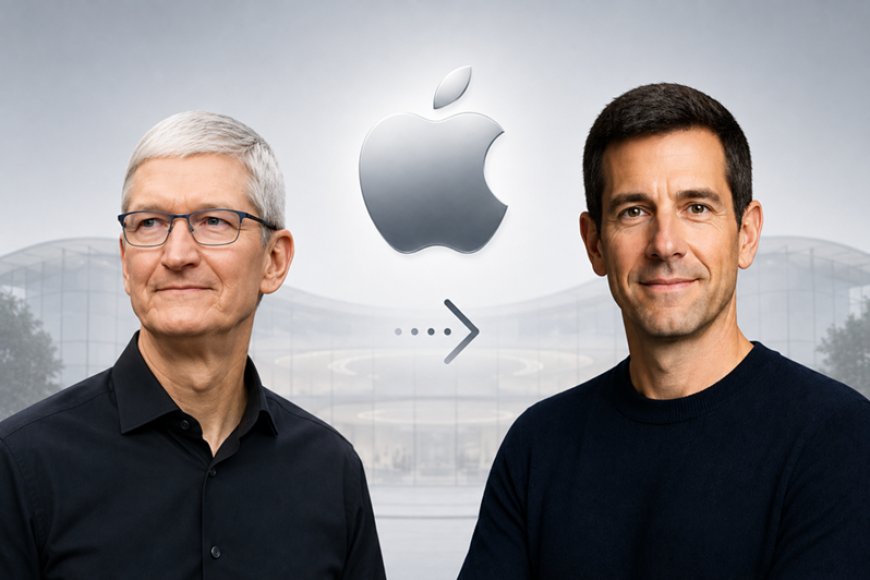
For the first time since 2011, the email that goes out from Apple's CEO desk on a big announcement day wasn't signed by Tim Cook. On September 1, John Ternus formally took over as chief executive, closing out a tenure that turned Apple into the most valuable company on the planet — and, quietly, into one of the biggest employers in India's electronics industry.
A Handover, Not a Departure
Cook isn't disappearing. He's moving into the role of executive chairman, where Apple says he'll keep working on "certain aspects" of the company, including relationships with governments and policymakers around the world. But the CEO title, and the day-to-day call on strategy and products, now belongs to Ternus, who joined Apple's product design team back in 2001 and rose to run hardware engineering from 2021 onward.
In a farewell memo to staff on his last day, Cook leaned on the same language Apple has used about itself for decades — the idea that the company exists to build things that matter, not just things that sell.
"Few people understand what it takes to build products that change the world the way John does, and I could not be more excited for his leadership."
It's the kind of line you'd expect from a retiring CEO, but it also doubles as a signal to investors and employees: don't expect a dramatic change in direction. Ternus was picked from inside, by the person who ran the place for a decade and a half, precisely because he isn't expected to blow anything up.
Why This Matters Beyond Cupertino — Including in India
Here's the part that gets less attention in the US coverage of this handover: a huge chunk of Cook's actual legacy sits in Indian factories, not California boardrooms. When Cook took over as CEO, almost every iPhone in the world was assembled in China. Today, roughly a quarter of global iPhone production happens in India, split between Foxconn and Tata Electronics plants — the same Tata Group that also owns Jaguar Land Rover and Air India. That shift didn't happen by accident; it was Cook personally pushing suppliers to diversify, partly to reduce US-China tariff exposure and partly because India's government offered manufacturers direct cash incentives to set up shop, through a scheme called the Production Linked Incentive (PLI) programme.
The scale is no longer a rounding error. India shipped iPhones worth well over $12 billion in exports in a single recent year, and for the first time, every variant of the iPhone 17 lineup was manufactured in India right alongside its global launch — not months later, as used to be the case. For Indian component suppliers, contract manufacturers, and the thousands of engineers now working in Foxconn's and Tata's assembly plants, Cook's exit raises a genuine question: was the India bet his personal project, or is it now baked into how Apple operates regardless of who's in the corner office?
A few numbers that put the shift in perspective:
- Apple now assembles close to 25% of all iPhones sold worldwide in India, up from near zero a decade ago.
- India-made iPhone production crossed roughly 55 million units in 2025, a jump of over 50% from the year before.
- More than half of iPhones sold in the US are now assembled in Indian factories rather than Chinese ones.
What Ternus Inherits — and What's Next
Ternus takes the wheel just eight days before Apple's September 9 event, where the company is expected to unveil the iPhone 18 Pro lineup and, reportedly, its first foldable iPhone — a launch we covered when the event date was first announced. That timing wasn't an accident either; Apple clearly wanted its new CEO's first major public moment to be a product event, not an earnings call, since product is literally what Ternus has spent 25 years doing.
For Indian buyers and industry watchers, the practical question isn't really about Cook or Ternus as individuals. It's whether Apple keeps deepening its India commitments — more local production, more component sourcing, maybe even more R&D work — at the same pace it did under Cook, or whether that momentum was tied to one executive's personal push and cools once he's no longer setting the agenda day to day.
Succession stories at trillion-dollar companies tend to get read as personality dramas — who's in, who's out, who said what in a farewell email. The more interesting test here plays out far from Cupertino, in factory floors in Tamil Nadu and Karnataka, over the next two or three years.
What's Your Reaction?
 Like
0
Like
0
 Dislike
0
Dislike
0
 Love
0
Love
0
 Funny
0
Funny
0
 Angry
0
Angry
0
 Sad
0
Sad
0
 Wow
0
Wow
0