






















DeepSeek Nears $7.4B Round, Valuation Soars to $74B Ahead of IPO
DeepSeek is nearing a $7.4 billion round at a $74 billion valuation as it preps a 2027 Shanghai IPO, a signal for India's AI cost math too.
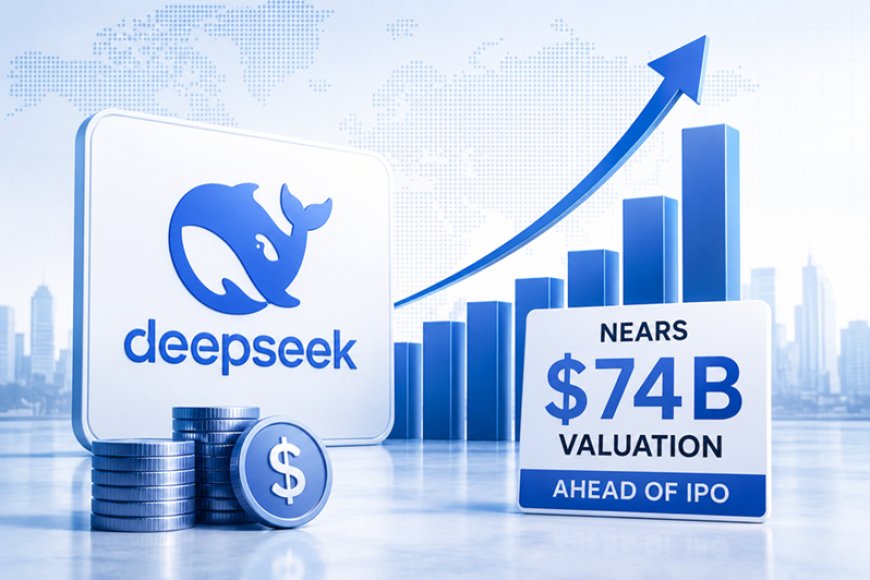
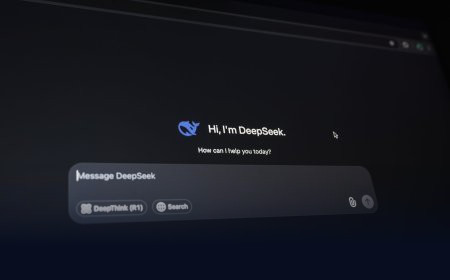
DeepSeek just went from "the app that crashed Nvidia's stock" to a company reportedly worth $74 billion in under two years. The Hangzhou-based AI lab is closing in on a fresh funding round of roughly 50 billion yuan, about $7.4 billion, and this time the money isn't just for more GPUs. It's laying the groundwork for a stock market debut.
The round: bigger checks, same backers
According to multiple reports out of China this week, DeepSeek's pre-money valuation (what the company is worth right before the new cash comes in) has jumped to around $74 billion, up sharply from the roughly $50 billion mark it hit just two months ago in its previous raise. That's a huge jump for a company that built its entire reputation on doing more with less compute.
The money is coming from a familiar mix of backers rather than a splashy new lead investor: Monolith Management and Shixiang, both existing shareholders, are said to be doubling down, alongside CATL, the battery giant that's been quietly building an AI investment portfolio, and several funds tied to Chinese local-government financing platforms. The stated use of proceeds is unglamorous but telling: more research headcount and a bigger compute buildout, the unsexy infrastructure work that lets a lab keep shipping frontier models instead of just one hit release.
Why the IPO timeline actually matters
The real story here isn't the check size, it's what it's for. DeepSeek is reportedly gearing up to file for an initial public offering on Shanghai's Star Market, a Nasdaq-style board China set up specifically for tech and biotech firms that don't fit the profile of traditional, profit-heavy listings. A filing could come as early as the end of 2026, with an actual public debut targeted for 2027.
That's a meaningful signal. Getting to an IPO means investors, and by extension Chinese regulators, expect DeepSeek's business model — give away powerful open-weight models for near-free, then monetize API access and enterprise deals — to hold up under public-market scrutiny. It's also a vote of confidence that the company can keep out-innovating better-funded American labs on a fraction of the budget, at least for now.
The cheapest AI lab in the room just became one of the best-funded ones — that's not a contradiction, it's the business model working exactly as designed.
What it means for Indian developers and startups
This isn't just a China story. DeepSeek's open-weight models (the underlying AI model files are published for anyone to download and run, unlike closed systems such as GPT-5.6) and rock-bottom API pricing have quietly become a go-to option for Indian startups and solo developers who can't stomach OpenAI or Anthropic's per-token bills. A funding round this size, feeding straight back into R&D and compute, likely means DeepSeek keeps undercutting Western pricing for another year at least, which is good news for cash-strapped Indian teams building AI features into their products.
It's also a useful contrast for anyone tracking India's own AI ambitions. The IndiaAI Mission's entire compute and R&D allocation is budgeted at roughly ₹10,000 crore, a little over $1 billion, spread across years and dozens of applicants. DeepSeek just raised nearly eight times that in a single private round. That gap says less about Indian engineering talent, which is well regarded globally, and more about the sheer scale of capital China is willing to deploy behind a handful of national AI champions.
There's a policy angle too. Indian enterprises weighing whether to build on DeepSeek's models still have to navigate India's Digital Personal Data Protection (DPDP) Act, the law governing how companies must handle Indian users' personal data, including rules on where that data can be processed and stored, and MeitY (the ministry that oversees IT policy) has previously flagged foreign AI tools for security review before government use. Cheaper doesn't automatically mean cleared for use in regulated sectors like banking or healthcare — that homework still has to be done separately.
The bigger picture
- Valuation roughly $74 billion pre-money, up from about $50 billion in June 2026
- Round size around 50 billion yuan (~$7.4 billion), expected to close by the end of August
- Backers include Monolith Management, Shixiang, CATL, and state-linked local government funds
- Targeting a Shanghai Star Market IPO, with a possible filing by late 2026 and listing in 2027
The AI price war was supposed to be a race to the bottom that only Silicon Valley's deepest pockets could survive. DeepSeek just showed that Chinese capital markets are willing to bankroll the other side of that fight at a scale that makes it a multi-year contest, not a stunt. For anyone building on top of these models, in India or anywhere else, that's the number worth watching, not just the next benchmark score.
What's Your Reaction?
 Like
0
Like
0
 Dislike
0
Dislike
0
 Love
0
Love
0
 Funny
0
Funny
0
 Angry
0
Angry
0
 Sad
0
Sad
0
 Wow
0
Wow
0