


























Amazon's Alexa+ Lands in India, Finally Speaks Hinglish
Amazon's generative AI assistant Alexa+ is live in India with Hindi and Hinglish support, free in early access before Rs 2,000/month kicks in.
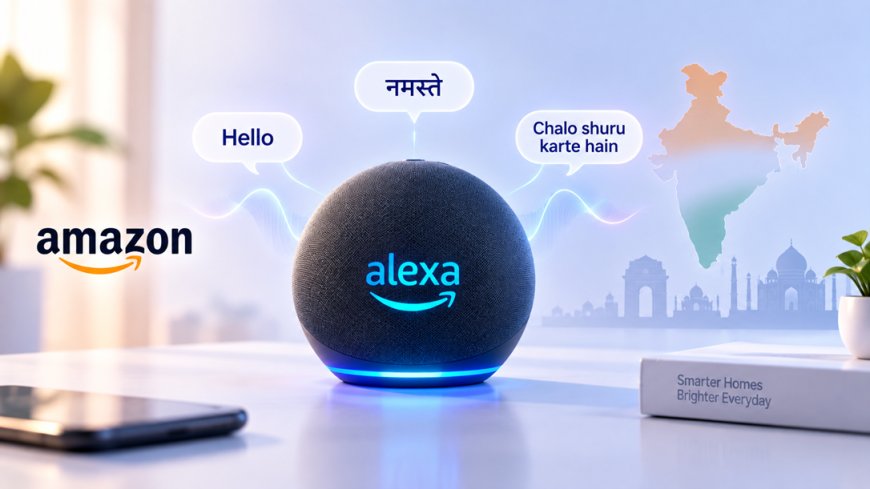
Tell Alexa "dhai baje mujhe reminder laga do" and, for the first time, it won't just blink back in confusion. Amazon's generative-AI voice assistant, Alexa+, started rolling out in India this week, and the headline feature isn't a new speaker or a cheaper price tag — it's that the assistant finally understands how Indians actually talk.
What's different this time
Alexa has supported Hindi in some form for years, but it treated English and Hindi as two separate boxes you had to pick between. Alexa+ throws that away. It's built on a large language model (the same underlying technology behind chatbots like ChatGPT and Gemini, trained to hold a real conversation rather than match keywords to canned responses), and it can follow a sentence that switches languages halfway through — the way most urban Indian households actually speak.
Amazon says the model has been specifically trained on Indian phrasing that doesn't translate cleanly into English: time expressions like "dhai baje" (half past two), quantities like "ek paav," and the tangle of Hindi family terms — bhanja, bhateeji, jethani, devar — that English simply doesn't have single words for. It's a small detail, but it's the kind of thing that decides whether a voice assistant feels useful in an Indian home or just gets muted after a week.
What it can actually do
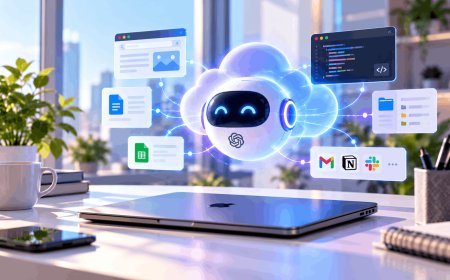
Beyond language, Alexa+ is pitched as being able to string together multi-step tasks instead of answering one question at a time. In practice, Amazon's early demos show it handling things like:
- Ordering groceries directly through Amazon Now, the company's quick-commerce arm, from a single spoken request
- Managing smart home devices — lights, plugs, ACs — based on more natural, indirect phrasing rather than fixed commands
- Holding context across a longer back-and-forth, so you don't have to repeat yourself if you follow up on something you asked two sentences ago
Amazon's devices chief Panos Panay framed it as a bigger shift than an app update. Speaking at the launch event in New York, he said the company had rebuilt Alexa from the ground up around generative AI.
"Today with generative AI and a completely re-architected Alexa, we're moving the world from chatbots to something entirely new."
That's the kind of line every AI launch gets these days, so the real test will be whether Alexa+ holds up outside a stage demo — particularly on Indian English accents and dialect variation, which is where most voice assistants have historically stumbled.
Free for now, ₹2,000 a month later
India gets Alexa+ in "early access," which Amazon is offering free to everyone with a compatible Echo device or the Alexa app. Once that window closes, it stays free for full Prime members, while Prime Lite, Prime Shopping Edition subscribers, and anyone without Prime will need to pay ₹2,000 a month to keep using it. That's a meaningful ask in a market where the base Prime subscription itself costs a fraction of that annually, and it puts real pressure on Amazon to prove the assistant is worth paying for on its own.
Why this matters beyond the gadget aisle
India is arguably the toughest market in the world to get a voice assistant right, precisely because so few people speak in a single, clean language for an entire sentence. Google has been pushing Gemini into Android phones and smart displays here, and Apple is reportedly working with Google to bring similar AI smarts to Siri on the iPhone. Amazon getting Hinglish support out first, on hardware many Indian households already own, is a genuine head start — if the accuracy holds up at scale, not just in a demo video.
There's a less flattering side to this too. An assistant that understands casual, code-switched conversation is also an assistant that's hearing a lot more of your actual life — not just commands, but the meandering half-sentences around them. That data has to be processed somewhere, and under India's Digital Personal Data Protection (DPDP) Act, companies handling that kind of personal data are required to be clear about what's collected, why, and for how long it's kept. Amazon hasn't published India-specific details on how long Alexa+ conversations are retained or whether they're used to further train its models, which is worth watching as the free early-access period gives way to a paid product people rely on daily.
The bigger picture
Voice assistants have spent a decade as a mildly useful sideshow — good for timers and weather, not much else. What Amazon, Google, and Apple are all betting on now is that generative AI finally makes talking to a device faster than typing on one, especially in a country where a huge share of new internet users are more comfortable speaking than typing in English. Whether Alexa+ becomes that everyday interface or just a smarter version of the same sideshow probably won't be clear from a launch event. It'll be clear from whether people are still using it in six months.
What's Your Reaction?
 Like
0
Like
0
 Dislike
0
Dislike
0
 Love
0
Love
0
 Funny
0
Funny
0
 Angry
0
Angry
0
 Sad
0
Sad
0
 Wow
0
Wow
0