






























Nvidia's $12.93 Billion Hugging Face Buyout Rattles Open-Source AI
Nvidia is buying Hugging Face for $12.93 billion, and open-source AI developers, many of them in India, are asking what changes next.
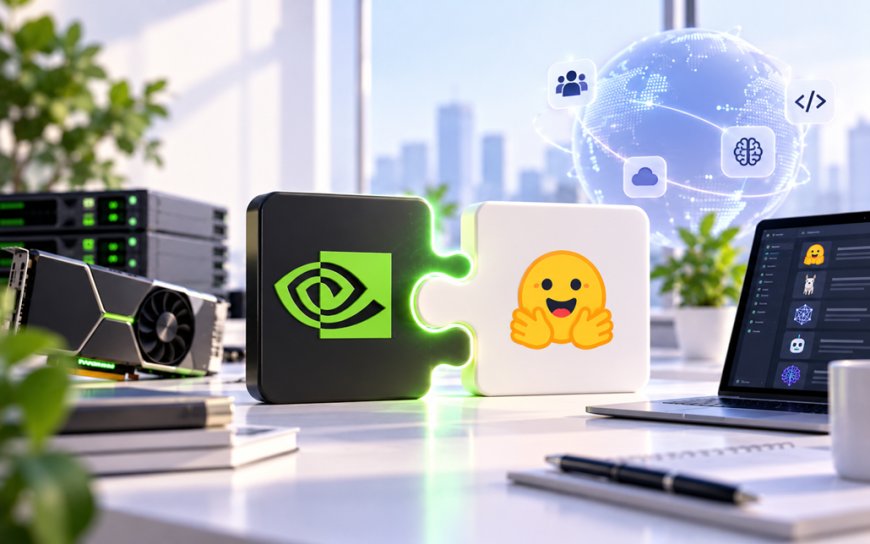
Jensen Huang just spent nearly $13 billion to buy the website where a huge chunk of the world's free AI models actually live. Nvidia has agreed to acquire Hugging Face for $12.93 billion, and the reaction from the developers who built their careers on the platform has been a mix of congratulations and quiet dread.
What Nvidia Just Bought
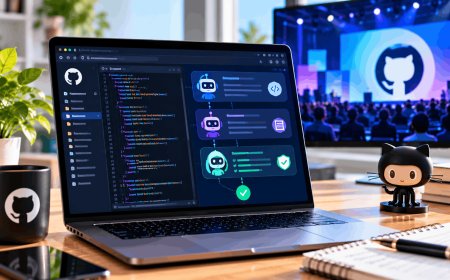
Hugging Face is the closest thing the AI world has to GitHub: a place where more than 18 million developers, students and researchers upload and download "open-weight" models — AI systems whose underlying settings are published publicly so anyone can run, tweak or fine-tune them, instead of only accessing them through a paid, closed API. The platform hosts over 3 million models, 500,000 datasets and a million small AI apps. It's free at the entry level, which is exactly why it became the default home for open-source AI experimentation everywhere from Bengaluru hostel rooms to Berlin research labs.
The deal, first reported in late August and confirmed by both companies on September 3, is Nvidia's second-largest acquisition ever, behind only its roughly $20 billion purchase of assets from chipmaker Groq. It's expected to close sometime in the first half of 2027, pending the usual antitrust review that any deal this size draws.
The GitHub Comparison Everyone Is Making
Developers keep bringing up one precedent: Microsoft buying GitHub in 2018. That deal didn't kill GitHub, but it did eventually nudge the platform toward Microsoft's own tools and cloud. The worry with Hugging Face is similar, except the stakes are arguably higher, because Nvidia doesn't just want developer mindshare — it wants everyone training and running AI models to buy Nvidia GPUs (the specialized chips that do the heavy computing behind AI) to do it.
Hugging Face today is deliberately hardware-neutral. Its tooling supports chips from AMD, Intel and Amazon just as much as Nvidia's. That neutrality is a big part of why smaller labs and independent researchers trust it. Jensen Huang has tried to get ahead of the anxiety directly:
"Exciting day for NVIDIA and Hugging Face. Open models strengthen safety and cybersecurity, accelerate innovation and diffusion, and enable sovereignty. They allow every developer, startup, university, industry and country to build with, customize and benefit from AI." — Jensen Huang, Nvidia CEO
Huang has also said in Nvidia's own announcement that the platform will "remain an open platform for the entire AI ecosystem" and that using Nvidia's cloud compute won't be a requirement to build on or deploy through it. Whether that promise survives contact with quarterly earnings calls is the actual question the community is sitting with, since ownership tends to reshape incentives slowly rather than through any single dramatic announcement.
Why This Matters for India's AI Scene
India is one of Hugging Face's largest developer bases anywhere in the world, and for good reason: with limited access to expensive proprietary APIs and a fast-growing pool of ML engineers, Hugging Face's free model hosting and open datasets are how a lot of Indian AI work actually gets built and shipped. Homegrown language model efforts and startups building on open weights routinely use the platform to host and distribute their work rather than standing up their own infrastructure. A few things Indian developers, startups and IT decision-makers are now watching for:
- Whether free-tier compute and storage limits tighten once Nvidia's commercial priorities enter the picture.
- Whether non-Nvidia inference options (AMD, Intel-based, or cloud-native alternatives popular with cost-sensitive Indian startups) stay first-class citizens on the platform.
- What it means for data residency and model-hosting choices under India's Digital Personal Data Protection (DPDP) Act — the law governing how Indian users' personal data must be stored and processed — since any shift in Hugging Face's ownership or infrastructure footprint could eventually touch how Indian teams handle compliance for models trained or hosted with local user data.
None of this means Hugging Face turns into a walled garden overnight. But the open-source AI world runs on trust in neutral infrastructure, and that trust is now sitting inside the balance sheet of the world's most valuable chipmaker. The next year, as the deal moves through regulatory review, will tell developers everywhere — India included — whether "open" survives being owned.
What's Your Reaction?
 Like
0
Like
0
 Dislike
0
Dislike
0
 Love
0
Love
0
 Funny
0
Funny
0
 Angry
0
Angry
0
 Sad
0
Sad
0
 Wow
0
Wow
0