



























AI Hallucinations Explained: Why Chatbots Make Things Up
Why AI chatbots like ChatGPT and Gemini invent facts with total confidence, how hallucinations happen, and ways to spot and avoid them.
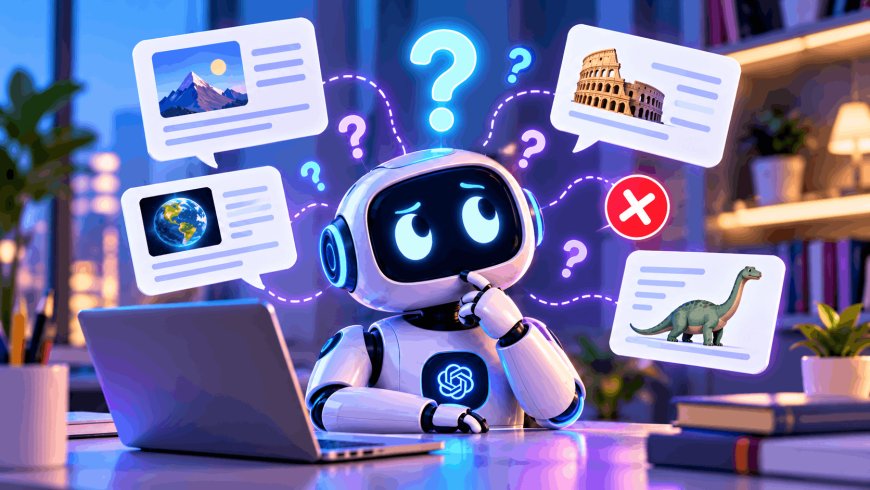
Ask a chatbot who won the 1983 Cricket World Cup final and it'll nail it without blinking. Ask the same chatbot for five research papers backing up a niche claim, and there's a real chance it hands you five polished citations — complete with plausible-sounding authors, journals, and page numbers — that simply don't exist. That's a hallucination, and it's one of the most misunderstood problems in AI today.
What's actually happening inside the model
A large language model (LLM — the technology behind tools like ChatGPT, Gemini, and Claude) isn't a search engine with a filing cabinet of verified facts. It's a next-word predictor trained on enormous amounts of text, which learns patterns in how language flows rather than storing a database of true statements. When you ask it something, it's generating the most statistically plausible continuation of your prompt, word by word. Most of the time, that continuation happens to be correct because correct answers are the most common pattern in its training data. But when the model doesn't have a strong pattern to draw on — an obscure fact, a very specific citation, a niche regional detail — it doesn't fall back to "I don't know." It keeps generating fluent, confident-sounding text anyway. The result looks exactly like a true answer, right down to the tone.
Why confidence has nothing to do with correctness
This is the part people trip over. A hallucinated answer isn't hedged or uncertain — it reads with the same polish as a correct one. There's no little flag inside the model that lights up when it's guessing versus when it's recalling something solid. Newer "reasoning" models and tools that search the web before answering have cut down on this significantly, but they haven't eliminated it, especially for narrow or recent topics where reliable source material is thin.
A chatbot doesn't know when it doesn't know. It just completes the sentence that sounds most plausible — and plausible isn't the same as true.
Where this already bit people in India
This isn't a hypothetical risk. Courts in multiple countries, India included, have seen lawyers submit filings that cited case law invented wholesale by a chatbot — real-sounding case names and judgment numbers that no court ever actually decided. It's an easy trap: legal research is exactly the kind of task where a confident, well-formatted answer feels trustworthy on first read. The same risk shows up more quietly in everyday use — students pulling "facts" for assignments from a free chatbot, small business owners asking for compliance summaries (GST rules, RBI guidelines, labour law thresholds) and treating the reply as final, or job seekers getting fabricated statistics dropped into a resume or cover letter. None of this requires malice from the AI; it's just the nature of how these models generate text, and it's worth knowing before you lean on one for anything that matters.
How to actually guard against it
You don't need to stop using AI tools — you just need a habit of checking the parts that can hurt you if wrong.
- Ask for sources, then open them. If a chatbot cites a report, a law, or a study, search for it independently before you repeat the claim. A fabricated source often doesn't exist at all, or exists but says something different.
- Be extra cautious with numbers, names, and dates. These are the easiest things for a model to invent confidently and the hardest for a casual reader to catch.
- Prefer tools that show their work. Chatbots that search the live web or pull from a fixed set of documents before answering are grounding their reply in retrieved text rather than pure recall, which cuts down hallucination a lot — though it doesn't make them infallible. (If you're curious how that retrieval actually works under the hood, our explainer on vector databases covers the mechanism that powers it.)
- Treat it as a first draft, not a final answer. Useful for structure, phrasing, and getting unstuck — not for anything you'd stake a grade, a client filing, or a business decision on without checking.
The honest way to think about a chatbot's answer is the way you'd think about a sharp intern's first draft: often right, occasionally confidently wrong, and always worth a second look before it goes out the door.
What's Your Reaction?
 Like
0
Like
0
 Dislike
0
Dislike
0
 Love
0
Love
0
 Funny
0
Funny
0
 Angry
0
Angry
0
 Sad
0
Sad
0
 Wow
0
Wow
0