






































Blacksmith Hits $1B Valuation as AI-Written Code Needs Checking
Blacksmith raised $66M at a $1B valuation to test AI-written code faster — with India's Peak XV Partners backing the round twice.
Two months ago, Blacksmith was worth $550 million. On October 21, it crossed into "unicorn" territory — startup shorthand for a $1 billion-plus valuation — after closing a $66 million Series C led by Sequoia Capital.
That kind of jump is rare even by AI-boom standards, and it says less about hype than about a problem a lot of engineering teams are quietly dealing with: AI tools can write code faster than humans can check it, and somebody has to verify the output before it ships.
What Blacksmith actually does
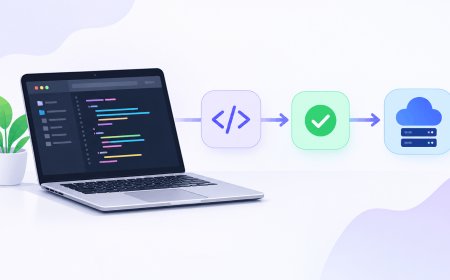
Blacksmith runs continuous integration (CI) — the automated process that builds, tests, and checks code every time a developer pushes a change — on its own purpose-built servers instead of the shared runners that come bundled with platforms like GitHub. The pitch is simple: faster test runs, lower cost, and infrastructure built around the assumption that a huge share of the code flowing through it was written by an AI agent, not a person.
That assumption is paying off. The company says its annual recurring revenue grew 17-fold over the past year and that its systems have now processed over 90 million automated checks. It has also pushed further into the agent space itself with "codesmith," a cloud coding agent developers can hand tasks to, and a companion tool meant to test those AI-written changes automatically before a human ever reviews them.
Every AI agent that writes code faster also writes code that needs checking faster — testing infrastructure has quietly become the bottleneck nobody priced in.
The Series C brings Blacksmith's total funding to $125 million, with existing backers Y Combinator and GV also returning. Most of the new money is earmarked for servers, as the company tries to scale its compute footprint by an order of magnitude and grow its roughly 40-person team to 75 by the end of the year.
The India thread in this round
One detail worth pausing on for readers here: Blacksmith's $45 million Series B two months ago, the round that first pushed it past half-a-billion-dollar valuation, was led by Peak XV Partners — the firm that used to operate as Sequoia Capital India & Southeast Asia before it split from its US parent in 2023. Peak XV came back for this round too, alongside Sequoia's US arm.
It's a reminder that India-rooted venture capital isn't just funding Indian startups anymore — it's placing serious early bets on the infrastructure layer of the global AI boom, well before the US arm of the same lineage shows up to confirm the thesis. For India's own software industry, the underlying problem Blacksmith is solving is just as real. The country's IT services firms and global capability centres (GCCs) have been among the fastest adopters of AI coding assistants like GitHub Copilot and Cursor, precisely because they run high-volume, outsourced development work where speed matters. That same scale makes automated code validation less of a nice-to-have and more of a basic requirement — nobody wants an AI agent quietly merging broken code into a banking or payments system because no one had time to review it properly.
Why the "unicorn" number matters less than the use case
A billion-dollar valuation makes headlines, but the more interesting signal is what investors are betting on underneath it:
- AI code generation is scaling faster than human code review capacity, creating a structural gap
- Testing and validation infrastructure is becoming its own category, not just a feature bolted onto existing CI tools
- Specialized, AI-aware infrastructure plays can out-execute incumbents like GitHub's own runners on speed and cost
Blacksmith isn't alone in this lane, and Dealroom's own analysis flags the obvious risk: GitHub and the major cloud providers could simply build or acquire their way into the same space. A 17x revenue jump is an impressive growth curve, not a moat.
Still, the broader pattern is hard to miss. As AI agents take on more of the actual coding work — not just autocomplete, but entire pull requests — the companies that profit most aren't always the ones building the flashiest models. Sometimes they're the ones building the unglamorous plumbing that catches the model's mistakes before a customer does. For any team, in India or anywhere else, leaning harder into AI-generated code, that's the part of the stack worth watching next.
What's Your Reaction?
 Like
0
 Dislike
0
 Love
0
 Funny
0
 Angry
0
 Sad
0
 Wow
0