






































How Password Managers Work, and Why You Need One
How password managers protect you from data breaches and reused logins, and how to set one up in minutes.
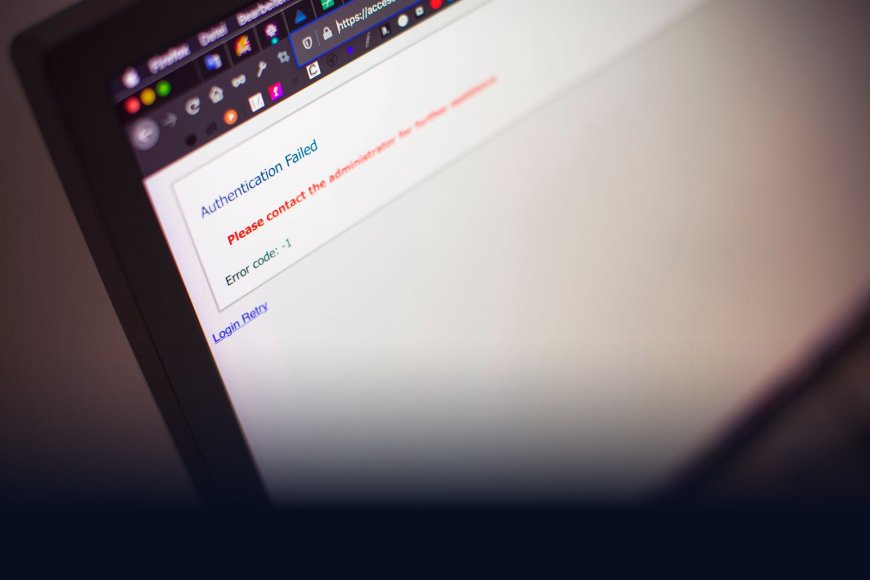
Quick test: how many of your online accounts share the exact same password right now? If you had to think about it for more than a second, you're not alone — and you're also exactly who password thieves are counting on.
Most people manage passwords the same way: pick something memorable, reuse it everywhere, maybe swap a letter for a number when a site insists. It works fine until one of those sites gets breached, and suddenly the same password unlocks your email, your bank app, and your Swiggy account too. A password manager exists to break that chain, and understanding how one actually works makes it a lot easier to trust using it.
What a password manager is actually doing
At its core, a password manager is an encrypted vault — think of encryption as scrambling data with a mathematical lock so it's unreadable to anyone without the right key. Instead of you remembering fifty different passwords, you remember one: the master password. That single password unlocks the vault, which then autofills the right unique, randomly generated password for every site you use.
The important design detail is zero-knowledge architecture. Good password managers encrypt and decrypt your vault entirely on your device, so the company running the service never sees your actual passwords, even on their own servers. If their servers get hacked, attackers walk away with scrambled data they can't use. Compare that to a text file of passwords sitting in your Google Drive, or a sticky note under your keyboard — both readable the moment someone gets access.
The strongest password you'll ever use is one you never have to type, and never have to remember.
Why reused passwords are the real problem
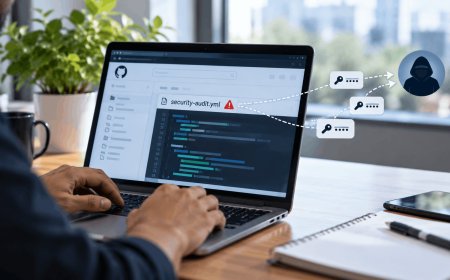
Data breaches happen constantly, and most of them aren't your fault — a company you trusted with your email and password gets hacked, and that list ends up for sale. The damage from that breach depends entirely on whether you reused that password elsewhere. Attackers run something called credential stuffing: taking a leaked list of email-password pairs and automatically trying them on banking sites, shopping sites, and email providers, betting that people reuse logins. It works often enough to be one of the most common ways accounts get taken over.
This matters more in India than the marketing usually admits. Several large-scale data leaks affecting Indian users have surfaced over the past few years, from e-commerce platforms to government-linked databases, and UPI-linked bank accounts are an especially attractive target once an attacker has a working email and password combo. The Digital Personal Data Protection (DPDP) Act, 2023 puts new obligations on companies to protect user data, but it doesn't retroactively fix a password you've already reused across a dozen apps. That part is still on you.
Setting one up without overthinking it
You don't need to migrate everything on day one. A reasonable approach:
- Pick a manager — Bitwarden (free tier is genuinely usable), Google Password Manager (already built into every Android phone, which covers a huge share of Indian users), or 1Password/Dashlane if you want a paid, polished option.
- Set one strong, memorable master password — a random-feeling sentence works better than a single word with symbols swapped in.
- Turn on two-factor authentication (a second verification step, usually a code from your phone) for the vault itself, since it's now your single point of failure.
- Let the browser extension or app prompt you to save passwords as you log into sites naturally, instead of manually re-entering everything at once.
- Use the built-in generator for new accounts and any password you're forced to change, rather than typing your own.
Most managers also flag reused or weak passwords once your vault has a few dozen entries in it, which is usually the moment people realize how much repetition they'd built up without noticing.
Where this fits with passkeys
Password managers and passkeys aren't competing ideas — they're two stages of the same shift away from memorized secrets. If you want to understand the newer approach, where your phone or a security key replaces the password entirely, our explainer on how passkeys work covers it well. Most major Indian apps still lean on passwords today, so a password manager is the more immediately useful upgrade for most people, with passkeys arriving gradually alongside it.
None of this requires becoming a security expert. It requires picking one tool, spending twenty minutes moving your most important logins into it, and letting autofill handle the rest going forward. The habit that actually protects you isn't a stronger password — it's never having to reuse one again.
What's Your Reaction?
 Like
0
Like
0
 Dislike
0
Dislike
0
 Love
0
Love
0
 Funny
0
Funny
0
 Angry
0
Angry
0
 Sad
0
Sad
0
 Wow
0
Wow
0