







































OpenAI Launches Agents API in Public Beta, Opens Up Codex's Engine
OpenAI's Agents API puts the Codex agent harness behind one call, with built-in sandboxing and context compaction.
OpenAI just handed every developer the same engine that powers Codex, its coding agent, wrapped in a single API call. The Agents API went into public beta on September 10, and the pitch is simple: stop building your own agent scaffolding and let OpenAI run the loop for you.
What the API actually does
Until now, if you wanted to build something like Codex, you had to stitch together your own session management, retry logic, and context handling by hand. The new Agents API exposes that entire harness directly. It's built around four building blocks: an agent (the model, its instructions, and the tools or MCP servers it can call), an environment (an optional sandbox where it can read files or run commands), a session (a persistent thread that survives across many turns instead of resetting each time), and events (the messages going in and the actions coming out).
The most useful piece for working developers is probably automatic context compaction. Long-running agent tasks — say, an agent working through a multi-file refactor over dozens of steps — eventually run into the model's context window limit. Instead of developers writing their own logic to summarize and trim old messages, the Agents API does it automatically, so a session can keep going across what would otherwise be several separate conversations.
Agents can also run inside a sandbox: an isolated, disposable environment where code executes and files get edited without touching your actual production systems. OpenAI will host that sandbox for you, or you can point the agent at your own infrastructure or a supported partner's. One limitation worth flagging for anyone handling sensitive data: everything stays on US servers, and Zero Data Retention — the option to have OpenAI not store your prompts and outputs at all — isn't supported yet.
Why this matters beyond OpenAI's own products
This is OpenAI competing less with Anthropic's chat product and more with the growing pile of open-source "agent frameworks" that developers currently duct-tape together themselves. If the Agents API's session handling and compaction genuinely work as advertised, it removes a real chunk of plumbing work that agent-building startups have been charging for.
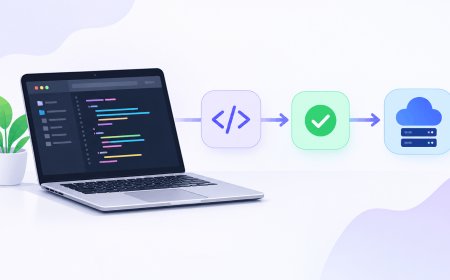
One API call now does what used to take a stack of custom infrastructure: session handling, retries, sandboxing, and context management for AI agents.
For Indian developers, this lands at a useful moment. Bengaluru, Hyderabad, and Pune have no shortage of startups building AI coding assistants, support-ticket agents, and workflow automation tools on top of GPT and Claude models, and a lot of that engineering effort currently goes into exactly the plumbing OpenAI is now offering pre-built: session persistence, retries, sandboxed execution. That's time and money an early-stage Indian startup could instead spend on its actual product. It's also relevant reading alongside Code24's earlier explainer on what MCP is and how AI agents connect to real tools, since the Agents API leans directly on MCP servers as one of its connection points.
There's a compliance angle too. Because data processed through the Agents API stays on US servers by default, Indian companies in regulated sectors — banking, fintech, healthcare — will need to think carefully about where their agents send customer data, especially with the Digital Personal Data Protection (DPDP) Act's data-localisation expectations in mind. An agent that can read files and execute commands on your behalf is also an agent that can leak or mishandle data if permissions aren't scoped tightly, which makes sandboxing and access control choices more than an implementation detail.
The catch developers should watch for
None of this is free lunch. OpenAI isn't charging extra for the Agents API itself, but every token, every tool call, and every sandbox-hour still bills at standard rates — an agent that runs for an hour compacting and re-reading context will rack up a genuinely larger bill than a single chat completion. A few things worth weighing before adopting it:
- Sandbox time and tool calls add up fast on long-running agent sessions, so cost monitoring matters more than it does for simple chat apps.
- Zero Data Retention isn't available yet, which rules this out for some regulated use cases for now.
- Locking into OpenAI's session and sandbox model makes it harder to later swap in a different provider's agent stack.
The real test isn't the announcement — it's whether agents built on this hold up over long, messy, real-world tasks instead of the clean demos. Developers who've been burned by "autonomous agent" hype before will be watching the failure modes just as closely as the feature list.
What's Your Reaction?
 Like
0
Like
0
 Dislike
0
Dislike
0
 Love
0
Love
0
 Funny
0
Funny
0
 Angry
0
Angry
0
 Sad
0
Sad
0
 Wow
0
Wow
0