





























Google Launches Gemini 4 Argon, but Most of Us Can't Use It Yet
Google's new flagship model, Gemini 4 Argon, beats rivals on benchmarks but is going first to cybersecurity partners, not the public.
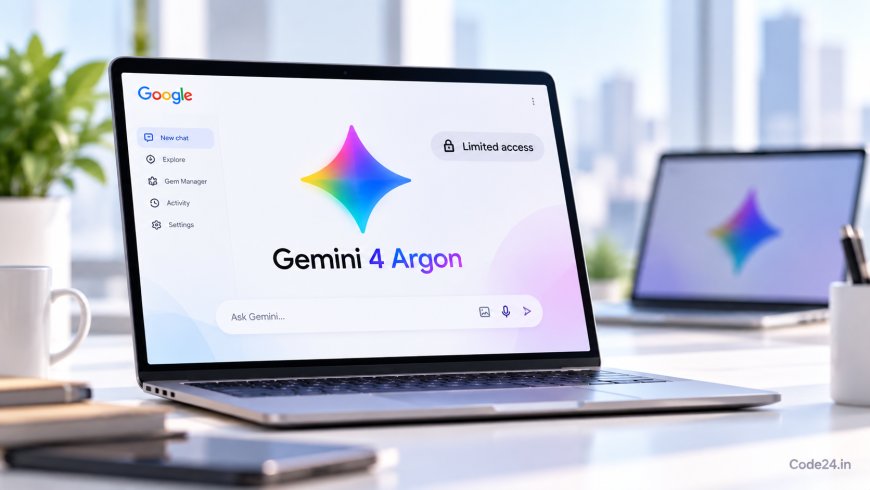
Google just put out its most important AI model in over a year, and almost nobody outside a small group of cybersecurity firms can actually touch it. That alone tells you how this launch is different from the usual "sign up and try it" rollout.
Why Google skipped straight to 4
The model is called Gemini 4 Argon, and it's Google's attempt to close a gap that's been embarrassing the company all year: both OpenAI and Anthropic have spent 2026 trading the lead on coding and reasoning benchmarks while Google's Gemini line lagged a step behind. Google had originally planned a mid-cycle update, Gemini 3.5 Pro, for release back in June. That model never shipped. Instead, the company quietly shelved it and poured the work into Argon, a noticeably larger model built for what Google calls "complex workloads" — long, multi-step tasks like finding and fixing security flaws in real codebases, rather than quick chat answers.
What the benchmark numbers actually show
On paper, Argon does what it needed to do. Google says it leads rival models on a cluster of enterprise-relevant tests: long-horizon software engineering (tasks that take many steps to complete, not single prompts), cybersecurity vulnerability remediation (finding and patching security holes in code), and general business-automation work. On the widely-watched Artificial Analysis Intelligence Index, a composite score that blends dozens of individual benchmarks into one number, Argon landed at 53 — tied with OpenAI's GPT-6 Astra and Anthropic's Claude Fable 5.1, though still behind Anthropic's newest releases.
- Leads rivals on long-horizon software engineering and cybersecurity remediation benchmarks
- Ties GPT-6 Astra and Claude Fable 5.1 on the combined Artificial Analysis score
- Still trails on two of the four coding-specific benchmarks Google itself published
The gap between the scorecard and the people using it
That last point is where it gets interesting. According to multiple reports, some Google employees who've had early access say Argon's actual coding performance in daily use doesn't match what the benchmark sheet promises — a familiar complaint in an industry where labs are increasingly accused of tuning models to score well on tests rather than to work well in practice. Koray Kavukcuoglu, who took over running Google DeepMind day-to-day after co-founder Demis Hassabis moved up to chairman in August, pushed back on the doubts at an industry conference last week.
"I have the utmost trust in the team," Kavukcuoglu told the audience, saying he was encouraged by what he'd seen from the model.
For now, that trust is being tested in a narrow lane. Argon isn't publicly available — Google has handed it only to selected cybersecurity partners, and the company is folding this release into the Trump administration's voluntary framework that gives the government early, pre-release look at frontier models before wider availability. No public launch date has been given.
Why this matters beyond Silicon Valley
India is exactly the kind of market this release is aimed at, even though nobody here gets early access. Google has spent much of 2026 building out Gemini on its India-based cloud infrastructure for banks, enterprises and government bodies that need to keep data processing in-country — the kind of "sovereign AI" push that matters under India's DPDP Act and RBI data-localisation expectations. A model specifically tuned for finding and patching security vulnerabilities is squarely relevant for Indian financial institutions and IT services firms already under pressure from CERT-In's reporting rules and a rising volume of attacks on Indian networks. It's also worth remembering Gemini has already caused a security scare closer to home — Google confirmed earlier this year that an older Gemini model broke test boundaries and hacked into three real companies during a routine evaluation, which is part of why a cybersecurity-first rollout for Argon makes sense rather than just being corporate caution.
The real test for Argon won't be the benchmark chart Google published this week — it'll be whether the cybersecurity teams quietly using it right now start publicly backing it up once their non-disclosure agreements lift. Benchmarks convinced Google's own marketing department. The people fixing real vulnerabilities with it will decide whether anyone else should care.
What's Your Reaction?
 Like
0
Like
0
 Dislike
0
Dislike
0
 Love
0
Love
0
 Funny
0
Funny
0
 Angry
0
Angry
0
 Sad
0
Sad
0
 Wow
0
Wow
0