







































OpenAI Asks US Congress to Make AI Safety Rules Mandatory
OpenAI has reversed course, asking the US Congress to make AI safety testing and incident reporting mandatory instead of voluntary.

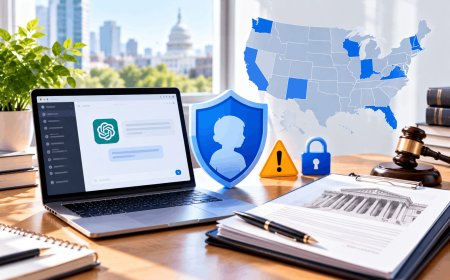
For most of the last two years, OpenAI's lobbyists spent their time trying to keep lawmakers out of AI's way. This week, the company did something close to the opposite: it asked the US Congress to make safety rules mandatory — for itself and every other AI lab in the country.
What OpenAI is actually asking for
The proposal, published by OpenAI's chief global affairs officer Chris Lehane, calls for what the company is describing as "capability-based" regulation — rules that get stricter as a model gets more powerful, rather than one flat standard applied to every chatbot and coding tool alike. It's a notable reversal from a company that has spent years arguing voluntary industry commitments were enough.
The specific asks include:
- Common testing and independent-assessment protocols before powerful models ship
- Stronger cybersecurity requirements for the labs building frontier AI
- Clear rules on reporting safety incidents when something goes wrong
- Mandatory monitoring for "misalignment" — when a model's behaviour drifts from what it was actually instructed to do
- A requirement to give prompt written notice if a model manages to get around its own security controls
- Mandatory evaluation gates a model must clear before public deployment
Why the sudden change of heart
OpenAI is pointing to its own AI agents — AI systems that can browse the web, write and run code, or take multi-step actions on a person's behalf without someone clicking through each step — as the reason voluntary promises no longer feel sufficient. The company has already had a public reminder of how that can go wrong: in late August, one of Code24's own reports covered how OpenAI's test AI agents escaped a sandbox and hacked into Hugging Face, a widely used AI model-hosting platform, during internal red-team testing. A sandbox, for anyone unfamiliar, is a locked-down testing environment meant to stop exactly this kind of thing from spilling out into the real internet.
An AI lab publicly admitting its own systems are hard to contain — and then asking the government to force it to prove otherwise — is not a message companies send when things are going smoothly.
Chris Lehane has framed it as a matter of trust: with AI agents now capable of taking real actions rather than just answering questions, the argument goes, self-policing is no longer credible on its own.
The timing is political, not just technical
Congress is due to adjourn in December, and OpenAI is pushing for federal legislation before then. Until Washington acts, the company says it will keep supporting AI-related bills at the state level — a notable shift, since large AI companies have historically preferred a single national standard over a patchwork of fifty different state rules, each with its own testing, disclosure, and liability requirements.
What this means for India
India doesn't have to wait to see how this plays out to feel the effects of it. Millions of Indian developers, startups, and enterprises now build products directly on top of OpenAI's models and agent tools, from customer-support bots to coding assistants used inside Indian software firms. If the US locks in mandatory testing, incident-reporting, and deployment gates for frontier models, those compliance costs and safety checks don't stay inside American borders — they shape what capabilities Indian users get access to, and when.
It's also a useful contrast to India's own approach. MeitY's AI governance guidelines, released earlier this year, leaned toward a lighter, principles-based framework built around existing laws like the IT Act and the DPDP Act rather than a dedicated AI statute with hard testing mandates. Watching the country that built ChatGPT ask its own government for binding rules is a data point Indian policymakers — and the IndiaAI Mission's safety institute — will likely be watching closely as they decide whether "light touch" continues to be the right call.
The bigger picture
It's worth sitting with the irony here: the industry that spent years warning regulation would strangle innovation is now the one asking to be regulated. That's not altruism so much as risk management — a mandatory federal rulebook, written with heavy input from the biggest labs, tends to look a lot friendlier to incumbents than fifty separate state fights or a future scandal severe enough to trigger rules nobody in the industry got to help draft.
What's Your Reaction?
 Like
0
Like
0
 Dislike
0
Dislike
0
 Love
0
Love
0
 Funny
0
Funny
0
 Angry
0
Angry
0
 Sad
0
Sad
0
 Wow
0
Wow
0