











































AMD Joins the $1 Trillion Club as AI Chip Demand Explodes
AMD's stock jumped 10% on Sept 21, pushing its market value past $1 trillion — the fourth US chipmaker to hit that mark amid an AI compute boom.
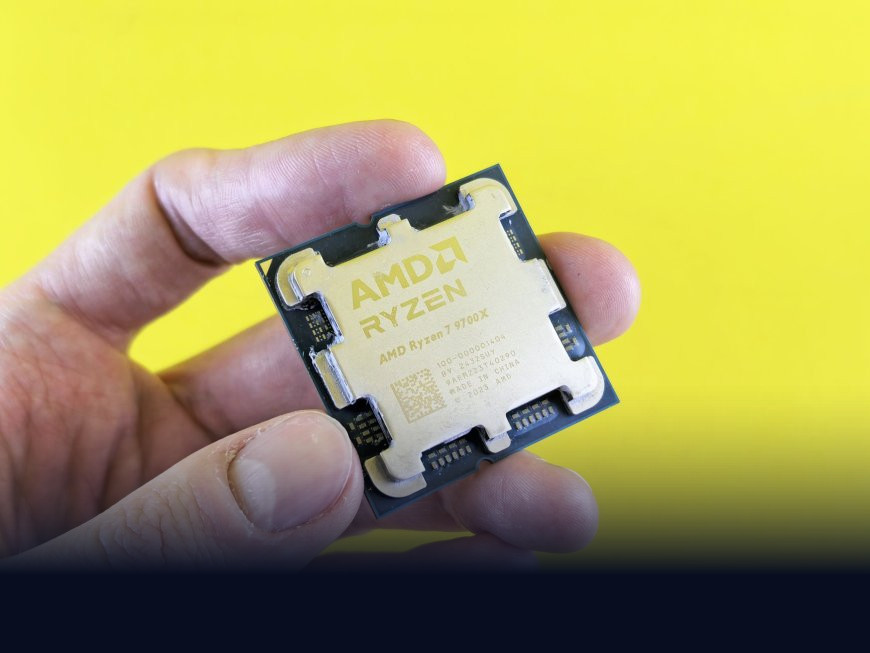
AMD's shares jumped nearly 10% in a single session on September 21, and by the time trading closed, the company was worth more than $1 trillion for the first time ever.
A fourth chipmaker joins the club
Market capitalization, the number you get by multiplying a company's share price by how many shares exist, is really just a snapshot of what investors collectively think a business is worth right now. For AMD, that snapshot briefly touched $616 a share before settling slightly lower, and the stock needs to hold above roughly $612 to keep its spot in the trillion-dollar bracket.
That puts AMD alongside Nvidia, Broadcom, and Micron as the fourth US chip company to cross the mark. Code24 covered Nvidia's own run past the trillion-dollar line on its way to becoming a $5 trillion company, and the pattern repeating with AMD says a lot about how concentrated the AI boom has become in a handful of hardware makers.
The climb wasn't a one-day fluke either. AMD is up roughly 30% this month alone, its best September gain in years, and that comes right after the stock had fallen about 26% from its June highs. Chip stocks as a group have been on a tear, with the rally spilling over into Asian semiconductor names too.
Why now: GPUs, server chips, and one very popular app
Two things are driving the move. First, Bank of America analysts pointed to strong early shipments of AMD's newer MI455 and Pensando silicon, the chips that go into "Helios" server racks built for running AI workloads, alongside server CPU growth analysts expect to rise more than 80% year-over-year in the back half of 2026. In plain terms: AMD's chips, both the GPUs (graphics processing units, the chips especially good at the parallel math AI models need) and its server processors, are getting bought up faster than expected.
Second, and almost coincidentally, Meta's new AI assistant Muse became the top free download on Apple's App Store around the same time. AMD supplies compute to Meta's AI infrastructure, so a hit consumer AI product translated almost instantly into a chip-stock rally, a reminder of how tightly the software and hardware sides of this boom are now wired together.
Every time an AI app tops the download charts, somewhere a chipmaker's stock ticks up too — the AI boom now runs on a single, shared supply chain.
Wall Street's mood reflects that: analyst price targets on AMD range widely, from the mid-$400s to over $1,200, but the consensus rating has stayed firmly on the buy side even after this run-up.
What this means for India
None of this plays out only on American stock tickers. Indian AI startups, cloud providers, and enterprises building on large language models are all downstream customers of exactly the same GPU supply chain that just pushed AMD past $1 trillion — when compute demand spikes globally, GPU allocation gets tighter and rental prices on Indian cloud platforms tend to follow, whether the workload is a Bengaluru startup fine-tuning a model or a bank running fraud-detection AI.
It's also a reminder of why India's semiconductor push, the Tata Group's upcoming fabs, Micron's Sanand assembly plant in Gujarat, and the broader India Semiconductor Mission, matters beyond national pride. Every AI-driven rally like this one is a reminder that chip supply is still concentrated in a few companies and a few countries, and India is trying to buy itself a seat at that table before demand outstrips supply again.
There's a retail angle too. Indian investors have increasingly used the RBI's Liberalised Remittance Scheme, which lets resident individuals send up to $250,000 abroad each year, through apps like INDmoney and Vested to buy US stocks directly. AMD's trillion-dollar milestone is exactly the kind of headline that tends to pull more first-time Indian investors into US chip stocks, often without fully appreciating how volatile that single sector has been this year.
A boom built on a lot of confidence, and a lot of debt
Here's the thing worth sitting with: this isn't happening in isolation. Around the same time AMD crossed the trillion mark, SoftBank was lining up more than $11 billion in bond sales specifically to fund its stake in OpenAI. That's a lot of borrowed money chasing the same AI infrastructure story that's inflating chip valuations.
A few things stand out about where this leaves the market:
- Chip valuations are now closely tied to the fortunes of a handful of AI products, not just enterprise IT spending broadly.
- Debt-funded AI bets, like SoftBank's bond raise, mean the capital behind this boom isn't all equity investors absorbing risk directly.
- Any slowdown in consumer AI adoption or enterprise AI spending would likely hit chipmakers' valuations faster than it hits the AI labs themselves.
AMD crossing $1 trillion is a genuine milestone, not a footnote. But it's also a fairly clean signal of how much of the current tech market's value now rests on one bet holding up: that AI compute demand keeps growing at roughly the pace it has for the last two years. If that pace slips even a little, this is the number that moves first.
What's Your Reaction?
 Like
0
Like
0
 Dislike
0
Dislike
0
 Love
0
Love
0
 Funny
0
Funny
0
 Angry
0
Angry
0
 Sad
0
Sad
0
 Wow
0
Wow
0