





























SIM Swap Fraud Explained: How Scammers Hijack Your Phone Number
Scammers can steal your phone number and empty your bank account within the hour. Here's how SIM swap fraud works and how to stop it.
Your phone suddenly loses signal. No calls, no texts, no "No SIM" warning you'd notice right away — just a dead network bar you assume is a tower issue. By the time you borrow someone else's phone to check your bank balance, your savings account has already been emptied through a string of UPI transfers you never authorised.
That's a SIM swap attack, and it's one of the more quietly devastating scams running in India right now, precisely because the target rarely sees it coming until the money is already gone.
What actually happens during a SIM swap
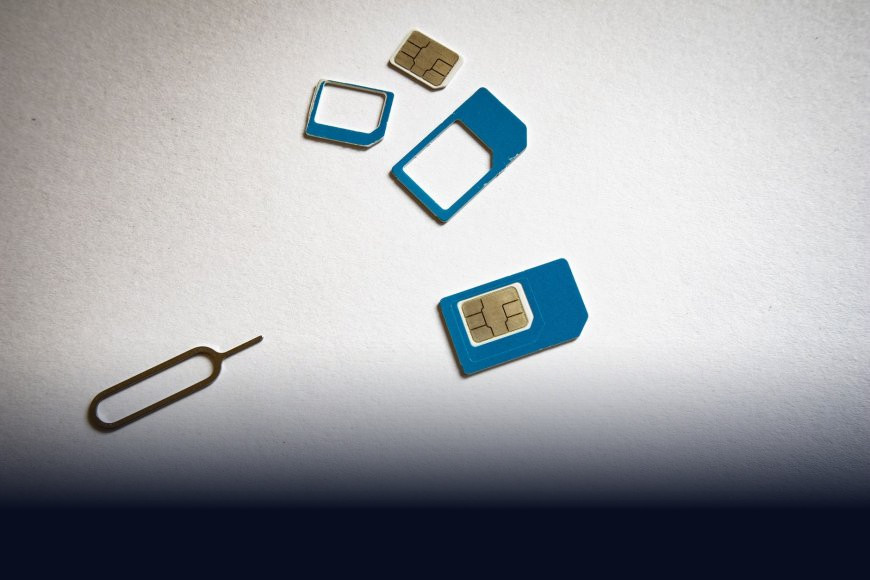
A SIM swap doesn't involve hacking your phone at all. It targets your telecom operator instead. A scammer who has already collected your basic details — full name, date of birth, maybe your address, gathered from a data leak, a phishing message, or even a fake customer-care call — contacts your mobile operator or walks into a retail store posing as you. They report the SIM as lost or damaged and request a replacement SIM for your number, sometimes using forged KYC (know-your-customer, the identity documents telecom operators are legally required to verify) documents or a compromised retailer.
The moment that new SIM is activated, your old one goes dead — that's the signal-loss moment from the opening scenario — and every call, SMS and OTP (one-time password, the six-digit code your bank texts you to confirm a transaction) meant for your number now lands on the scammer's device instead. From there, they use your leaked banking credentials or simply trigger "forgot password" flows on your bank and UPI apps, intercept the OTP, and move money out before you've even realised your phone stopped working.
A SIM swap doesn't break your password. It breaks the assumption that your phone number belongs only to you.
Why SMS-based security makes this worse
The uncomfortable truth is that SIM swap fraud works precisely because so much of India's digital banking still leans on SMS OTP as the final checkpoint. We've written before about how two-factor authentication is only as strong as its weakest factor, and SMS is the weakest one on the list — an authenticator app or a hardware key never depends on which SIM is sitting in whose phone. A SIM swap doesn't just steal a text message; it quietly hands over the one factor millions of Indian bank and UPI accounts still treat as sufficient proof of "yes, this is really you."
Warning signs worth acting on immediately
Most victims miss the early signals because they look like ordinary network trouble. Watch for these instead of shrugging them off:
- Sudden, unexplained loss of signal or "No Service" that doesn't clear after restarting your phone
- A text or email from your telecom operator confirming a SIM replacement or number-porting request you didn't make
- Being unable to make calls or send texts while WiFi-based apps still work fine
- Bank or UPI login attempts, password-reset emails, or OTP messages you didn't request, seen on a secondary device or email inbox
- Any call from someone claiming to be from your telecom operator asking you to "confirm" an OTP to complete a SIM upgrade you never asked for
That last one is worth repeating on its own: no legitimate telecom staff will ever ask you to read out an OTP over a phone call. That request alone is confirmation of a scam in progress.
How to actually protect yourself
A few habits cut this risk down sharply, and none of them require special technical skill:
- Set a SIM PIN or porting password with your operator. Under the Department of Telecommunications' rules, mobile number portability requires a one-time password sent to your existing SIM before a port can go through — but duplicate-SIM requests at a retail counter have historically been easier to social-engineer, which is why several operators now let you add an extra security PIN on your account specifically for SIM-related requests.
- Move away from SMS OTP wherever you can. Most Indian banks and UPI apps now offer an authenticator app or app-based approval as an alternative to SMS OTP in their security settings — switch to it for anything tied to money.
- Set a strong PIN or password on your telecom account and email, since scammers often chain a data leak, a phishing email, and a SIM swap together rather than relying on any single weak point.
- Act within minutes, not hours, if your phone loses signal unexpectedly — call your operator from another line immediately to check for an unauthorised SIM request, then alert your bank to freeze suspicious transactions.
- Report it fast. India's Indian Cyber Crime Coordination Centre runs a dedicated helpline (1930) and the cybercrime.gov.in portal for exactly this kind of financial fraud — the faster a bank is notified, the better the odds of freezing or reversing a fraudulent transfer.
On the regulatory side, the Reserve Bank of India's rules on customer liability for unauthorised electronic transactions work in your favour here: if you report the fraud to your bank within three working days of noticing it, your liability can be capped or even zero, depending on where the fault lies. That window is exactly why speed matters more than almost anything else once you notice something's wrong.
The real takeaway
SIM swap fraud succeeds because it exploits trust in a system — your telecom operator's identity verification — rather than any flaw in your phone itself. You can't personally audit your operator's retail counters, but you can shrink your exposure: move your most important accounts off SMS OTP, lock down your telecom account with a porting PIN, and treat an unexpected loss of signal as something to investigate immediately rather than dismiss as a network glitch. The gap between noticing and acting is exactly where this scam lives.
What's Your Reaction?
 Like
0
Like
0
 Dislike
0
Dislike
0
 Love
0
Love
0
 Funny
0
Funny
0
 Angry
0
Angry
0
 Sad
0
Sad
0
 Wow
0
Wow
0