






































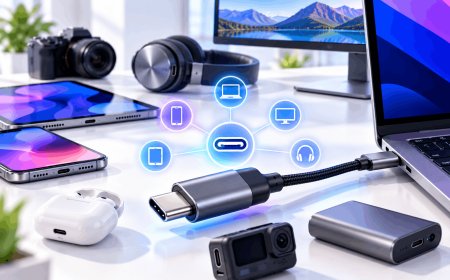

How Does Fast Charging Actually Work?
Fast charging explained: why speeds throttle near 100%, and why India's heat and BIS certification rules matter when picking a charger.
Plug in a phone at 8am with almost no charge left, and by the time you've finished your coffee it's past 50%. A few years ago that would have taken half the morning. Fast charging is the one bit of phone technology that's improved fastest and most visibly — but almost nobody who benefits from it actually knows how it works, or why some chargers get warm enough to worry about.
The basic trick: more power, delivered carefully
Charging speed comes down to a simple formula: power equals voltage multiplied by current. A basic 5W charger from a decade ago pushed 5 volts at 1 amp. Today's 100W-plus chargers get there by cranking up both numbers, sometimes running at 10-20 volts and several amps at once. The catch is that a lithium-ion battery cell can only accept so much current before it heats up dangerously or degrades faster, so "fast charging" isn't really about brute-forcing more power in — it's about a constant negotiation between the phone and the charger.
That negotiation happens through a chip inside the phone called a charge controller. When you plug in, the phone and charger essentially handshake: the phone tells the charger how much voltage and current it can safely accept right now, and the charger adjusts. This is why using a phone's original charger (or one that supports the same fast-charging standard) matters more than the wattage number printed on the box — a mismatched charger will often just fall back to slow, safe charging.
Why the speed isn't constant
Anyone who's watched a charging percentage climb has noticed it isn't linear. Fast charging works in stages:
- 0-50%: the battery accepts the most current here, which is why brands advertise "50% in 20 minutes" — it's the easiest, safest stretch to charge fast.
- 50-80%: current tapers off gradually as the battery's chemistry becomes more sensitive to overcharging individual cells.
- 80-100%: charging slows dramatically, sometimes taking as long as the first 80% combined, because pushing current into an already-full cell is where most of the long-term battery damage happens.
This is also why a phone that boasts 100W charging doesn't fill up twenty times faster than a 5W one did — the last stretch is deliberately throttled no matter how powerful the charger is.
The number on the charger's box tells you the ceiling. The battery's own chemistry decides the floor.
The India angle: heat, counterfeit chargers, and a policy push
Fast charging is arguably a bigger deal in India than in cooler markets, for a fairly unglamorous reason: heat. Lithium-ion batteries lose capacity faster and charge less efficiently in high ambient temperatures, and Indian summers regularly push past 40°C in large parts of the country. Manufacturers selling here have had to build in more aggressive thermal throttling than they might for a European market, which is part of why Indian variants of some phones charge slightly slower than the same phone sold elsewhere in hot weather.
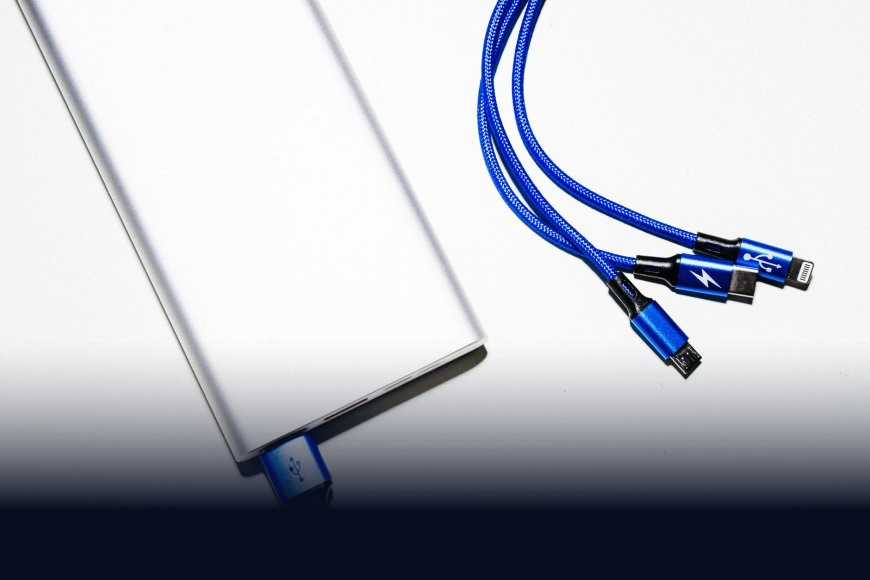
There's also a real safety angle that matters more here than the marketing usually lets on. India's pavements and local markets are full of cheap, uncertified charging bricks and cables that skip the safety circuitry a genuine fast charger has — and a mismatched high-current charger paired with a cheap cable is a real fire risk, not a theoretical one. The Bureau of Indian Standards (BIS), the government body that certifies electronics and appliances for safety, has been tightening registration requirements for power adapters sold in India specifically because of this. If you're buying a replacement charger, checking for a BIS registration number on the box is a genuinely useful five-second habit, not just red tape.
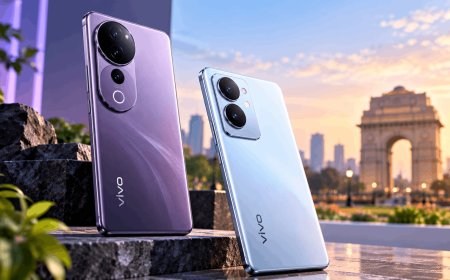
Phones built for the Indian market increasingly lean into fast charging as a headline feature rather than a footnote — Poco's recent X8 Power launch, for instance, pairs a 10,000mAh battery with 100W charging and promises a full day's charge in about 20 minutes, explicitly targeting buyers who worry about running out of power during long commutes or irregular access to power outlets during the day.
What this means for how you actually charge
A few habits make a real difference if you want your battery to last years rather than degrade within one:
- Use the charger and cable that came with the phone, or ones certified for the same fast-charging standard — mixing brands often means losing most of the speed anyway.
- Don't obsess over charging to 100% every time; stopping around 80-90% regularly is easier on the battery, since it's that last stretch that stresses the cells most.
- Avoid charging in direct sun or under a pillow — trapped heat is the single biggest accelerant of battery wear, fast charger or not.
- If a charger or cable feels unusually hot to the touch, stop using it. That's not normal, even for high-wattage charging.
None of this is about being paranoid over a piece of tech that's genuinely gotten safer and smarter with every generation. It's about understanding that the impressive number on the box is only half the story — the quieter engineering happening inside your phone, tuned for how hot your commute gets and how you actually use the thing, is what makes fast charging work without cooking your battery in the process.
What's Your Reaction?
 Like
0
Like
0
 Dislike
0
Dislike
0
 Love
0
Love
0
 Funny
0
Funny
0
 Angry
0
Angry
0
 Sad
0
Sad
0
 Wow
0
Wow
0