





























Meta Plans $95B Stock Sale to Fund Its AI Spending Spree
Meta is raising up to $95 billion for AI infrastructure, and its Reliance-backed Jamnagar data center shows what that means for India.
Mark Zuckerberg's AI bet just got a price tag attached, and it's enormous: Meta is lining up as much as $95 billion in fresh equity to keep its data centers growing.
The plan, disclosed on October 26, comes in two pieces. The first is an underwritten offering — banks guarantee to buy the shares and resell them to investors — worth roughly $35 billion, split between about $22.5 billion in ordinary Class A stock and $12.5 billion in preferred shares (a hybrid that pays fixed returns like a bond but counts as equity). Chipmakers Nvidia, AMD, and Broadcom are reportedly interested buyers of part of that slice, which would be an unusual move for suppliers to effectively bankroll their own biggest customer. The second piece is a planned $60 billion "at-the-market" program — selling new shares gradually into the stock market rather than all at once — that Meta says it hasn't finalized and might not launch until sometime in 2027.
Why Meta needs this much cash
Meta has guided investors to expect somewhere between $135 billion and $145 billion in capital spending for 2026 alone, almost all of it going toward the servers, chips, and buildings needed to train and run AI models. That's capex — money spent on physical infrastructure — not Meta's regular operating budget, which is why the company is reaching for outside capital rather than just drawing down cash reserves.
This isn't a new theme for Meta's finance team. On an earnings call earlier this year, CFO Susan Li put it plainly:
"We have continued to underestimate our compute needs even as we have been ramping capacity significantly."
That line captures the pattern across the entire AI industry right now: every major player keeps revising its infrastructure spending upward, and the financing tools being used to fund it are getting more creative and more aggressive. An all-equity raise of this size dilutes existing shareholders, which is presumably why reports on how investors reacted differ quite a bit — some accounts described a mild dip in Meta's stock price, others a much sharper slide. That the numbers don't agree is itself telling: markets are still trying to figure out whether this level of AI spending is visionary or reckless.
The India connection most coverage is missing
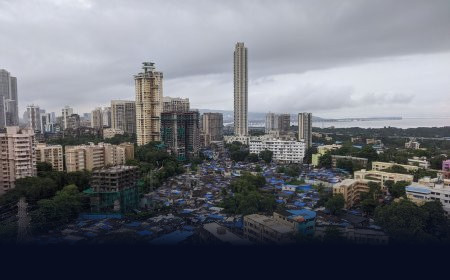
Here's the part that matters directly for Indian readers. Meta isn't just building in the US. Earlier this year, it struck a deal with Reliance Industries for its first AI-dedicated data center in India — a 168-megawatt campus coming up in Jamnagar, Gujarat, with room to scale further later. Reliance will construct and run the facility while Meta leases the capacity, continuing a relationship that goes back to Meta's $5.7 billion investment in Jio Platforms in 2020.
The Jamnagar campus is planned to run entirely on renewable power and use desalinated seawater for cooling, with Meta footing those costs. It's part of a much bigger wave: hyperscalers collectively poured an estimated $400 billion into India's AI and data center ecosystem over the past year, with Reliance and Adani separately pledging around $110 billion and $100 billion respectively toward turning India into a serious AI compute hub.
Why should a developer or startup founder in Bengaluru or Pune care about a Meta stock sale? A few reasons:
- Global GPU and data center capacity is effectively one shared pool. When Meta raises tens of billions to lock down Nvidia chips and power contracts, that tightens supply and props up prices for everyone else renting compute, India included.
- Indian startups building on Meta's open-weight Llama models depend on Meta continuing to fund frontier research rather than cutting back if investor patience runs out.
- The Jamnagar project is a preview of where Indian data center capacity and jobs could come from if this spending cycle holds — but also a reminder that India's AI infrastructure buildout is currently financed largely by foreign capital and partnerships, not domestic balance sheets.
A spending race with no clear finish line
Meta isn't alone in this. Google, Microsoft, and Amazon are all running similarly large capex programs, and Meta's own recent solar power deals for its US data centers show how much supporting infrastructure — not just chips — this buildout actually requires. What's different this time is the financing method: tapping public equity markets at this scale signals that even a company with Meta's cash flow doesn't want to fund the AI race from operating profit alone.
The honest answer to whether this spending pays off is that nobody knows yet, including Meta. What's clearer is that the compute arms race has stopped being a Silicon Valley story and is now, through deals like Jamnagar, directly reshaping where data centers get built, who finances them, and how expensive AI compute will be for the rest of the world to rent.
What's Your Reaction?
 Like
0
 Dislike
0
 Love
0
 Funny
0
 Angry
0
 Sad
0
 Wow
0