



































Marvell Buys Lumentum for $115B to Power AI Data Centers
Marvell is buying optical component maker Lumentum for $115 billion to build an end-to-end AI data centre supply chain.
Marvell Technology is spending $115 billion to buy a company most people have never heard of — and that's exactly the point. On November 2, the chipmaker agreed to acquire Lumentum Holdings, a maker of the optical components that move data between racks of AI processors, in an all-stock deal that values Lumentum at roughly $1,132 a share, a premium of about 24% over where the stock was trading before deal talk leaked.
Why a chip company wants an optics company
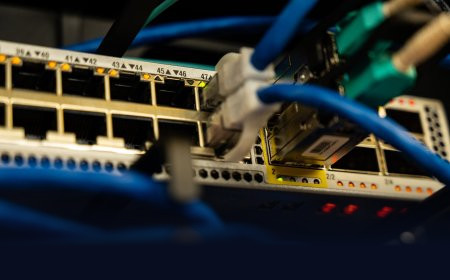
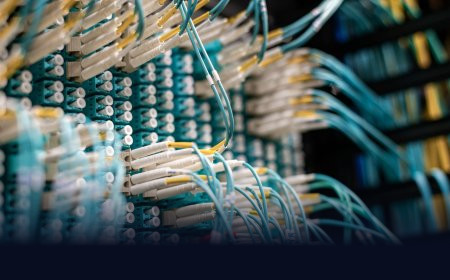
Marvell doesn't make GPUs — Nvidia and AMD get that spotlight. What Marvell does is design the custom silicon that sits around AI chips: networking switches, interconnects, and the "glue" that lets thousands of processors in a data centre act like one giant computer. Lumentum makes photonics — the lasers and optical transceivers that convert electrical signals into light so data can travel between servers at the speed modern AI training actually needs. Put plainly, if Marvell's chips are the brain cells, Lumentum's optics are the nerves connecting them.
Under the deal terms, each Lumentum share converts into 4.5 Marvell shares. Once it closes, Marvell shareholders will hold about 67% of the combined company and Lumentum shareholders the remaining 33%. Matt Murphy, Marvell's CEO, stays on as chairman and CEO of the merged business. In the companies' joint statement, Lumentum's CEO made the scale of the bet clear:
Combining with Marvell creates a company uniquely positioned to capitalize on a market opportunity of $550 billion. — Michael Hurlston, CEO, Lumentum Holdings
That $550 billion figure is the companies' own estimate of the total addressable market for AI data centre connectivity over the coming years — not a guarantee, but a sign of how big they think the "plumbing" business around AI has become. The deal still needs shareholder votes and antitrust clearance, and the companies expect it to close sometime in the first half of 2028 — a long runway that itself says something about how closely regulators are now watching AI infrastructure consolidation.
The unglamorous side of the AI boom
Every story about the AI buildout tends to focus on the same few names — OpenAI's compute bills, Nvidia's chip shortages, Anthropic's IPO filing. Less visible is the physical plumbing underneath all of it: the optical cables, switches, and cooling systems that actually let a data centre function at AI scale. Lumentum's stock has already been a quiet AI winner this year, with Nvidia itself taking a direct investment stake in the company earlier in 2026 to help secure its optics supply chain. Marvell buying it outright is a bet that owning that supply chain end-to-end is worth more than just having a seat at the table.
- Data centres built for AI training need far more bandwidth between servers than older cloud facilities, which is where optical components become a bottleneck if supply can't keep up.
- Marvell gains a captive source of photonics instead of competing with everyone else for Lumentum's output.
- Lumentum gains Marvell's balance sheet and chip design relationships with the big cloud providers building out AI capacity.
What it means for India's own AI build-out
This deal is unfolding thousands of kilometres from India, but the consolidation it represents touches Indian AI infrastructure directly. Indian data centre operators — from CtrlS's upcoming AI hyperscale factory in Bihar to the large facilities coming up around Mumbai, Chennai, and Hyderabad — depend on the same global supply of optical transceivers and networking gear that Marvell and Lumentum make. When two major suppliers merge, pricing power shifts, and that eventually shows up in what it costs an Indian operator to wire up a new AI facility. India's semiconductor ambitions under the government's production-linked incentive schemes have mostly focused on chip fabrication and assembly rather than photonics, which means the country still imports almost all of this optical hardware — a dependency worth watching as AI data centre capacity becomes a matter of national digital infrastructure, not just corporate IT spending.
There's also a market angle for Indian investors tracking US tech stocks through international investing platforms: AI infrastructure deals of this size tend to move an entire sub-sector, and semiconductor supply chain plays have become one of the more closely watched corners of the AI trade this year.
The bigger pattern
Megadeals like this rarely happen in isolation. They tend to show up when an industry decides the next phase of competition won't be won on a single component but on how tightly the whole stack — chips, networking, and optics — is controlled by one company. Whether regulators let Marvell and Lumentum combine on these terms, and whether the rest of the AI supply chain responds by consolidating further, will say a lot about who actually controls the cost of building AI over the next few years. The GPU makers got the headlines for this AI cycle. The next one might belong to whoever owns the wires.
What's Your Reaction?
 Like
0
 Dislike
0
 Love
0
 Funny
0
 Angry
0
 Sad
0
 Wow
0