




































ASML Warns Chip Equipment Can't Keep Up With AI Demand Till 2028
ASML posted record Q3 sales but warned its lithography equipment supply won't meet demand through 2028 — a problem for India's new Dholera fab too.
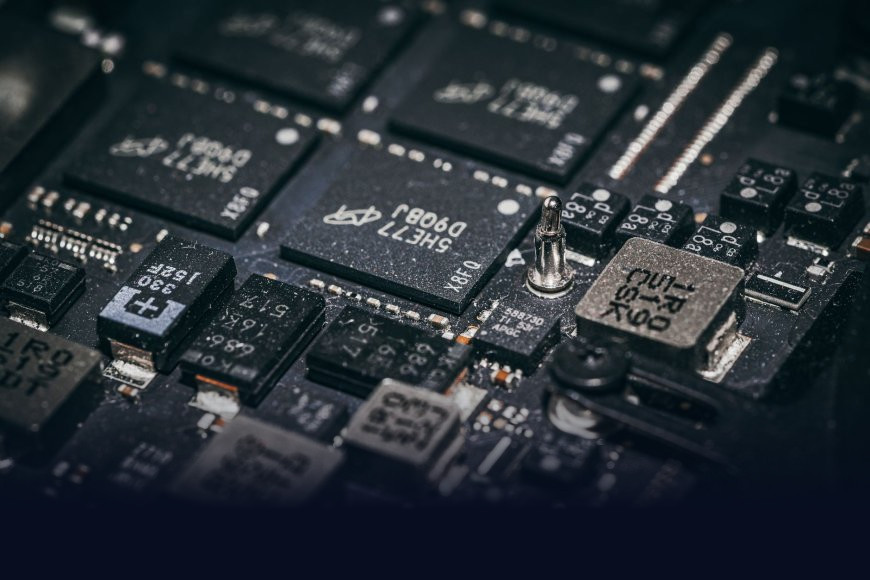
ASML just posted record sales for the third quarter of 2026 — and still managed to spook investors. The reason: the one company that builds every advanced chipmaking machine on Earth says it can't make enough of them, not this year, not next year, not the year after.
A record quarter with a warning attached
The Dutch company, which has a near-total monopoly on the extreme ultraviolet (EUV) lithography machines used to print the tiniest transistors onto silicon wafers, reported net sales of €11.7 billion for the quarter, with a gross margin of 57.5% and net income of roughly €4.96 billion. ASML also raised its full-year sales forecast to between €44 billion and €45 billion.
Normally that's a stock-popping quarter. Instead, shares slipped after the earnings call, because ASML's management said something that mattered more than the numbers: the lithography capacity it currently has planned for 2027 and 2028 won't be enough to cover what customers actually want to buy. Some chipmakers are already asking about reserving machines for 2029 and 2030 — years most companies don't plan that far ahead for industrial equipment.
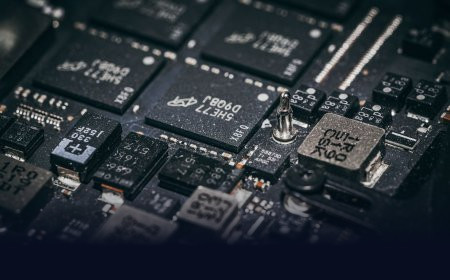
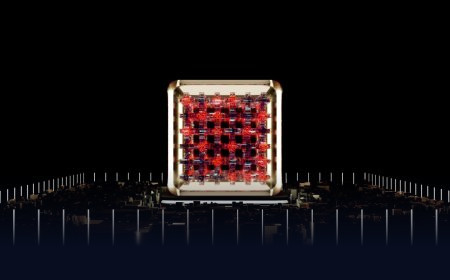
The world's most advanced chips all pass through the same handful of machines — and ASML itself says there won't be enough of those machines to go around through 2028.
That single line tells you how far the AI boom has reshaped the entire chip supply chain. It's not just Nvidia and the big cloud companies racing for GPUs anymore — it's reaching all the way back to the machines that make the chips in the first place, and there's a multi-year queue forming for them.
Why this isn't just a Netherlands problem
ASML doesn't really have competitors for its most advanced tools. If you want to manufacture cutting-edge logic chips, you buy from ASML or you don't manufacture them at all. That makes its production schedule a chokepoint for the entire semiconductor industry — TSMC, Samsung, Intel, and every newer fab trying to get into the game are all drawing from the same limited pool of machines.
- TSMC and Samsung, as established customers with decades-long relationships, typically get priority allocation.
- Newer or smaller fabs often end up further back in the queue when capacity gets tight.
- A multi-year order backlog means delivery delays for anyone who isn't already near the front of the line.
What it means for India's own chip ambitions
This is where the story stops being an abstract Wall Street earnings note for Indian readers. Back in May 2026, ASML signed a memorandum of understanding with Tata Electronics to supply lithography tools for India's first commercial 300mm semiconductor fab, being built at Dholera in Gujarat as part of an $11 billion project developed alongside Taiwan's PSMC. The plan is to eventually produce chips across a range of older but still widely used process nodes — from 28nm down to 110nm — for automotive, mobile, and AI-adjacent applications, and it sits alongside the government's broader India Semiconductor Mission push to build a domestic chip ecosystem.
A fab is only as good as its equipment delivery schedule, and that's exactly what ASML just said is under strain globally. Dholera is a newer customer relationship compared to TSMC's or Samsung's decades of history with ASML, which raises a fair question: when the world's lithography capacity is already spoken for years out by the biggest, oldest customers, where does a first-time fab in Gujarat land in that queue? Nothing in ASML's statement singles out India, and the Tata deal remains an MoU rather than a signed, dated supply contract — but a global squeeze on the one machine every fab needs is not a detail India's chip strategy can ignore.
The bigger picture
None of this means the AI spending wave is slowing down — if anything, ASML's numbers say the opposite. Demand for compute is now pulling on a supply chain that starts years before a single chip gets made, at the machine-building stage, and every fab in the pipeline, from Taiwan's giants to Gujarat's newest project, is now competing for the same scarce slots. The companies that locked in their orders early are in good shape. Everyone else, India included, is going to find out just how long that queue really is.
What's Your Reaction?
 Like
0
 Dislike
0
 Love
0
 Funny
0
 Angry
0
 Sad
0
 Wow
0