


























UPI MDR Returns October 15: Merchants Pay 0.4%, You Pay Nothing
From October 15, merchants will pay 0.4% MDR on UPI payments above ₹2,000, capped at ₹300. Consumers and small vendors stay free — here's what changes.

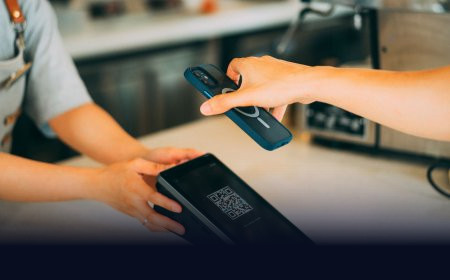
Scan a QR code at your neighbourhood kirana next month and nothing changes. Buy a ₹3,000 mixer grinder from a big electronics chain the same way, and something invisible happens behind the scenes: the store's bank keeps ₹12 as a processing fee. That tiny deduction is India's biggest payments story right now.
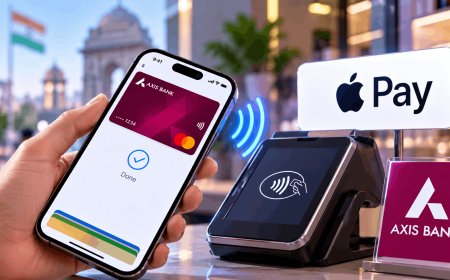
From October 15, 2026, the Unified Payments Interface (UPI) — the instant bank-to-bank payment rail run by the National Payments Corporation of India (NPCI) — ends a free run that lasted more than six years. A detailed FAQ released on September 15 confirms that a merchant discount rate, or MDR, is coming back for larger merchant payments. MDR is the small cut that banks and payment apps share for processing a transaction, and on UPI it has been zero for person-to-merchant payments since January 2020.
What exactly changes on October 15
The new framework applies only to person-to-merchant (P2M) payments — money you pay a business, not a friend. Above ₹2,000, specified merchants will pay 0.4% of the transaction value as MDR, capped at ₹300 once the bill crosses ₹75,000. Here's what that looks like at the till:
- ₹2,000 purchase — ₹0 MDR
- ₹3,000 purchase — ₹12 (0.4%)
- ₹50,000 purchase — ₹200
- ₹1,00,000 purchase — ₹300, because the cap kicks in
Several high-volume categories get a flat ₹5 fee per transaction instead of the percentage rate: railways, telecom, insurance premiums, fuel, government utilities such as electricity and water, and education-fee collections. Capital-market payments — mutual funds, stocks, broker wallet top-ups — get their own rate of 0.02%, also capped at ₹300. Recurring payments through UPI AutoPay, like OTT subscriptions and SIPs set up as mandates, carry no MDR at all. And credit-on-UPI products, such as RuPay credit cards linked to UPI, follow separate credit-product rules.
Who stays free — and who doesn't
Start with the part most people actually care about: you, the person paying. Person-to-person transfers stay free no matter the amount. Merchant payments up to ₹2,000 stay free too — and according to the FAQ, that covers more than 95% of all P2M transaction volume. Merchants are explicitly barred from passing the MDR on to you, and UPI apps can't invent a platform fee either.
Small vendors get their own shield. Under NPCI's P2PM category — small merchants receiving up to ₹1 lakh a month through UPI QR codes straight into their bank accounts — MDR stays mandatory zero. Only if collections cross ₹1 lakh for three straight months does a merchant graduate into the paying P2M category. The chai stall, the vegetable cart and the home tailor are, in effect, permanently exempt.
UPI isn't getting a tax. It's getting a business model.
So who actually pays? Larger merchants — think e-commerce platforms, retail chains, organised businesses — on transactions above ₹2,000. And since MDR is a financial service, the fee itself will attract 18% GST, a small extra on top for the merchant.
Why the free ride is ending
The scale explains it. UPI processed 2,451 crore transactions worth ₹29.9 lakh crore in August 2026 alone. Keeping that running — servers, fraud-prevention systems, bank tech support — costs an estimated ₹20,000 crore a year, according to industry estimates cited in the FAQ. Government incentives were always meant as short-term bridge funding, not a permanent subsidy for the payments industry.
The official pitch is that a predictable revenue stream will fund cybersecurity, AI-driven fraud detection and better infrastructure — and even encourage new fintech startups to take on the dominant apps. Part of the MDR pool will feed a dedicated fund to expand UPI acceptance in Tier 3 to Tier 6 towns, the Northeast, and Jammu & Kashmir and Ladakh, with the finer details to be worked out with the RBI over the next three months. Operational parameters sit with the UPI and Services Steering Committee, headed by NPCI.
Even at 0.4%, UPI undercuts the alternatives. Credit-card MDR typically runs 1.5% to 2.5%, and debit cards can go up to 0.9%. UPI stays the cheapest serious way for a business to get paid.
What it means going forward
UPI is already live in 11 countries, and it has spent the past year adding features at a clip — from biometric payments that replace the PIN to NPCI's plan to let AI agents pay through UPI. A sustainable funding model is the unglamorous plumbing that decides whether all of that keeps working at 2,400-crore-transactions-a-month scale.
For merchants, the maths now matters. A business doing ₹10 lakh a month in large UPI payments will feel the 0.4% in its margins, and some will quietly rework pricing or nudge big bills toward other modes. For everyone else, the QR code stays free — but the era of UPI as a fully subsidised public good is over. What replaces it is something more durable: digital public infrastructure that pays its own bills.
What's Your Reaction?
 Like
0
Like
0
 Dislike
0
Dislike
0
 Love
0
Love
0
 Funny
0
Funny
0
 Angry
0
Angry
0
 Sad
0
Sad
0
 Wow
0
Wow
0